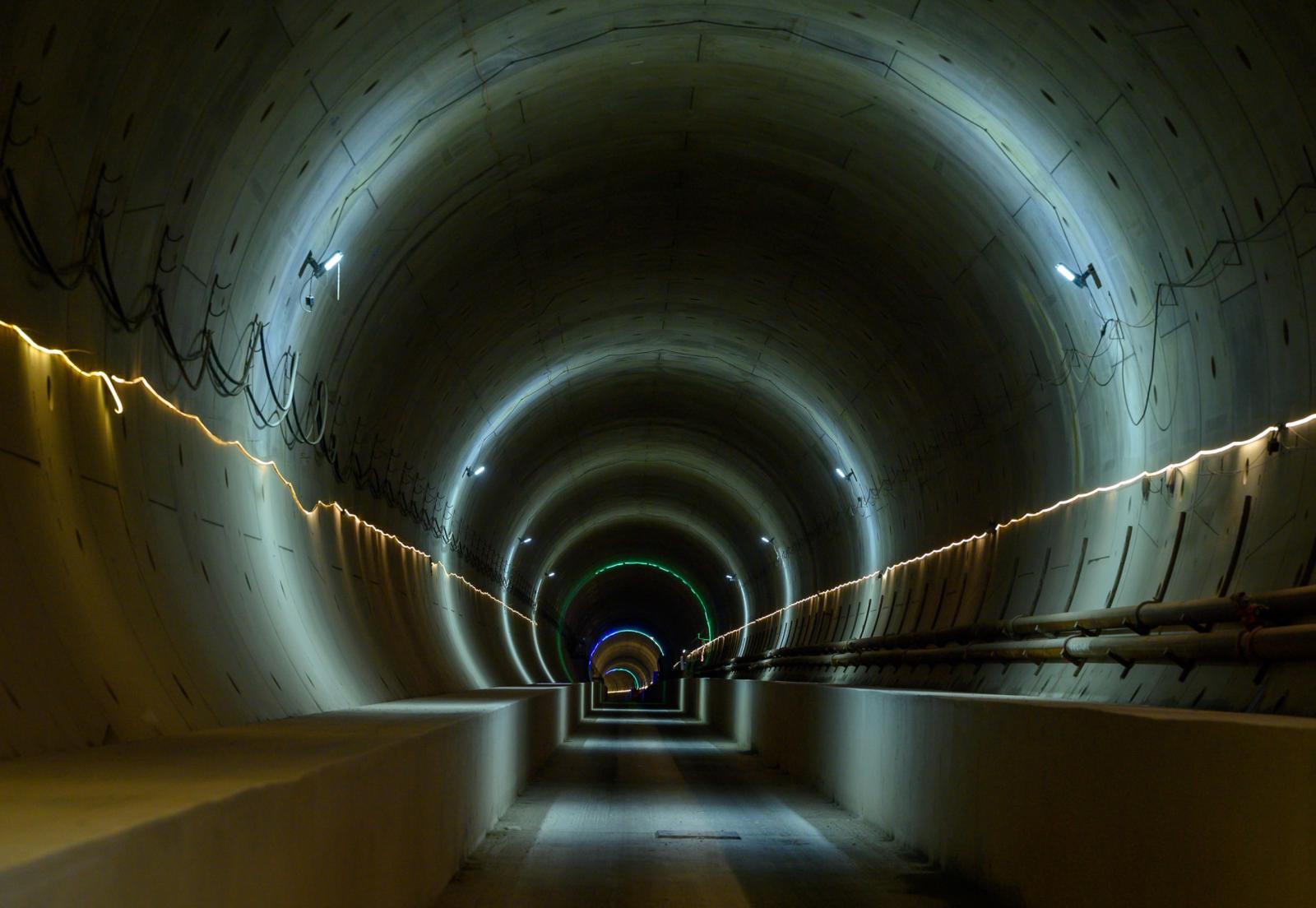

Construction of HS2’s longest tunnel has officially wrapped up, delivering a major civil engineering landmark for the high‑speed railway and marking nearly five years of intensive work beneath the Chilterns.
HS2 Ltd confirmed that completion of construction at the Chesham Road and Little Missenden ventilation shafts signals the end of the main civil engineering phase for the 10‑mile Chiltern tunnel. Once fitted with track and overhead line equipment, the twin‑bore structure will eventually carry trains travelling at 200mph—covering the entire tunnel in just three minutes.
Five Years of Tunnelling Comes to a Close
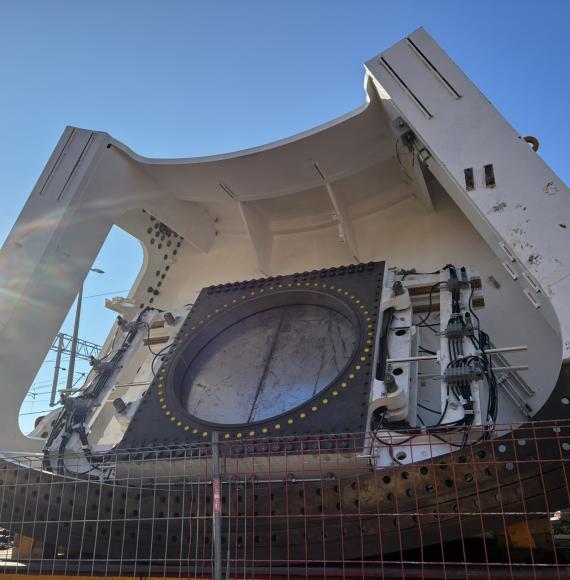
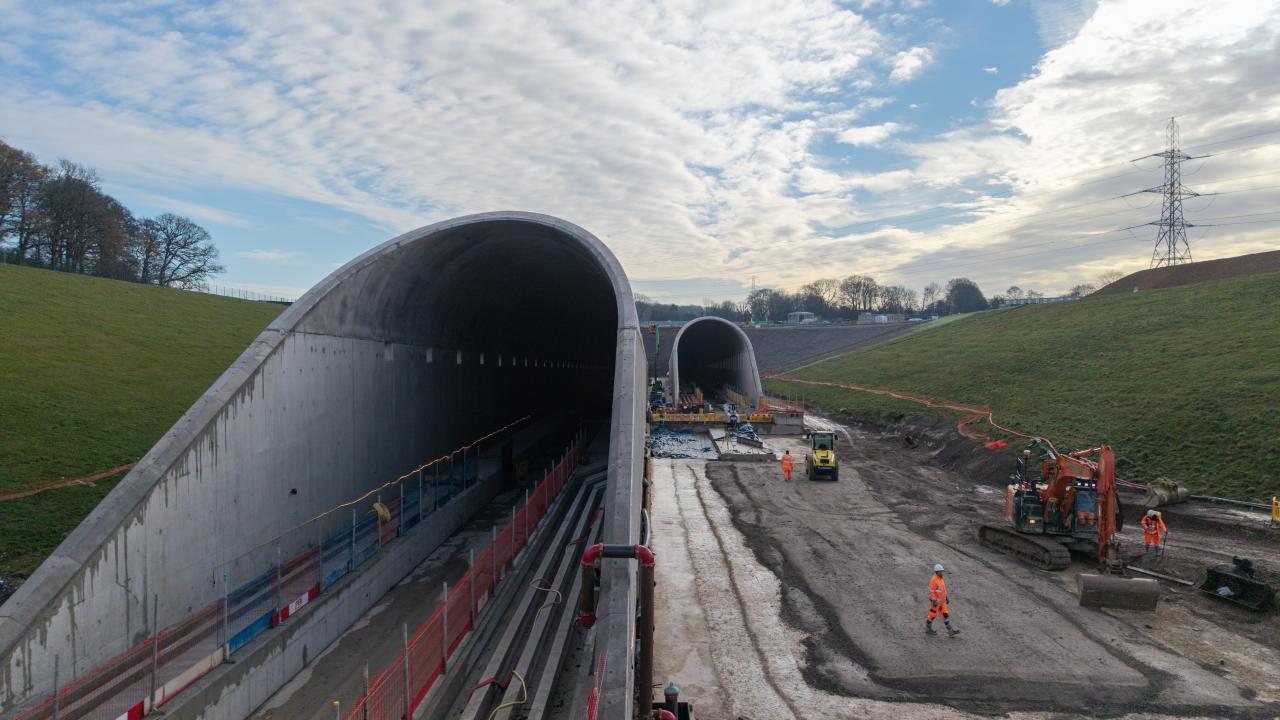
Main works on the twin bores began in May 2021, when two 2,000‑tonne tunnel boring machines (TBMs) were launched from HS2’s South Portal near the M25 at Maple Cross. Ahead of their arrival, five deep ventilation and access shafts—some reaching 78 metres—were sunk along the route. Grimshaw’s understated headhouse designs aim to blend the structures into the Chilterns landscape.
The TBMs advanced north at a steady average of 16 metres per day, breaking through near Great Missenden in early 2024. Since then, teams have focused on constructing porous portal extensions, completing internal walkways and fitting out 40 cross‑passages.
This marks the second of HS2’s five twin‑bore tunnels to reach structural completion, following the Long Itchington Wood tunnel breakthrough in Warwickshire last year.

Reset Underway, but Progress Clear
Despite the milestone, HS2 Ltd acknowledged that major work continues across the 140‑mile London–Birmingham route. Chief Executive Mark Wild is overseeing a comprehensive project reset aimed at maximising efficiency and bringing costs under tighter control.
Delivery of the Chiltern tunnel was led by Align JV—a joint venture of Bouygues Travaux Publics, Sir Robert McAlpine and Volker Fitzpatrick—working closely with HS2 Ltd’s in‑house civil engineering teams.
Mark Clapp, HS2 Ltd’s head of civil engineering for the tunnel, said:
“Multi-facetted projects of the Chiltern tunnel’s scale and complexity don’t often come along; as a civil engineer, you’re lucky to be involved in anything like it. The team we assembled at HS2 Ltd, and with Align JV – our main civil works contractor - and all its subcontractors, to deliver this part of the new high-speed railway was exemplary.
I pay tribute to everyone involved. They can all feel certain that their hard work will stand the test of time.”
Align JV project director Adrien Baudard added:
“Being part of the successful delivery of the Chiltern tunnel has been a source of immense pride for everyone at Align and our partners across the supply chain. Their unwavering commitment, technical skill, and collaborative spirit have been truly impressive. Whether it was advancing safety standards, setting new TBM records, or helping to train future engineers, we’ve had the privilege of learning from and working with some of the top talent in our field.
With the completion of the Chiltern tunnel’s civil works, the achievements of this integrated project team as well as the sustainable benefits such as carbon reduction and safety innovations will set a standard in tunnelling for generations to come.”
Round-the-Clock TBM Operations
To keep the TBMs moving 24/7, Align delivered a tightly worked logistics operation. Each machine was supplied with a continuous flow of 56,000 tunnel lining segments, manufactured at a purpose-built plant near the South Portal.
The TBMs—named Florence and Cecilia after Florence Nightingale and astronomer Cecilia Payne-Gaposchkin—excavated three million tonnes of chalk over their 33‑month drive. Rather than transporting spoil by road, the material has been repurposed on site to create 120 hectares of chalk grassland along the Herts/Bucks border. The initiative expands Hertfordshire’s biodiverse chalk grassland by nearly 20%, restoring a habitat once prevalent before intensive farming.
Next Phases: MEP and Rail Systems
With civil works complete, teams will now move to mechanical, electrical and plumbing installation, with design work underway and enabling works scheduled to start this year. Rail systems—including track and overhead power equipment—will follow.
Civil engineering activity across the wider HS2 route continues, as the project moves steadily towards the systems‑installation phase.
Image credits: HS2