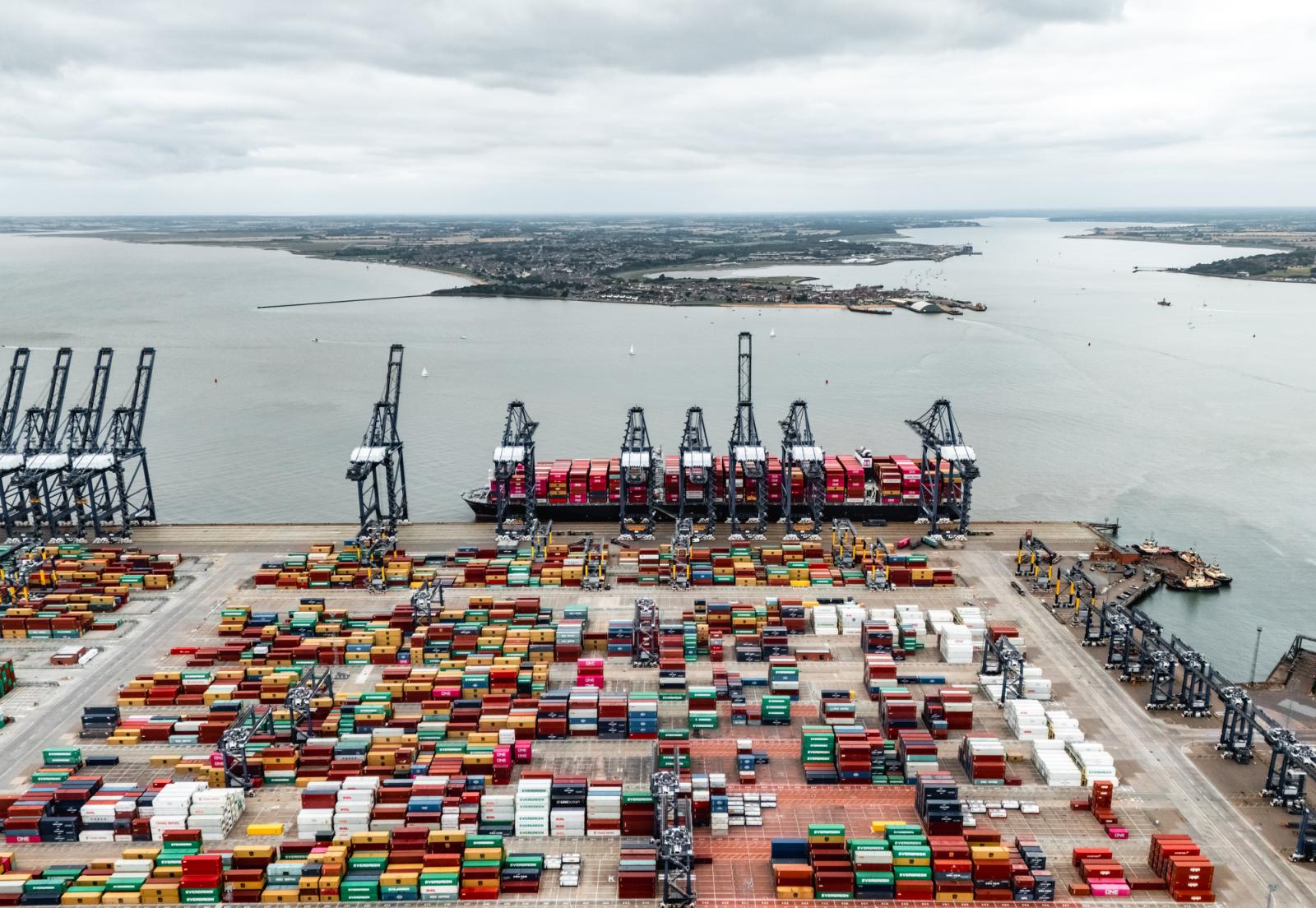

Freeport East has published a new Transport Masterplan that sets out a far‑reaching programme of rail investment designed to unlock the full economic potential of one of the UK’s most strategically important freight corridors.
Covering the Port of Felixstowe, Harwich International Port and the Gateway 14 inland logistics hub at Stowmarket, Freeport East sits at the heart of Britain’s containerised trade. Developed in partnership with sub‑national transport body Transport East, the 2026 masterplan spans road, local transport, active travel and digital connectivity — but it is the rail proposals that carry the greatest national significance.
At the core of the document is a clear and consistent message. As Steve Beel, Chief Executive of Freeport East, and Andrew Summers, Chief Executive of Transport East, state jointly in the foreword: “productivity comes from connectivity.” With Freeport East forecast to generate 13,500 new jobs and up to £5.5bn in Gross Value Added over the next decade, the masterplan positions rail connectivity as a national economic enabler rather than a regional aspiration.
Tackling the Ely and Haughley Rail Bottleneck
The most critical rail intervention identified in the masterplan is the long‑planned Ely and Haughley Rail Improvement Package — a scheme widely regarded as one of the most pressing freight capacity constraints on the UK rail network.
The document describes the corridor as “a major congestion issue on the most intensively used and nationally important rail freight corridor in the UK.” Proposed works include a new double‑track junction at Haughley, north‑west of Stowmarket, alongside wider capacity enhancements through Soham and Ely.
Together, these upgrades would increase network capacity from 6.5 to 10 trains per hour, enabling up to six additional freight paths per day to and from the Port of Felixstowe. The masterplan estimates this could remove around 98,000 lorry movements from the road network each year and deliver carbon savings of approximately 1.7 million tonnes over a 60‑year appraisal period.
With rail freight in the eastern region forecast to grow by between 2% and 3.2% annually through to 2043, the strategic case is well established. The full Ely and Haughley programme is expected to cost in excess of £500m, although the Haughley junction element alone — estimated at around £30m — is seen as a near‑term opportunity if funding can be secured within the next 12 to 18 months.
A full business case is already in place, with the scheme expected to deliver £4.89 of benefits for every £1 invested. Freeport East’s role, as set out in the masterplan, is to support partners in articulating the additional national and regional benefits required to unlock government funding.
Ipswich–Felixstowe Electrification Gains Momentum
Alongside capacity enhancements, the masterplan lends renewed weight to the long‑discussed electrification of the Ipswich–Felixstowe branch line — a short but strategically critical route serving the UK’s largest container port, which handles close to 40% of Britain’s containerised trade.
Despite its importance, the single‑track line remains reliant on diesel traction. The masterplan argues this constrains growth in low‑carbon rail freight and limits alignment with national decarbonisation objectives. While Network Rail continues to reassess electrification priorities in light of bi‑ and tri‑mode traction, the document is clear that the Felixstowe branch “remains a candidate for electrification.”
Targeted electrification would improve acceleration and reliability, reduce emissions and support the development of a Green Freight Corridor linking Freeport East with the East Midlands Freeport — a partnership formalised through a Memorandum of Understanding in May 2024.
Although the scheme carries a medium‑to‑high indicative cost and a delivery horizon of five years or more, Freeport East positions itself as a key advocate, supporting partners in building the strategic and economic case.
Passenger Rail and Workforce Connectivity
The masterplan also recognises the importance of passenger rail in widening labour markets and supporting economic growth across the region. Proposed priorities include service enhancements on the Ipswich–Cambridge, Ipswich–Peterborough and Colchester–Clacton routes.
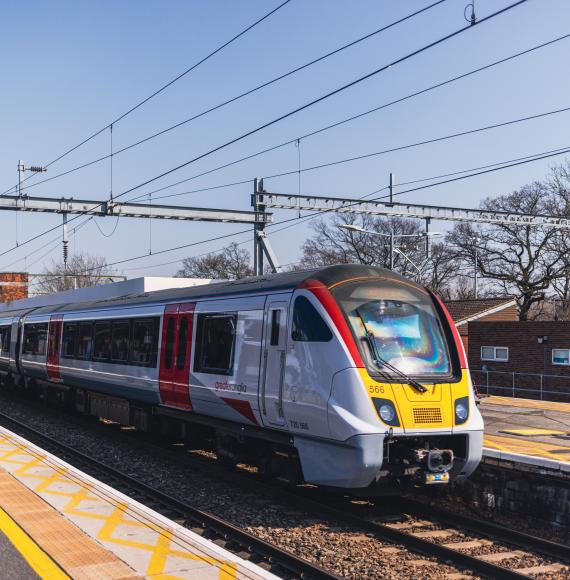
On the Colchester–Clacton line in particular, an all‑day half‑hourly service is currently being assessed by Greater Anglia for inclusion in its next annual business plan to the Department for Transport. Notably, this service uplift would require no additional infrastructure, making it one of the most immediately deliverable rail interventions in the document.
The masterplan notes that “higher frequency passenger rail services have demonstrated significant increase in passenger footfall,” reinforcing the link between service quality, accessibility and economic participation.
A National Freight Priority
Taken as a whole, the Freeport East Transport Masterplan makes a compelling case that rail investment in East Anglia is not a local issue, but a matter of national logistics resilience. The Felixstowe–Nuneaton corridor underpins the UK’s supply chains, and constraints on its capacity have implications far beyond the region.
While the document is candid about the challenge of securing funding — noting that identifying delivery mechanisms will be “as much of a priority as identifying which schemes we consider to be most impactful” — it provides a clear framework for advocacy and decision‑making.
As a statement of intent, the masterplan signals that Freeport East is positioning rail connectivity at the heart of Britain’s future trading capability.
Image credits: iStock