Greater Manchester has unveiled one of the most ambitious rail strategies seen in the UK in decades—a blueprint that reimagines passenger services, freight capacity, governance, and city-region development up to 2050. Branded On the Right Track for Growth, the 47-page document lays out a transformative three-phase roadmap designed to overhaul Victorian-era infrastructure, integrate local rail into the Bee Network, and ultimately take central Manchester rail lines underground.
For those working across the UK rail industry, the vision signals a decisive step change: a move away from incremental upgrades toward wholesale structural reform, delivered through deepened partnerships between Great British Railways, local authorities, operators, and freight interests.
A Rail System that Anchors Growth—Not Follows It
Greater Manchester argues that its rail network is already struggling under the weight of growth. The city-region’s population has surged by 300,000 since 2011, and the economy is expanding at twice the UK average. Yet productivity remains hampered by poor public transport accessibility, with nearly two million residents unable to reach Manchester city centre within 30 minutes.
Passenger rail demand is high—40 million annual trips to Manchester’s central stations—but infrastructure constraints mean the network “fails to provide the connections we need,” particularly around the Castlefield Corridor, Piccadilly, and Oxford Road. Freight capacity is equally pressurised, despite 40 freight trains passing through the region daily.
The report makes the case bluntly: without major intervention, rail will act as a brake on Greater Manchester’s economic ambition rather than its engine.
Three Phases, One 2050 Destination
The roadmap to 2050 unfolds in three distinct stages: Improve to 2030, Grow to 2040, and Transform to 2050.
Phase 1: Improve to 2030 – Integrating Rail into the Bee Network
Rail is the “missing piece of the jigsaw,” the report argues. Greater Manchester plans to integrate eight rail lines into the Bee Network by 2028, with full integration by 2030. This first phase includes:
- Contactless pay-as-you-go ticketing across rail and Metrolink
- New services on underserved corridors
- A comprehensive station upgrade programme, improving safety, accessibility, and passenger information
- New stations, including the already-planned Golborne station
- Weekend and late-evening service improvements
- A new delivery model working jointly with GBR under a place-based approach
By 2030, 30,000 more people are expected to be connected to the rail network within a 15-minute walk of home.
Phase 2: Grow to 2040 – A Bigger, Higher-Frequency Network
The 2030s bring more transformative expansion:
- Tram-train and Metrolink extensions to all 10 boroughs
- Up to 480 new train carriages for a modernised rolling-stock fleet
- Major station area regeneration opportunities, including Old Trafford and Stockport
- Better services to Liverpool, Leeds, and Sheffield through the Transpennine Route Upgrade and emerging NPR elements
- A large-scale station renewal programme, aiming to bring at least 50% of stations to Bee Network standards
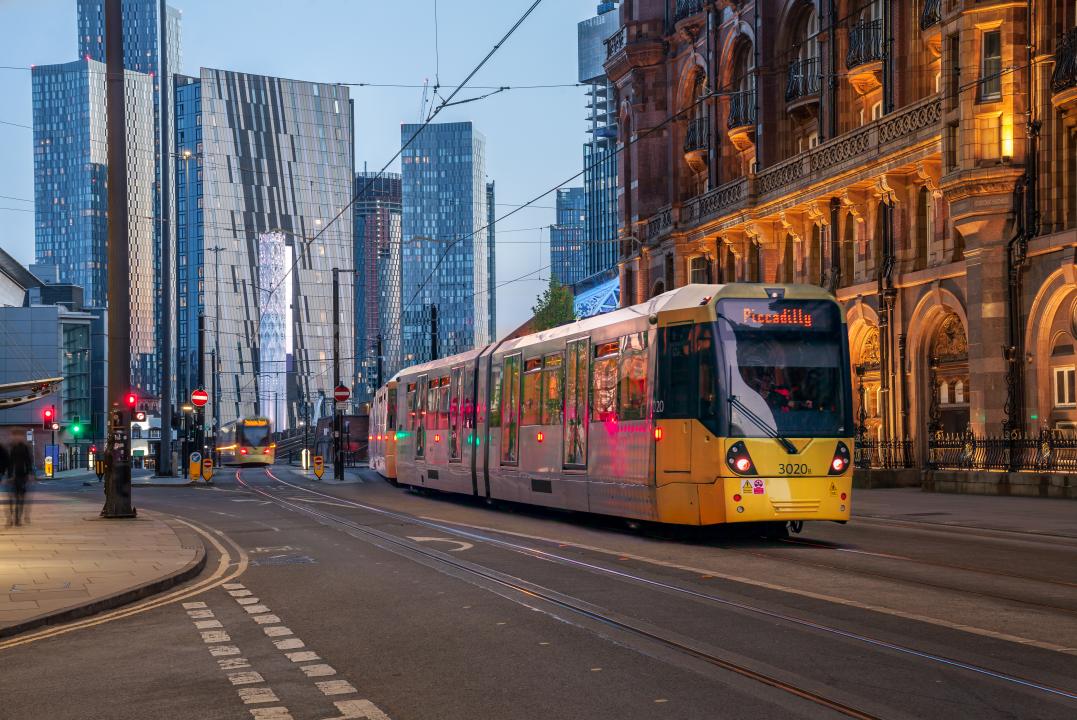
The Bee Network’s multimodal model is envisioned as a northern counterpart to London’s integrated transport system—boosting ridership, reducing car dependency, and supporting housing development around stations.
Phase 3: Transform to 2050 – Going Underground
This final stage marks the most dramatic intervention: putting parts of Greater Manchester’s rail network underground.
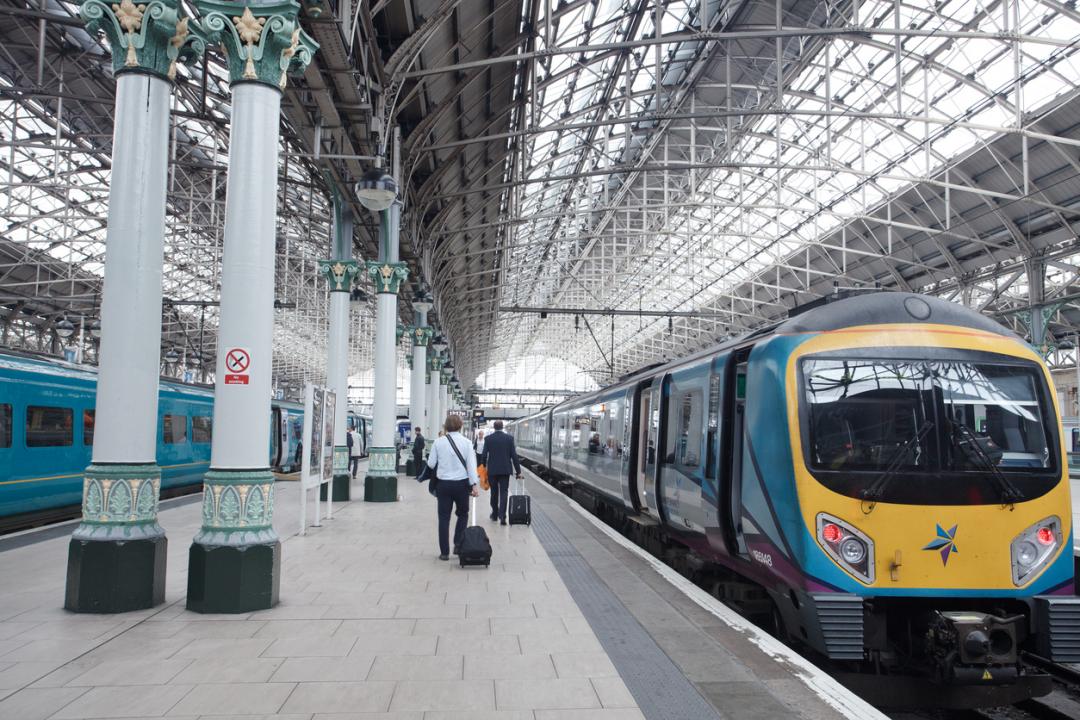
An underground Piccadilly station and a new underground east–west rail link form the centrepiece of a wider Liverpool–Manchester Railway, enabling fast through-services from Liverpool to Leeds and Hull. The benefits outlined include:
- Relief of the chronically overloaded Castlefield Corridor
- Separation of local, regional, intercity, and freight movements
- Significant new rail capacity for both Metrolink and heavy rail
- Faster cross-North services and better airport connectivity
- A development uplift around Piccadilly unlocking up to 75,000 homes by 2050
The document is explicit: without underground capacity, the region cannot deliver the promised 15-minute frequency “metro-style” heavy-rail service.
A New Governance Model: Rail Reform as an Enabler
The forthcoming creation of Great British Railways and the statutory role for Mayoral Strategic Authorities feature heavily. Greater Manchester says the move toward place-based planning makes this the “right moment to be bold.”
The report calls for:
- A Local Commissioning Partnership with GBR
- Long-term devolved funding settlements
- Earlier involvement of local leaders in national rail scheme development
- Greater transparency over rail investment planning
- Reform to integrate freight and passenger planning from the outset
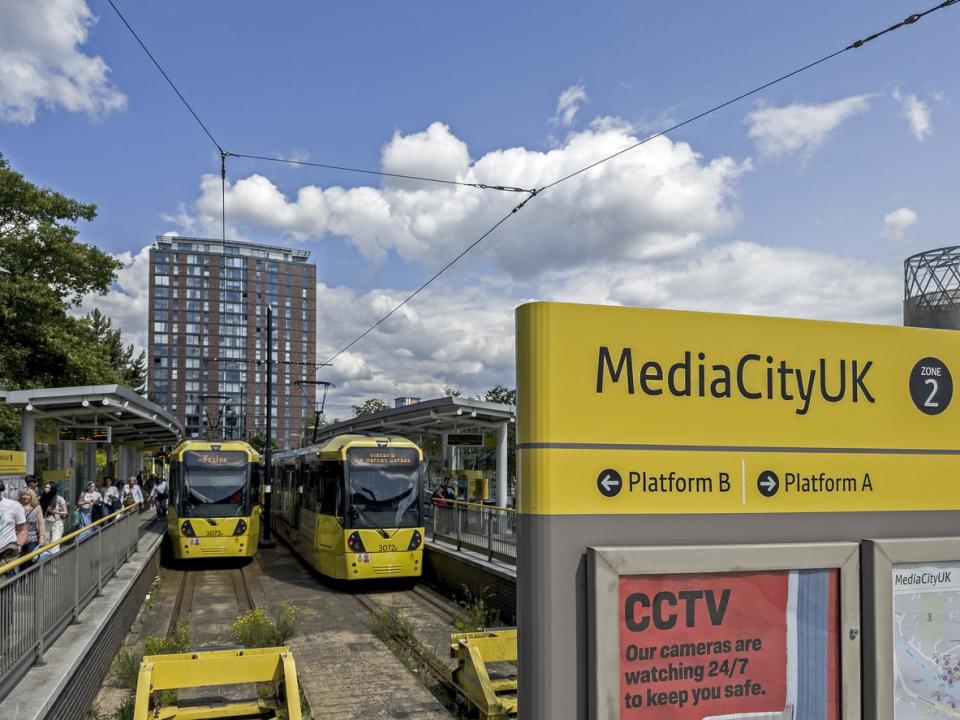
With the region already operating England’s largest light-rail network and its first franchised bus network outside London, leaders argue they have proven capability to manage integrated transport at scale.
Freight: A Central Player, Not an Afterthought
If passengers gain much of the headlines, freight receives unusually prominent treatment.
Rail freight, the report notes, supports construction, food supply chains, waste movement, supermarket logistics, and national long-distance flows passing through Greater Manchester. Illustrations show how aggregates from Derbyshire, groceries from Daventry, and intermodal goods from the South Coast ports move through the city region daily.
The region backs the UK Government’s 75% freight growth target and calls for:
- New freight loops and passing capacity
- Better segregation of freight from local commuter services
- Protection and expansion of intermodal terminals such as Trafford Park, Port Salford, and the proposed “ILP North” site
One freight path, the report notes, can remove up to 129 HGVs from the roads.
Impact: What Success Looks Like in 2050
The document paints a picture of everyday life transformed:
- 95% passenger satisfaction
- Intercity mode share doubled
- Metro-style rail frequencies across the region
- Net-zero rail across Greater Manchester
- Tens of thousands of new homes built around stations
- Seamless ticketing and unified branding across all public transport
- Rail acting as a catalyst for skills development through programmes such as the Manchester Baccalaureate (MBacc)
For the rail workforce and supply chain, the growth potential is significant. New infrastructure, rolling stock, signalling, operations, and maintenance requirements promise sustained demand for talent—at a time when the region is already working to attract apprentices and upskill its labour force.
Industry Reaction: Strong Support—But Delivery Is Key
Rail industry partners including Network Rail, Northern, TransPennine Express, and the Rail Freight Group publicly endorse the vision within the document, calling it “a model for how rail can support thriving communities and inclusive economies.” They emphasise that meeting the scale of service ambition will require “strategic and transformational” infrastructure across central Manchester.
Local businesses quoted in the report echo that sentiment, linking rail reliability and capacity to both productivity and inward investment.
A Generational Opportunity—and a Generational Challenge
Greater Manchester’s 2050 Rail Vision is unapologetically ambitious. It challenges long-standing funding and governance orthodoxy, calls for nationally significant infrastructure, and sets out expectations for a far more integrated railway.
For the UK rail industry, the message is clear: the city-region sees itself not as a passenger in national rail reform—but as a co-driver.
Whether the vision becomes reality will depend on the alignment of political will, long-term funding, and cross-industry collaboration. But as the report concludes, the cost of inaction would be far higher.
“Nearly 200 years after Greater Manchester launched the world’s first inter-city passenger railway, we are ready to lead again.”
You can read the report in full here
Image credits: iStock