New homes, stronger local economies and thriving communities could all be unlocked through rail investment, but only if stations are viewed as more than transport assets.
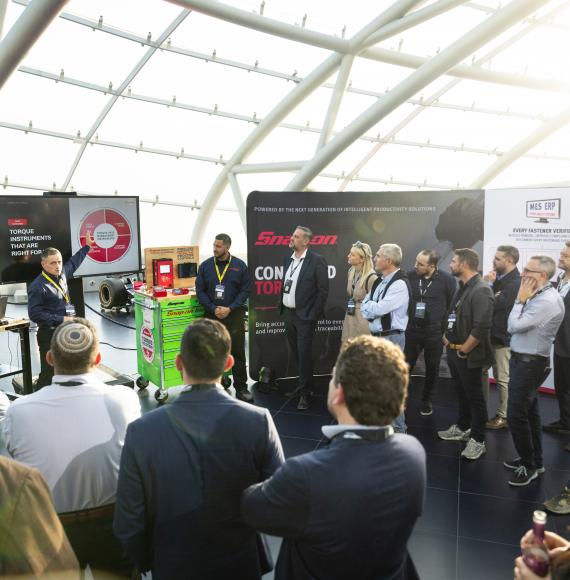
That was the key message from a panel discussion on rail infrastructure and place-based growth at TransCityRail North 2026, where industry leaders explored how local rail projects can deliver wider economic and social benefits when properly integrated into community planning.
Bringing together experts from SLC Rail, WW+P Architects, Tees Valley Combined Authority and Shrewsbury MP Julia Buckley, the discussion focused on how rail infrastructure can become a catalyst for regeneration, housing growth and improved connectivity.
The panel emphasised the importance of developing a place-based business case, one that looks beyond railway operations and considers how transport investment can support broader economic and community objectives.
Rather than focusing solely on platforms, timetables and passenger numbers, successful projects should examine how stations can:
- Connect residents to employment opportunities
- Unlock housing development
- Improve access to town centres
- Encourage walking and cycling
- Support local regeneration programmes
Achieving these outcomes requires engagement from a wide range of stakeholders early in the development process, including local authorities, transport planners, landowners, employers and local communities.
The discussion highlighted Darlington Station as a successful example of place-based thinking in action.
Rather than being treated as a purely rail-focused upgrade, the project was designed with wider ambitions in mind. Alongside improving rail infrastructure, the scheme sought to create a stronger gateway into the town, strengthen connections between the station and the surrounding community, and maximise opportunities linked to ongoing regeneration investment.
The panel argued that embedding these broader objectives from the outset helps ensure they remain central throughout project development.
One of the most debated topics centred on a familiar challenge facing transport planners: should investment follow demonstrated passenger demand or help create it?
The panel was unanimous that infrastructure often needs to be delivered ahead of growth.
Railway stations, new services and network enhancements can take years to plan, design and deliver. Meanwhile, housing allocations, employment zones and population forecasts are frequently set out years in advance through local planning frameworks.
Waiting until demand becomes visible risks creating capacity constraints and limiting economic growth opportunities.
The Northumberland Line was cited as a strong example of how rail investment can stimulate wider regional growth.
Its stations and services form part of a much larger programme aimed at improving connectivity and supporting regeneration across the region.
According to the panel, passenger numbers have exceeded original expectations, reinforcing the challenge of accurately forecasting rail demand and demonstrating the value of investing with future growth in mind rather than relying solely on existing travel patterns.
Perhaps the most thought-provoking moment of the discussion was the challenge to traditional interpretations of the term "minimum viable product" within infrastructure delivery.
The panel suggested that while a minimal intervention may solve an immediate engineering problem, it can also represent a missed opportunity.
A project designed purely to meet technical requirements may overlook chances to:
- Improve accessibility
- Create commercial space
- Enhance station environments
- Support nearby development opportunities
The message was clear: infrastructure projects should consider what additional value can be achieved when wider objectives are incorporated from the outset.
Examples from Middlesbrough Station and Eaglescliffe Station demonstrated how collaboration and co-investment can increase project benefits without fundamentally changing their purpose.
At Middlesbrough, what began as a station strengthening project evolved into a broader discussion around accessibility improvements and the creation of business space.
Meanwhile, at Eaglescliffe, bridge enhancement works helped improve links between the station and a neighbouring business park, supporting plans for additional commercial development.
The panel stressed that the objective is not to make every project larger, but to identify opportunities where collaboration can maximise value for communities and stakeholders.
The discussion concluded with a reminder that successful rail development is rarely about infrastructure alone.
Tracks, stations and funding remain essential, but projects deliver the greatest long-term impact when combined with local knowledge, technical expertise and sustained collaboration between public and private sector partners.
The panel agreed that supply chain organisations have an important role to play in building capacity within public bodies, while communities and elected representatives help ensure schemes remain aligned with local needs and aspirations.
As the railway industry continues to deliver new stations, upgrades and connectivity improvements across the UK, the message from TransCityRail North 2026 was clear: stations must be viewed not simply as transport assets, but as drivers of place-based growth capable of transforming the communities they serve.