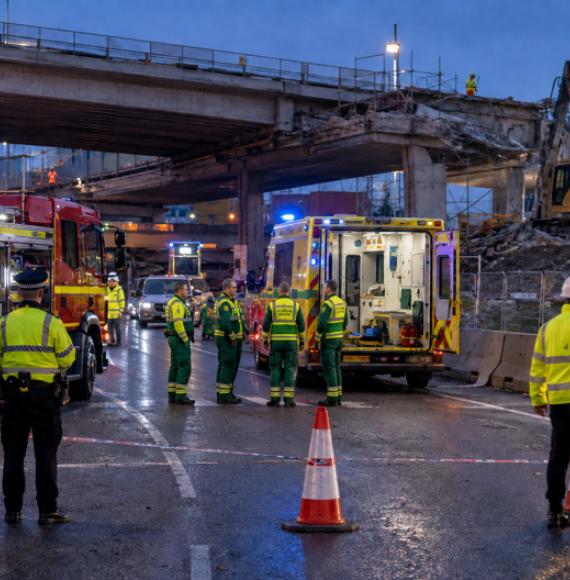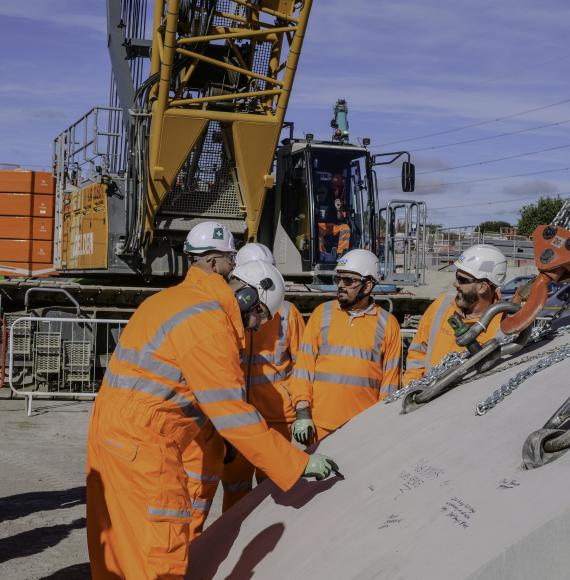
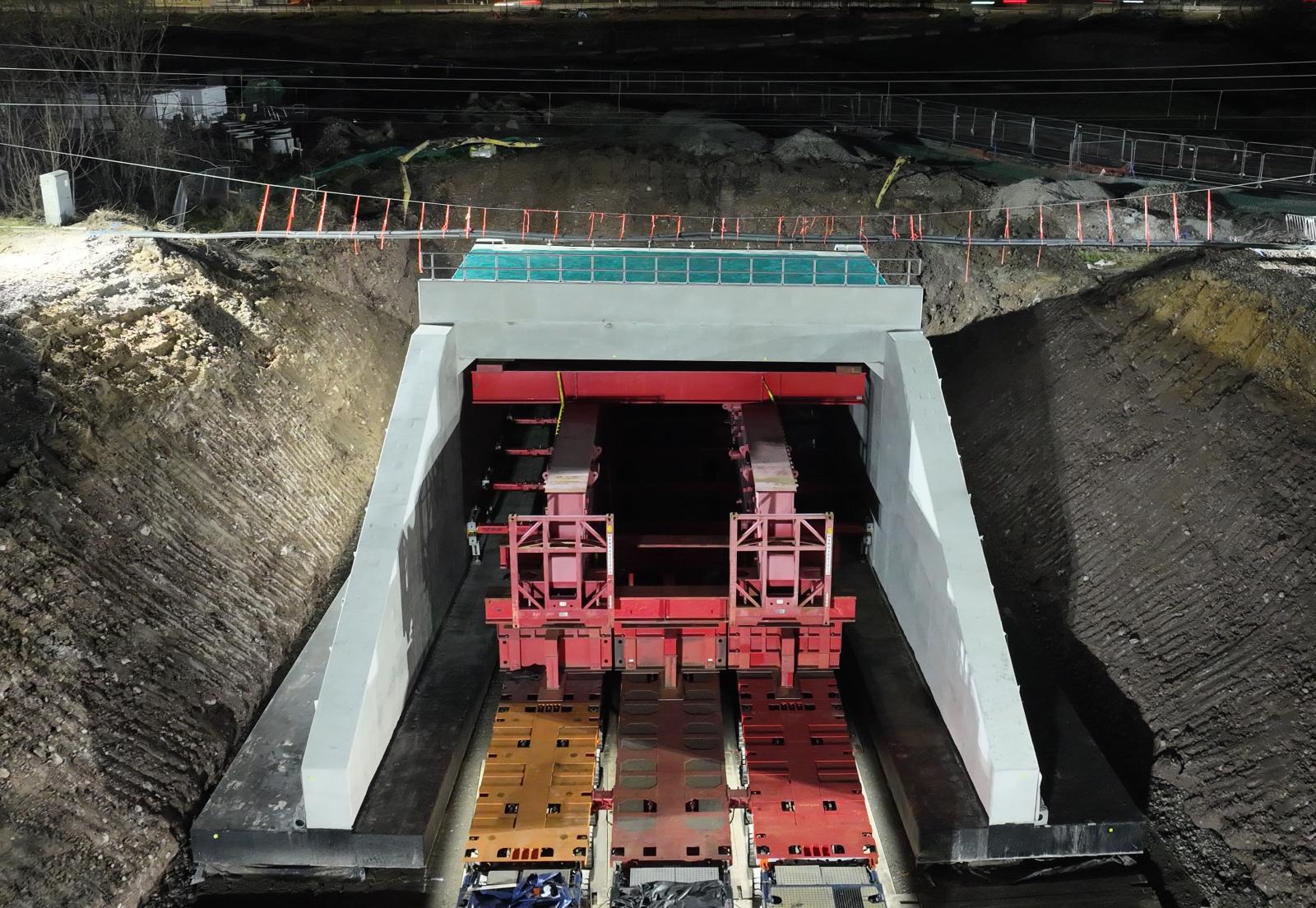

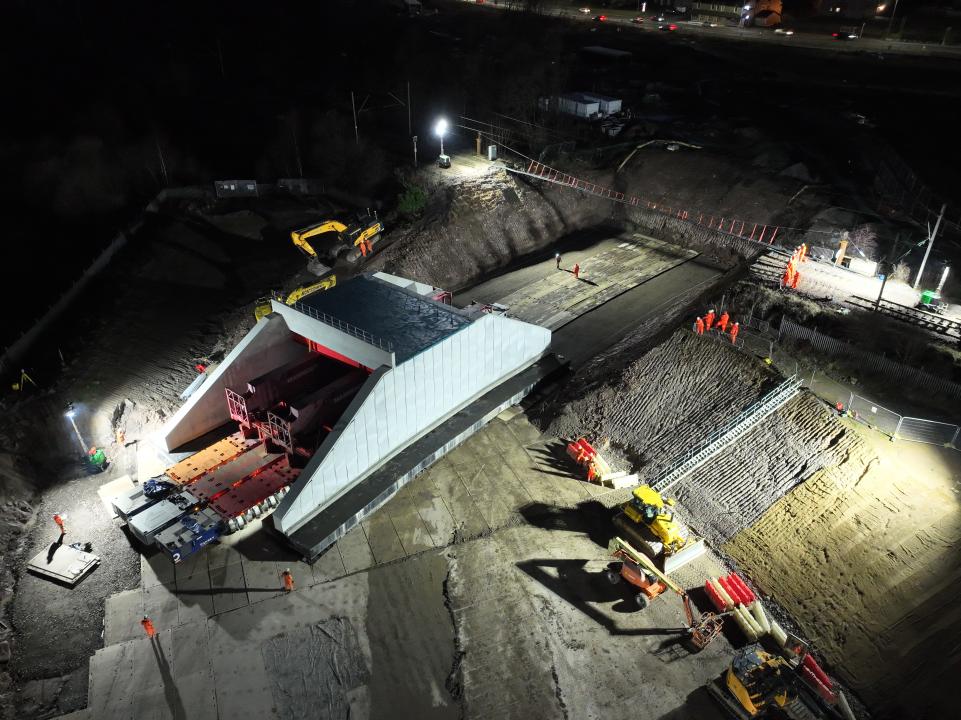
A new railway bridge at the Bowling Strategic Development Site in West Dunbartonshire has successfully glided into position, marking a significant step forward in transforming the area.
Network Rail began work on the project during the summer, starting with the excavation of more than 80,000 tonnes of material to prepare the site. Once cleared, engineers constructed the bridge on location using 1,860 tonnes of concrete – equivalent to the weight of around 34 million mince pies!
With the first phase complete, train services through the area were paused on Christmas Eve to allow for an intense nine-day engineering programme. The highlight came on Boxing Day, when the structure was carefully driven into its final position.
The £5.9m bridge forms a key part of the Glasgow City Region Deal, a major investment programme aimed at improving transport links, unlocking economic growth, and supporting sustainable development. The new structure will provide additional direct road access and enable future development of the Bowling Strategic Development Site, led by West Dunbartonshire Council.
Laura Craig, scheme project manager at Network Rail Scotland, said:
“Everything we’ve done over the past few months has led up to this moment. Building such a huge bridge on site and then moving it into position is an incredible task, and it’s been amazing to see the planning and teamwork come together so successfully.
“The festive period has been an intense time, with work continuing day and night to make sure the move happened safely and on schedule. Driving the bridge into place on Boxing Day is a fantastic achievement and it’s thanks to the dedication of everyone involved.”
Councillor David McBride, West Dunbartonshire Council’s Convener of Infrastructure, Regeneration and Economic Development, added:
“This is a landmark moment in this major project and I am delighted to see such significant progress on the site.
“While there has been some disruption on the trains, this has been minimised by the work being carried out over the festive period and I thank local people for their patience.”
Image and video credit: Network Rail