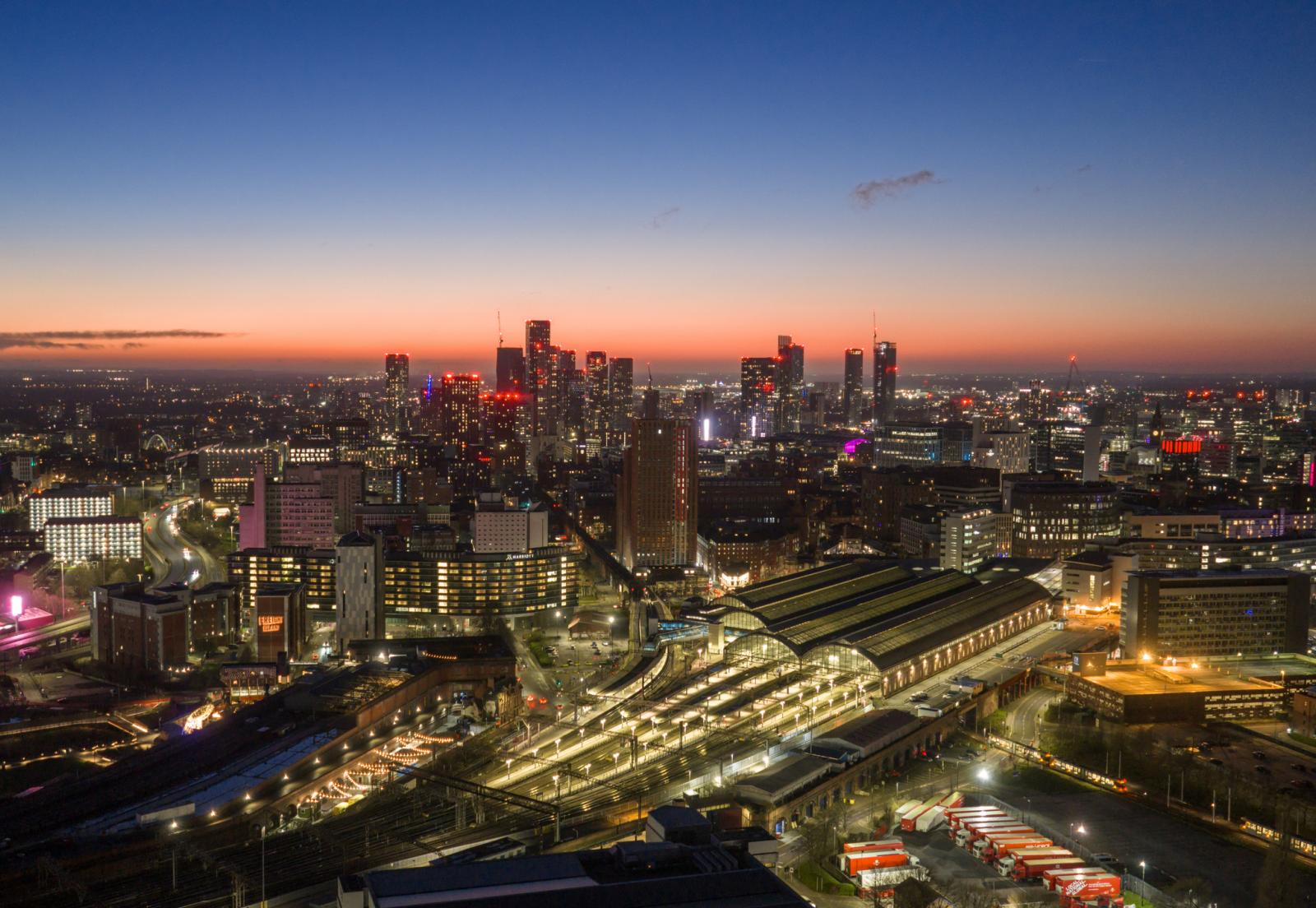
Manchester is positioning itself for one of the most transformative periods in its modern history — and rail infrastructure sits firmly at the centre of that ambition. A new vision for the Manchester Piccadilly growth area outlines how the city intends to unlock tens of thousands of jobs, major regeneration, and world‑leading innovation ecosystems, with rail connectivity acting as the primary catalyst.
Already one of the UK’s fastest‑growing urban economies, Manchester contributes more than £28bn in GVA each year and has sustained annual growth of around 3.4% since 2000 — roughly double the national rate. This economic strength is powered by a diverse business base including the UK's largest professional and business services sector outside London, Europe’s biggest fintech cluster (valued at ~£5bn annually), and globally recognised capabilities in AI, data science, health innovation and advanced materials. The city’s attractiveness is reflected in its strong foreign direct investment performance, hosting 80 FTSE 100 firms and 50 international banks.
The next phase of Manchester’s growth will be shaped by a 150‑hectare regeneration area centred on Manchester Piccadilly Station. Stretching north and south of the station, and east through Mayfield, the Digital Campus, Ardwick and East Village Central, the zone is one of the most significant urban development opportunities in the UK. Its strategic position — where national rail, regional rail, Metrolink services and innovation districts converge — makes rail the enabler of its city‑shaping potential.
According to the report, the area surrounding Piccadilly could deliver:
- Up to 40,000 new jobs
- Around 13,000 new homes
- Almost one million square metres of commercial space
As one of the most internationally comparable regeneration sites in the UK, the document sets Manchester Piccadilly alongside global exemplars such as King’s Cross, Antwerpen Centraal and New York’s Hudson Yards — all rail‑anchored regeneration successes.
Northern Powerhouse Rail: The Critical Unlocker
At the centre of the growth vision is Northern Powerhouse Rail (NPR) and the creation of a new underground through‑station at Manchester Piccadilly. NPR is positioned as a cornerstone of the Government’s National Growth Strategy, designed to connect Manchester more effectively with Liverpool, Bradford, Leeds, Sheffield, York, Hull, the north east and North Wales.
The project aims to stitch together currently separate urban economies across the North by:
- Expanding labour markets
- Improving journey times and reliability
- Boosting passenger and freight capacity
An underground NPR station is described as “the critical facilitator” to releasing the area’s full potential. Crucially, it would free up valuable surface land for high‑value development, support long‑term capacity, and ensure Manchester can compete globally as a rail‑connected economic hub.
A Cluster of Distinct but Connected Rail‑Linked Districts
The report highlights a series of character areas surrounding Piccadilly, each with a rail‑enabled development role:
- Piccadilly Central: A major commercial district directly north of the station.
- Sister: A mixed‑use zone with a strong employment, innovation and life‑science focus.
- Mayfield: A regeneration area anchored around a new public park and significant commercial space.
- Manchester Digital Campus: A sustainable office hub targeted at digital and tech firms.
- Ardwick: A significant residential opportunity supporting eastward growth.
- Piccadilly Basin, East Village Central, Portugal Street East: New and emerging neighbourhoods enhancing connectivity and urban density.
- Oxford Road Station area: A major place‑making opportunity to create a highly accessible destination at the edge of the Oxford Road Corridor.
Collectively, these areas form a coherent, multi‑district economic geography — but their success hinges on rail capacity, rail connectivity and rail‑led place‑making.
The vision makes one message clear: Manchester’s future growth, regeneration and competitiveness will be defined by what happens at Piccadilly Station. Rail is not simply part of the plan — it is the foundation on which the next phase of the city’s development will be built.
Image credit: iStock
Video credit: Manchester City Council