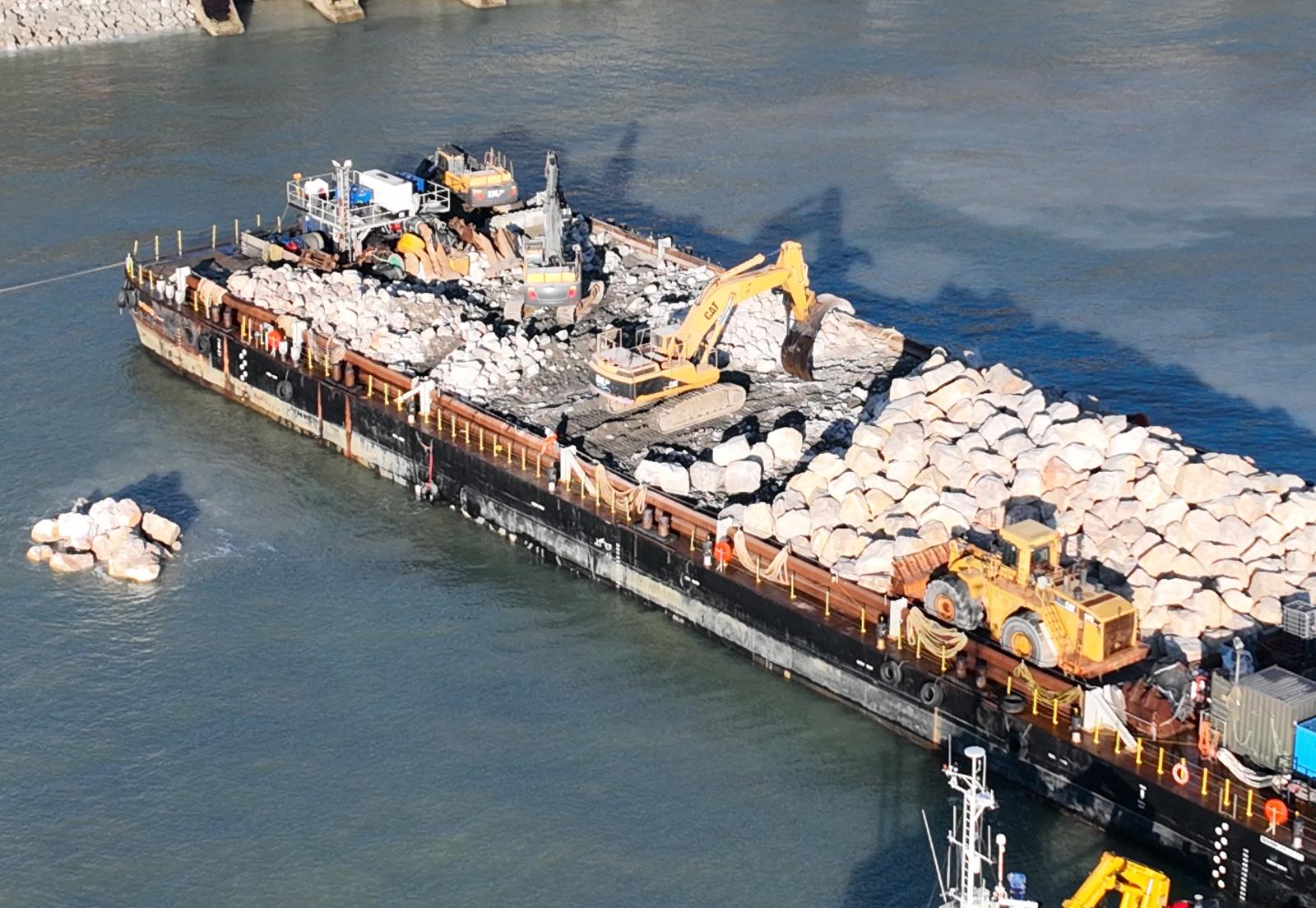
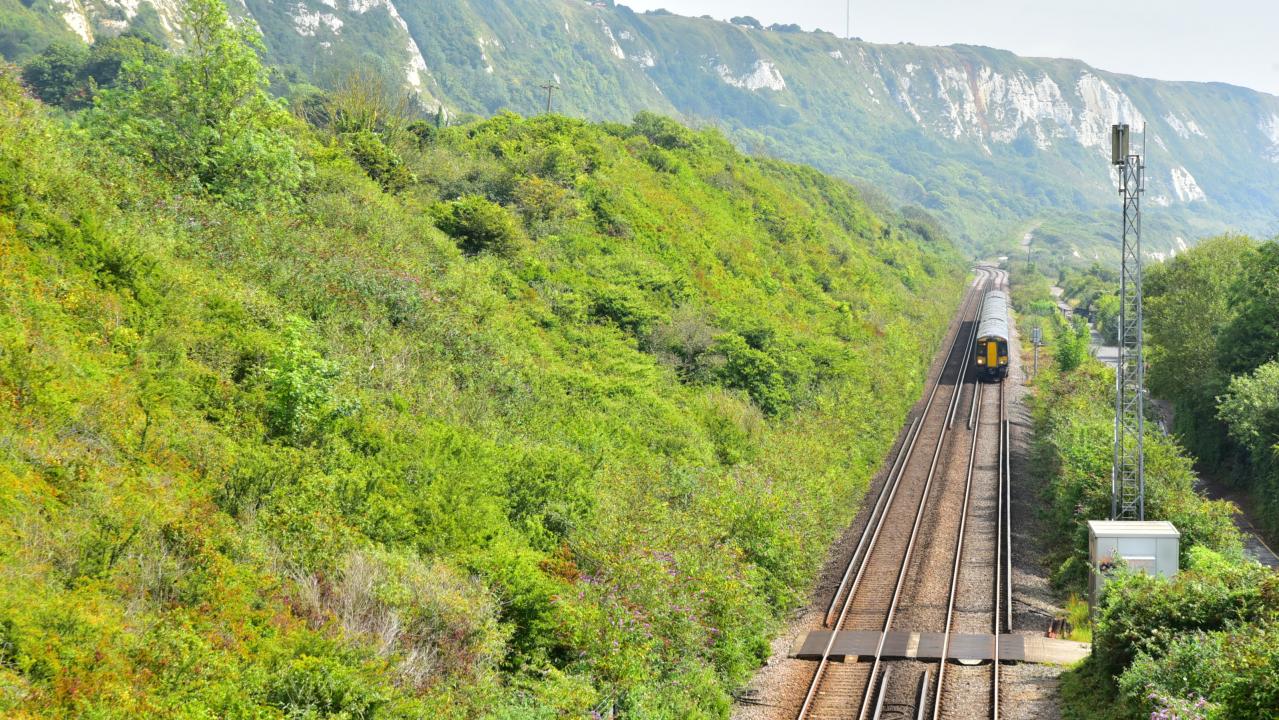
Network Rail has made significant progress on its coastal resilience works at Folkestone Warren, where 18,000 tonnes of rock armour are being installed to protect the vital railway line between Folkestone and Dover. The programme, delivered in one of the network’s most challenging geological environments, is strengthening sea defences, repairing drainage systems and stabilising ground long affected by landslips.
Since last summer, engineers and contractors have been working along the foreshore to reinforce the sea wall and secure the railway without disrupting passenger services. All materials have been delivered by barge from Boulogne, enabling large sections of the western beach and walkway to remain safely closed during construction.
What Has Been Achieved So Far
- Groynes cleared and excess timber removed from the beach.
- Installation of around 50 sheet piles behind the sea wall to prevent seawater from undermining railway abutments.
- Major drainage repairs after subsidence of around one metre due to cliff movement.
- Concrete repairs across multiple bays and commencement of walkway restoration between the sea defence and cliff face.
The western beach is now lined with thousands of tonnes of rock armour, providing significant protective weight to stabilise the ground beneath the railway. Walkway improvements and remaining works are due for completion by July 2026.
Monitoring and Safety Measures
Network Rail has expanded its real-time ground movement monitoring network, enabling engineers to detect even the slightest shifts and take immediate action.
Bob Coulson, Infrastructure Director for Southeastern Railway, said:
“There’s a long history of landslips at Folkestone Warren, with ongoing movement for many years. The rock armour we have been installing since January provides a huge weight that stops the ground moving underneath the railway, protecting it for many years to come.”
He added:
“We have also installed monitoring equipment that collects and shares real-time data to alert us of further minor or significant movement. This allows us to caution or stop trains if movement is detected.”
Coulson also thanked local communities, emphasising public safety:
“I want to thank people for their patience while work has been underway on the beach – and I would ask that members of the public please stay clear of the worksite for their own safety. Large machinery can be extremely dangerous, and we want to keep everyone safe.”
Image and Video Credits: Network Rail