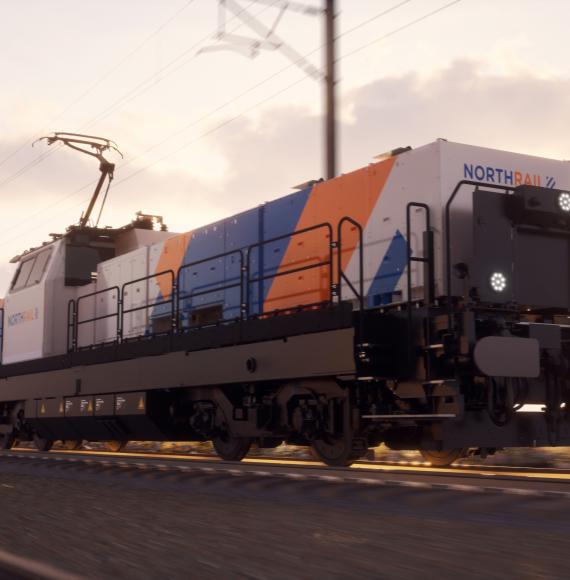
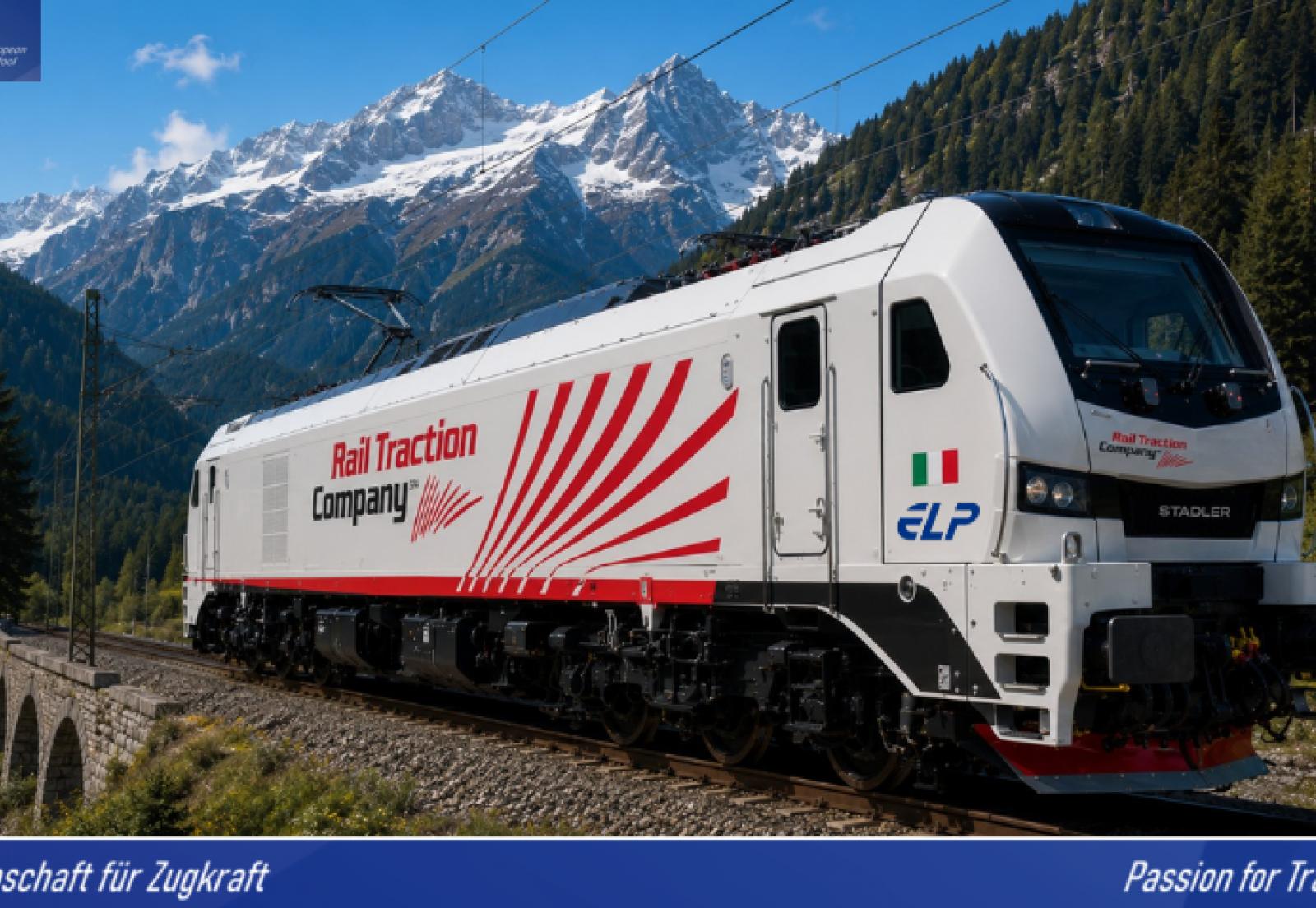

European freight operations on one of the continent’s most demanding corridors are entering a new phase, as Rail Traction Company (RTC) begins operational testing of the Euro9000 locomotive in Italy.
Following official Italian approval, European Loc Pool (ELP), working in partnership with RTC, has launched the first practical homologation test runs of the Euro9000 multi‑system hybrid locomotive. The trials are focused on real‑world freight services across the Brenner corridor and the Domodossola route—two of Europe’s most strategically important north–south rail freight links.
The move marks a significant expansion of the Euro9000’s operational footprint and underlines growing momentum behind interoperable, high‑performance traction for international rail freight.
Testing interoperability on Europe’s key freight arteries
The Brenner corridor, linking Germany, Austria and Italy, alongside the Domodossola route between Switzerland and Italy, presents a demanding mix of gradients, cross‑border complexity and heavy freight loads. With Italian approval now secured, the Euro9000 is being tested under precisely these conditions, allowing RTC to assess whether the locomotive can deliver greater efficiency and operational flexibility in daily service.
RTC is among the first operators to place the Euro9000 into operational testing in Italy—an important step towards reducing locomotive changes and simplifying cross‑border train production.
“We believe that technical development must constantly continue,” explains Martin Ausserdorfer, Managing Director of RTC. “The Euro9000 promises a significant improvement in operational efficiency, especially on the Brenner corridor.”
Towards seamless cross‑border operations
A core objective of the trials is to determine whether international services can be operated end‑to‑end without additional locomotive changes. With its multi‑system capability, the Euro9000 is designed to operate across Germany, Austria, the Benelux region and Italy—opening the door to truly interoperable freight services across the entire corridor.
“In the future, there will be more and more interoperable operations,” continues Ausserdorfer. “We need locomotives that can operate in Germany, Austria, the Benelux region and Italy and ideally run seamlessly across all networks.”
Until now, some Brenner services have required double traction to handle heavy loads. A key focus of the test programme is whether the Euro9000 can replace this with a single‑locomotive solution.
“The ELP locomotive promises performance levels that previously required two locomotives in some cases,” says Ausserdorfer. “That is exactly what we want to evaluate during the test runs.”
Reliability and service remain critical
Beyond pure traction performance, RTC is also assessing the wider full‑service leasing model provided by ELP. High availability, fast response times and effective day‑to‑day problem solving are seen as critical factors in international freight operations.
“The most important things are service, availability and the ability to solve problems quickly and efficiently,” says Ausserdorfer. “Every day a locomotive cannot operate costs money.”
Hybrid capability for corridor and last‑mile operations
According to ELP, the Euro9000 has been developed not only for heavy international freight but also for efficient first‑ and last‑mile operations—reducing the need for additional shunting or diesel locomotives.
“The Euro9000 was not only developed for heavy international freight operations, but also to efficiently cover the first and last mile. This is one of the locomotive’s major advantages,” says Willem Goosen, CEO of European Loc Pool.
“Operators can manage services without additional shunting or diesel locomotives while simultaneously benefiting from the high performance on international corridors.”
Under 3 kV infrastructure, the Euro9000 is able to combine electric operation with diesel boost, significantly increasing available power for demanding routes.
“In this way, we create more efficiency, less complexity and a much more flexible train production,” Goosen adds.
Long‑term potential for European freight growth
Should the Italian test runs prove successful, RTC sees strong potential for wider deployment of the Euro9000 across additional international routes and markets.
With its high power output, multi‑system capability and integrated diesel module, the Euro9000 is positioned as a next‑generation locomotive for modern European freight corridors.
“With the Euro9000, we are now bringing our three years of operational experience from international markets into the Italian market as well,” says Goosen. “We are convinced that the locomotive will meet RTC’s expectations.”
Image credit: European Loc Pool AG