
The recent rail disruption across the north-west was a reminder of how much modern life depends on power systems that we never see. A short drop in the mains supply took out a Network Rail operations centre in Manchester. The resulting lag meant the knock-on effect cascaded across six train operators, displacing trains and crews and leaving commuters stranded well into the following day.
We don't know the specifics of that site. But it raises a question I spend a lot of my working life on: if the mains supply fails, is the backup able to do its intended job?
Signalling is safety critical. When the system loses certainty about where trains are, the safe response is to stop everything. That’s the operator doing exactly what it should. It's also why the resilience of the power supply behind signalling carries a weight it wouldn't in most other settings. Network Rail runs around 20,000 miles of track, tens of thousands of bridges and viaducts, and thousands of signals, level crossings and points, all of it working round the clock. Behind a great deal of that infrastructure sits a backup supply that most passengers will never think about, standing between a local grid fault and a regional standstill.
Minding the gap between mains and generator
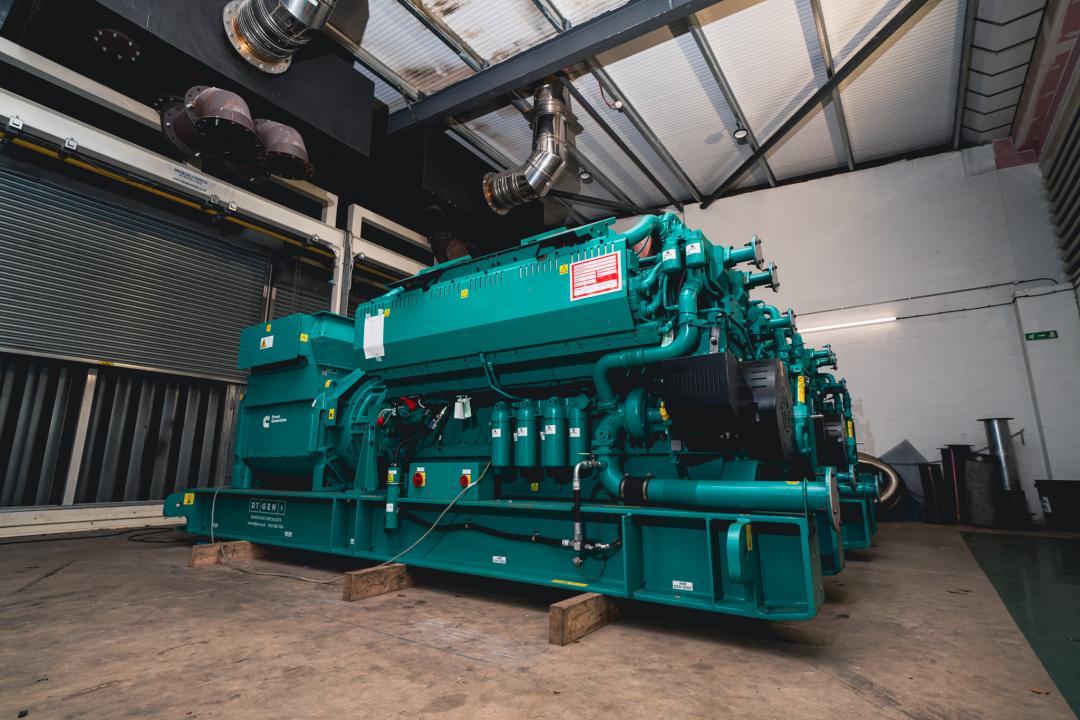
A standby generator can't predict when it will be called on and obviously isn't running continuously. Generally, if the main supply fails, there’s a short break in supply while the set starts, comes up to speed and takes the load. That happens within seconds, but it isn't instantaneous.
For a lot of applications, those few seconds of latent supply don’t matter. But for safety-critical signalling, it can be the difference between riding out a disturbance and triggering a full shutdown. This is where an uninterruptible power supply comes in.
Where a load is genuinely critical and even a few seconds of interruption is unacceptable, an uninterruptible power supply (UPS) sits between the mains and the equipment. A UPS is essentially a very fast battery system that steps in the instant the mains drops, holding the critical load while the generator starts and takes over.
Data centres are the obvious parallel. They invest heavily in UPS protection because they operate to a zero-downtime standard and can't afford even a few seconds without power. Safety-critical signalling belongs in the same category of thinking, and the best rail installations will be designed around it.
Our own work on the Borders Railway is a good illustration of how this looks in practice. When the line reopened, the longest new domestic railway built in Britain in over a century, we supplied and installed generating sets at six principal signal points, each paired with a UPS and configured with front and back synchronisation to keep disruption to critical power to an absolute minimum. That combination, generator plus UPS designed together, is what genuine resilience for signalling requires.
Available isn’t the same as connected
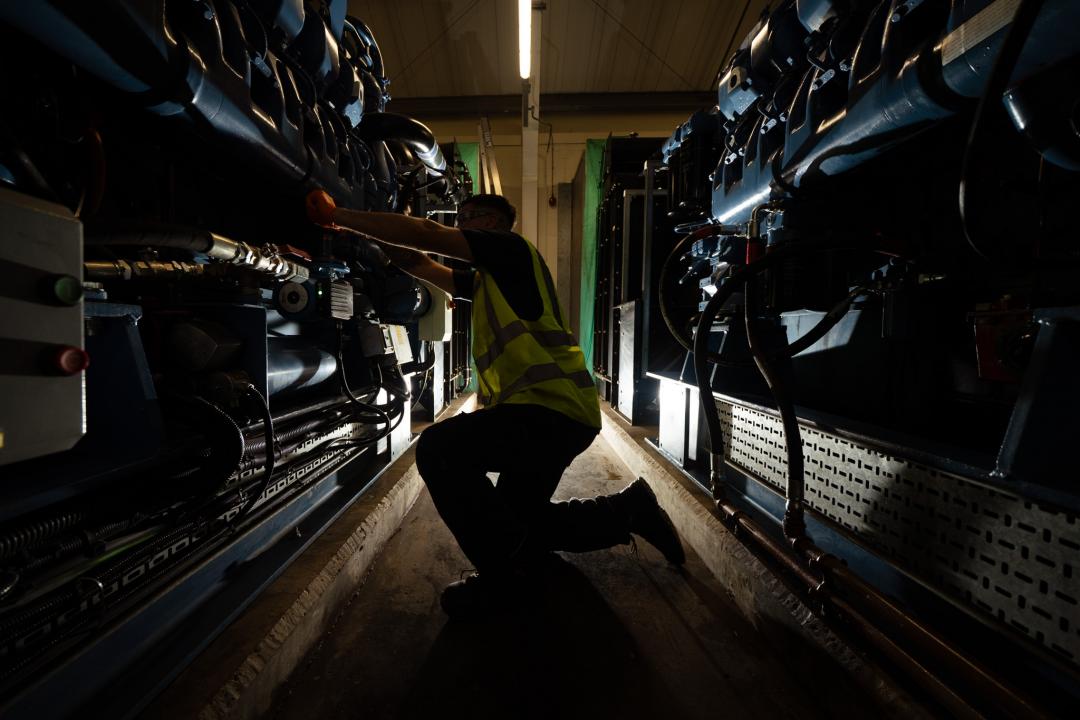
There's a second potential point of failure that is often not recognised, and it's one of the more common reasons backup systems can fail. A generator can be running perfectly, up to speed and ready to take load, but the site can still go dark. The reason is the changeover switch, or automatic transfer switch.
In a standby arrangement, the generator has no direct link to the mains. The changeover switch is what monitors the incoming supply, signals the generator to start when it senses a failure, and then breaks the connection to the failed mains and makes the connection to the generator once the set is ready. If this switch fails to complete the transfer, through a fault in its mechanism or because its control logic has never been properly tested, the set will run without supplying power to the site. Externally the assumption will be the generator has failed, but the breakdown is as simple as a failed transfer.
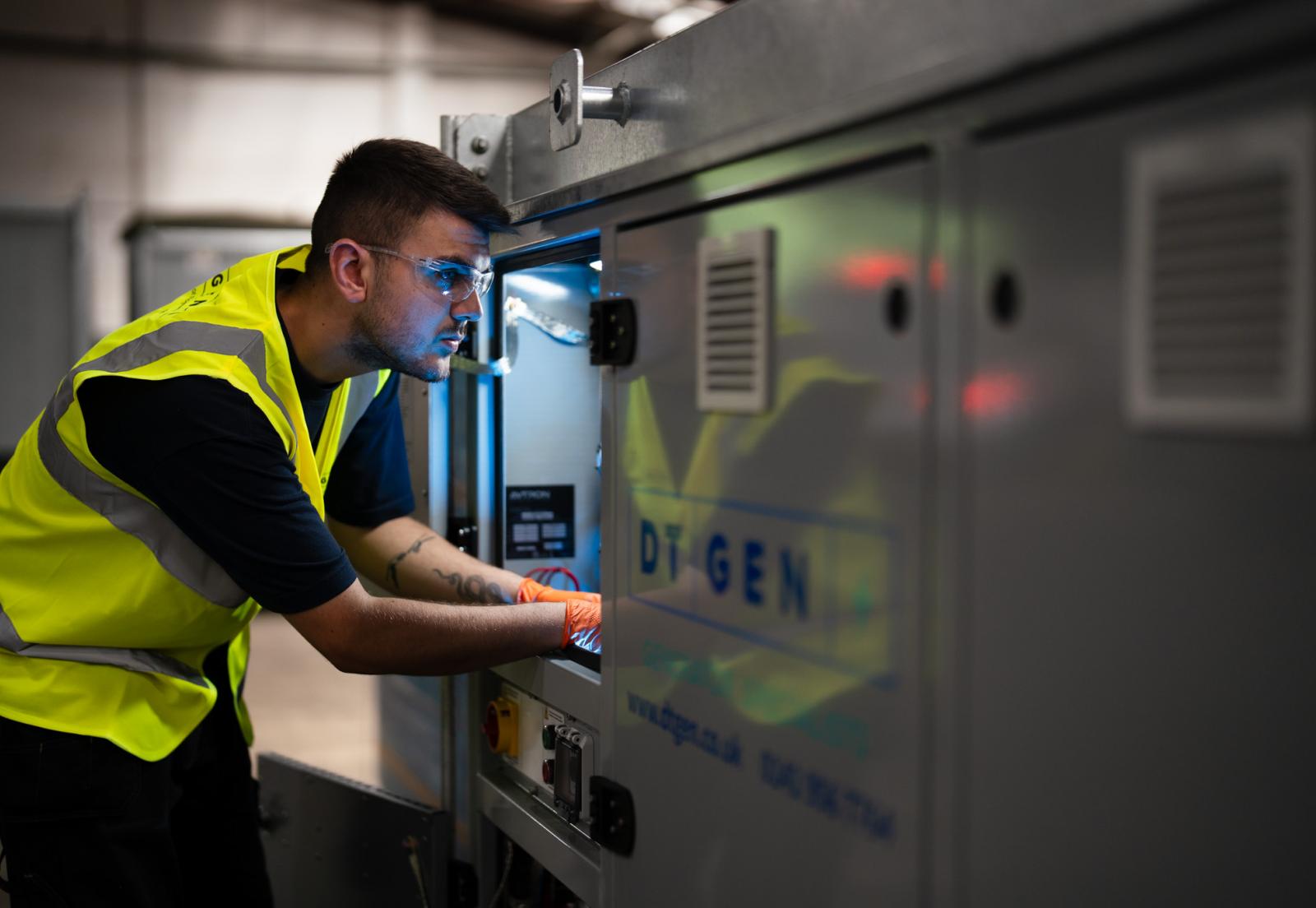
This is why the control system deserves as much care and attention as the generator itself. Across the Network Rail installations we have been responsible for, we’ve built bespoke control systems for each site, with dual-controller resilience and full G99 synchronising, so the transfer is engineered for the specific location rather than assumed. On a railway, where sites vary enormously in size, access and spatial constraint, that site-by-site design is crucial.
Managing the maintenance timetable
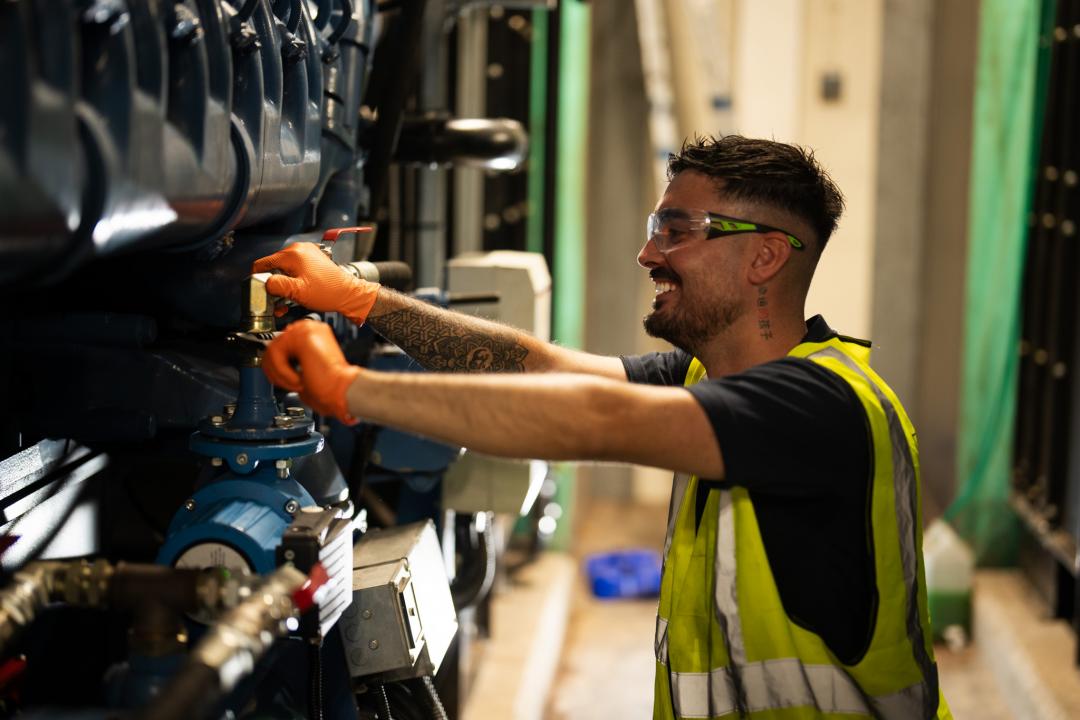
Specification tends to get proper attention up front; the generator rating, the coverage, the criticality of the transfer time. These are usually addressed carefully at the design stage. Often the issues arise later, as once a set is commissioned, it can be effectively forgotten, and the maintenance routine can slip.
Any interruption to maintenance can become a false economy, because a generator is obviously only as good as the infrastructure around it and only as reliable as its upkeep. Starter batteries that aren't maintained, or fuel quality that isn't monitored, or the entire system checked by running the set on load, can produce a generator that fails to start in the one scenario it exists for. Good maintenance practice means more than a weekly visual check for leaks and obstructions, valuable as that is. It means running the set on load every month to confirm it can deliver stable output under real conditions, and a longer full-load test each year to prove it still meets its rating. It’s also important that the set is genuinely loaded when tested. A diesel engine that only ever runs off-load or lightly loaded can start to wet stack, where unburnt fuel collects in the exhaust and undermines reliability over time, so a meaningful load needs to go through the set. Remote monitoring is important too; our rail installations come with remote access and monitoring as standard, in some cases controllable from a mobile app, so a developing fault can be caught before it becomes a failure. But robust, on-site, investigative maintenance is the foundation for avoiding failure.
Track record
DTGen has worked in the rail sector for many years and delivered more than 25 key projects for Network Rail, including Edinburgh Waverley, Glasgow Queen Street, Aberdeen, the Highland Main Line and the Borders Railway. We're a framework-approved supplier of power generating equipment for Network Rail, and we hold PADS approval, the specific approval required to supply generating equipment to Network Rail, with most of that work reaching sites through contractor partnerships.
No single supplier is behind every installation on the network, and resilience is a shared responsibility across a long supply chain.
Keeping a railway running through a power failure isn't the work of one generator or one supplier. It's the product of good specification, the right pairing of generator and UPS, a transfer system that has been designed and tested for the site, and a maintenance regime that's carefully followed.
Get those right and a mains failure becomes a non-event that passengers never hear about. Get them wrong and, as the north-west has shown, a brief interruption can turn into days of disruption and a serious dent in public confidence.
The value of backup power is measured in the interruption it avoids.
Chris Connors, Project Sales Director, DTGen
Based in the Midlands, Chris is focussed on building the DTGen business throughout England and Wales. He has worked in the power generation sector for more than 25 years with tenures in both national and international senior technical sales roles. His project experience includes a multi-megawatt, high voltage, generator installation for numerous generator projects across the rail, finance and data centre markets.