The UK Government is stepping up efforts to reposition HS2 as a world-class high-speed railway, drawing direct inspiration from Japan’s renowned Shinkansen network. Following a recent visit to Japan, Transport Secretary Heidi Alexander has set out a renewed ambition to deliver a faster, more efficient HS2—both in performance and delivery.
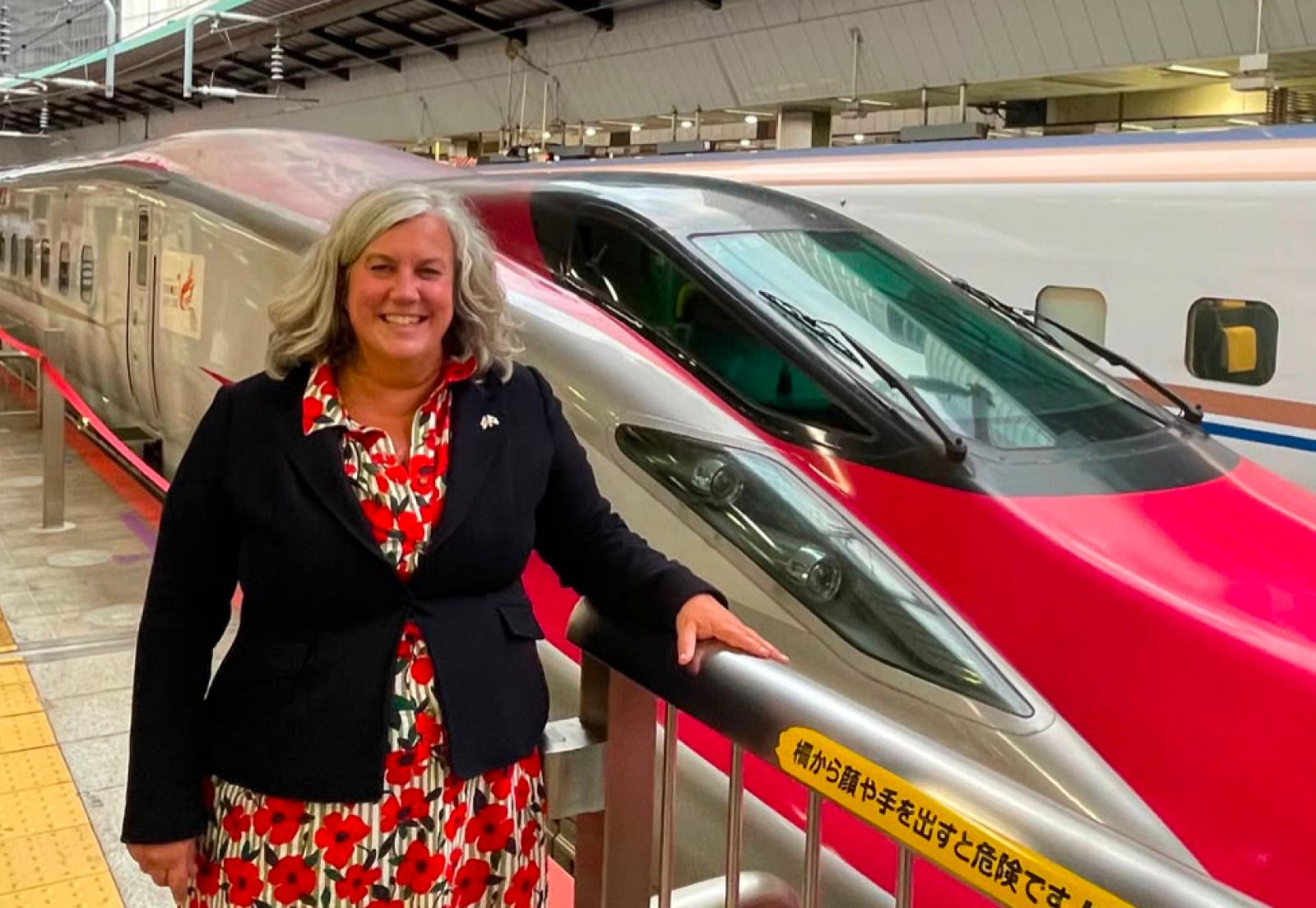
During her trip, the Transport Secretary travelled onboard the Shinkansen between Tokyo and Osaka, gaining first-hand experience of the operational excellence that has defined Japan’s high-speed rail system for decades. The visit comes shortly after confirmation that HS2 will match the Shinkansen’s top operating speed of 320 km/h (200 mph), a move expected to unlock both cost and programme efficiencies.
Speed Alignment Brings Cost and Time Savings
Aligning HS2’s design specifications with Japan’s bullet train technology could save up to £2.5 billion and shorten delivery by at least a year. This marks a significant shift in the Government’s approach to the programme, as it seeks to rebuild confidence following years of scrutiny over cost overruns and delays.
The emphasis is now firmly on delivering tangible benefits earlier—boosting connectivity, reducing journey times, and supporting regional growth.
Learning from Japan’s Integrated Rail Economy
While speed is a key headline, the visit also highlighted a broader ambition: to emulate Japan’s success in integrating rail infrastructure with economic development. Japanese station hubs are widely regarded as catalysts for urban growth, supporting retail, housing, and commercial activity at scale.
These insights are expected to directly inform the redevelopment of London Euston, where a new delivery model—led by private investment through the Euston Delivery Company—aims to transform the station into a major economic engine.
According to forecasts from Camden Council, the Euston project could:
- Deliver at least 2,000 new homes
- Support 34,000 jobs
- Contribute £41 billion to the UK economy
Strengthening UK–Japan Rail Collaboration
The visit also included high-level meetings with Japanese ministers and industry leaders, including a tour of Hitachi’s Tokyo headquarters. The UK already has strong ties with the manufacturer, whose Newton Aycliffe facility in County Durham employs around 600 people and plays a key role in UK rolling stock production.
Discussions extended beyond HS2, covering the challenges of delivering multiple large-scale rail projects simultaneously—an issue highly relevant as the UK progresses not only HS2 but also Northern Powerhouse Rail and other strategic infrastructure programmes.
Resetting HS2’s Direction
The Government’s “reset” of HS2 is positioned as a turning point for the project, focusing on improved governance, cost discipline and delivery certainty.
Transport Secretary Heidi Alexander said:
"It’s easy to see why Japan’s iconic bullet trains are so loved and I want Britain to match them.”
“Running at bullet train speeds is just the start - our reset of HS2 is ending years of waste and mismanagement, taking control of costs and delivery, and making sure the railway delivers real benefits for passengers, communities, and the economy.
“By aligning the UK’s own dedicated high-speed line with the Shinkansen, we could save up to £2.5 billion and cut at least a year from the delivery timeline, meaning passengers and communities benefit sooner.”
Industry Implications
For rail professionals across the UK, this renewed alignment with international best practice signals a more pragmatic and delivery-focused phase for HS2. It reinforces the importance of:
- Standardisation in design and engineering
- Leveraging global expertise
- Integrating infrastructure with wider economic planning
As HS2 moves into its next phase, the challenge will be translating ambition into delivery—while maintaining stakeholder confidence and demonstrating clear value for money.
Image credit: Department for Transport