

HS2 engineers have delivered a major civil‑engineering milestone with the completion of the northern porous portals at the Chiltern Tunnel—specialist structures designed to prevent ‘sonic boom’ effects as HS2 trains enter the tunnel at speeds up to 200mph.
Located near Great Missenden in Buckinghamshire, the two newly finished northern portals match those completed earlier this year at the southern end of the 10‑mile tunnel. Together, the four structures form a critical component of HS2’s high‑speed rail system, supporting safe, quiet and reliable operations beneath the Chiltern Hills.
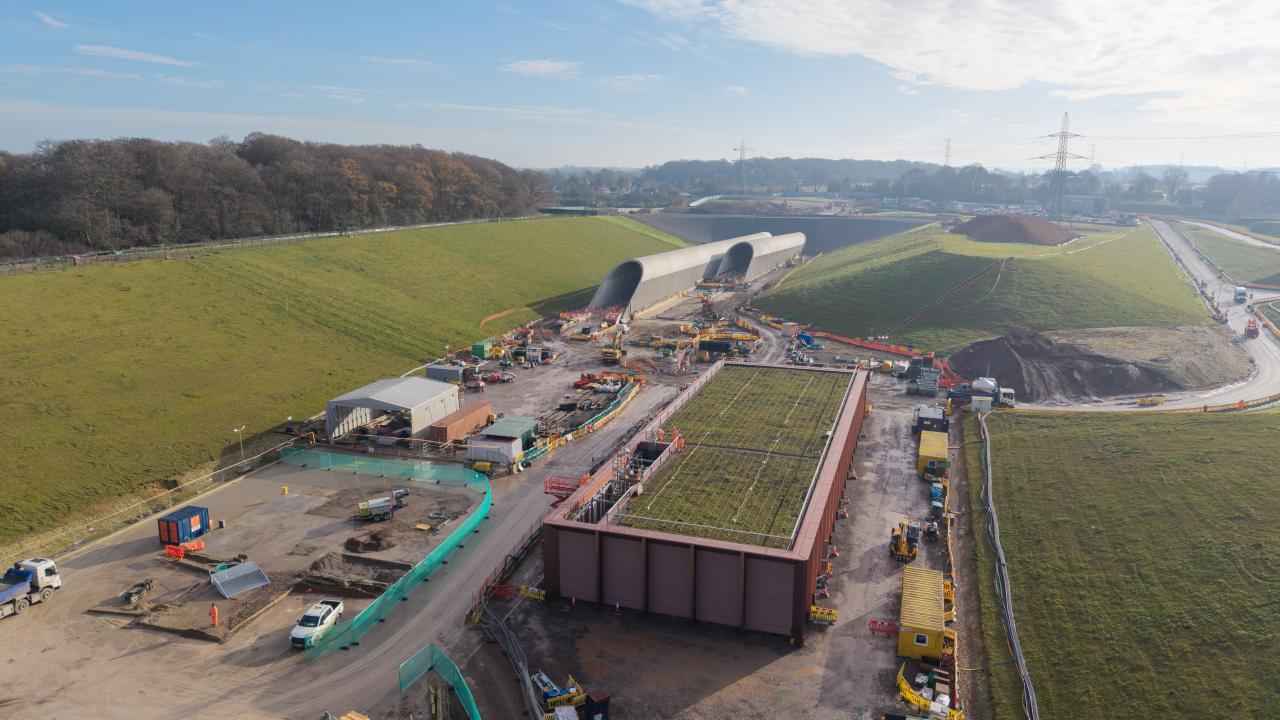
Knowledge Sharing Helps Deliver Northern Portals in Half the Time
The northern porous portals were delivered by Align JV—HS2’s main works civils contractor for this stretch of the route, comprising Bouygues Travaux Publics, Sir Robert McAlpine and Volker Fitzpatrick.
After handing over the southern portals, the same specialist engineering team moved directly to the northern site. By applying lessons learned and refining construction techniques, the team achieved a substantial productivity improvement: reducing build time from 20 months to just 12.
Mark Clapp, HS2 Ltd’s Head of Civils, said:
“I am extremely proud of the team because they rose to the challenge of constructing these unique porous portals at the Chiltern Tunnel’s southern end – and then built on the experience to do even better by delivering identical structures 10 miles to the north in a little over half the time.
They have clearly demonstrated the benefits that flow from retaining skilled people by providing a steady stream of work because this helps drive efficient project delivery – in short, they haven’t had to reinvent the wheel.”
Jean‑Lou Grenard, Align’s Porous Portal Lead Engineer, added:
“The porous portal team at Align has demonstrated exceptional commitment and expertise over the past three years. By embracing collaboration and actively applying lessons learnt from the construction of the south porous portals, we have significantly enhanced productivity during the build of the north porous portals.”
Engineering Out the High‑Speed ‘Sonic Boom’
At speeds approaching 200mph, trains entering tunnels generate powerful micro‑pressure waves, which—if unmanaged—can exit the opposite end as a noticeable ‘thud’. While not a concern on conventional railways, this phenomenon is significant at high‑speed rail velocities.
HS2’s solution is the use of specially designed porous portals, extending up to 220 metres and featuring precisely spaced ventilation openings. These allow displaced air to escape gradually, mitigating any sonic boom effect and ensuring quieter operations for communities along the route.
A Key Milestone for Britain’s New High‑Speed Railway
The Chiltern Tunnel is the longest of HS2’s five twin‑bore tunnels between London and Birmingham. Once services begin, HS2 trains are expected to travel through the 10‑mile tunnel in around three minutes.
Beyond journey‑time savings, HS2 is designed to free up significant capacity on the West Coast Main Line, enabling more local, regional and freight services—supporting long‑term modal shift and rail‑network resilience.
While civil engineering progress continues across the route, HS2 Ltd remains in a wide‑ranging programme reset led by Chief Executive Mark Wild, focused on delivering the project more efficiently and reducing overall cost.
Image credit: HS2