
Transport for London (TfL) has confirmed that more stations and tunnelled sections of the Tube network now offer high-speed mobile coverage, marking a significant step forward in connectivity for passengers. This latest milestone includes the first sections of the Circle and District lines going live.
The rollout follows the completion of the Elizabeth line in December 2024, which became the first fully connected line. Today, 62 out of 121 underground Tube stations now provide mobile coverage in ticket halls, corridors, and platforms. Key stations such as Euston Square, Cannon Street, and Battersea Power Station have recently gone live with 4G and 5G services. More stations—including King’s Cross St Pancras, Gloucester Road, Warwick Avenue, and Vauxhall—are expected to join them in the coming months.
Progress is also being made in tunnel coverage. The first sections of the Circle and District lines between Blackfriars and Cannon Street, and Notting Hill Gate and Bayswater, are now live. TfL and Boldyn aim to introduce additional sections throughout 2026, with the vast majority of the Northern and Metropolitan lines expected to have tunnel coverage by the end of summer.
All four major mobile network operators—Three UK, EE, Vodafone, and Virgin Media O2 (VMO2)—are participating in the rollout. The initiative supports the Mayor and TfL’s commitment to deliver mobile connectivity across London’s transport network. The infrastructure will also host the new Emergency Services Network (ESN), enabling first responders to access critical data and images during emergencies.
TfL and Boldyn are working to extend coverage beyond the Tube, including the Docklands Light Railway (DLR), Elizabeth line, and the Windrush line between Highbury & Islington and New Cross. Following interoperability testing across all Tube lines in 2025, design and initial testing for the Windrush line and DLR are underway, with coverage expected later this year. Installation work is already in progress at Cutty Sark, coordinated with planned escalator upgrades.
The programme will continue throughout 2026, focusing on the Circle and District lines, as well as the Victoria, Jubilee, Bakerloo, and Piccadilly lines. Work will also extend to smaller tunnelled sections outside central London. Both TfL and Boldyn remain committed to achieving full network coverage by the end of 2026.

Isabel Coman, Director of Engineering and Asset Strategy at TfL, said:
“It’s great to see further progress in our goal to introduce high-speed mobile coverage across our Tube network. The latest stations and tunnels going live means that we are on a clear path towards having 4G and 5G mobile coverage across the whole network by the end of 2026. Engineers are working hard overnight during the limited engineering hours to deliver this programme and we hope that customers enjoy benefitting from being able to stay in contact with friends and family, shop online and stay on top of the latest news and sports results while travelling across London.”
Nick Hudson, Chief Operating Officer for the UK & Ireland at Boldyn Networks, added:
“Our long-term partnership with TfL to extend reliable 4G and 5G mobile coverage across the London Underground is grounded in improving everyday journeys for millions of people.”
“A project of this scale demands extraordinary engineering effort and close-knit collaboration with TfL, with work often carried out overnight in one of the world’s most complex transport networks.”
“We’re immensely proud of what’s been achieved so far, and each section completed brings us closer to our goal of creating a more connected London for those who visit the city and those who call it home.”
Deputy Mayor for Transport, Seb Dance, commented:
“I am delighted to see the promise the Mayor made of delivering 4G and 5G across the London Underground continuing to progress, with Euston Square, Cannon Street and Battersea Power Station joining an ever-growing network of lines and stations with full connectivity.
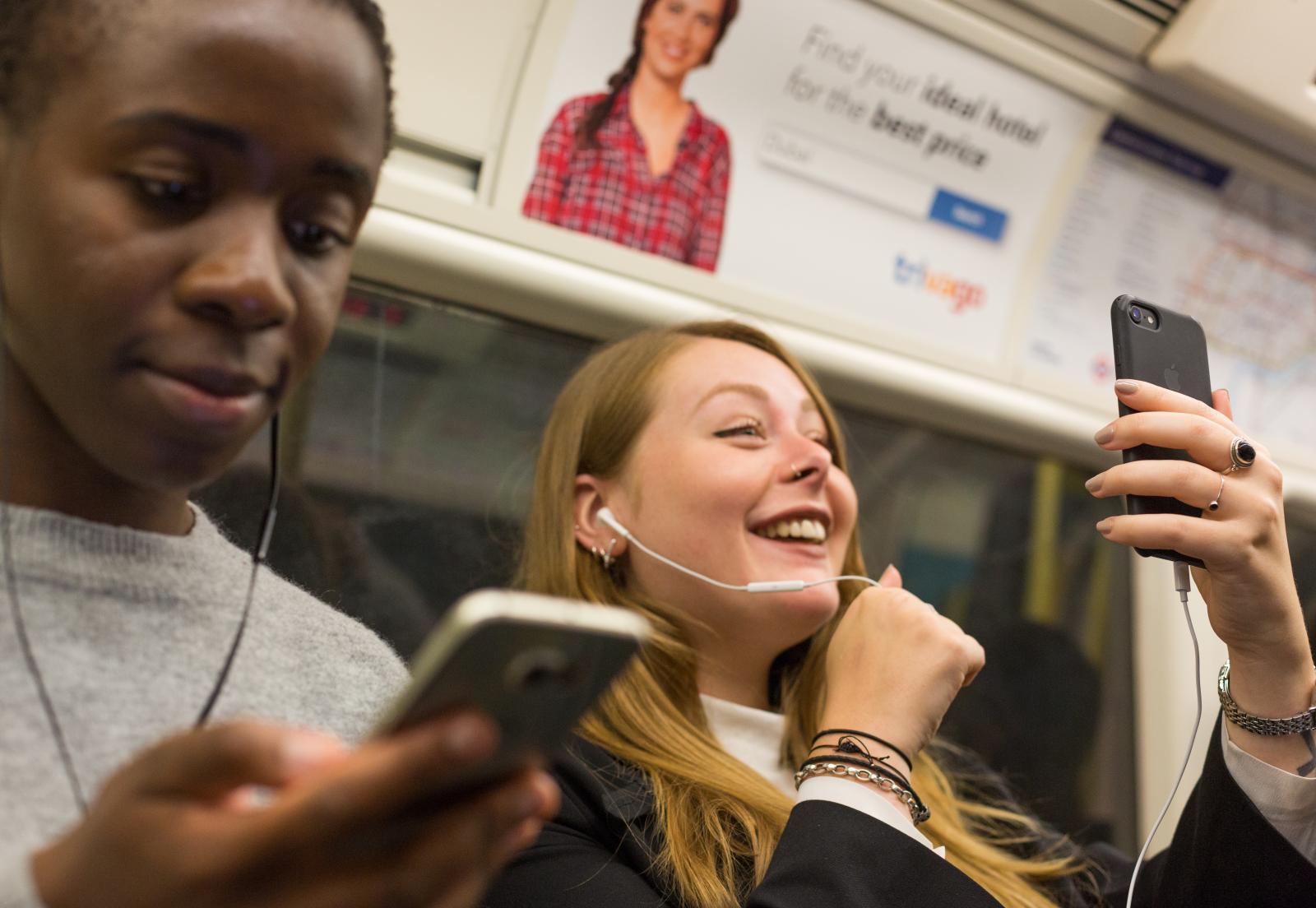
This means Londoners and visitors can now access the latest travel information or social media, check their emails, make calls, and stream videos whilst on the move underground. Growing numbers of underground Tube stations now have 4G and 5G services, with more to come as we continue to build a better London for everyone.”
Chris Hayward, Policy Chairman at the City of London Corporation, said:
“The City of London is one of the most important financial centres in the world, the economic heart of the United Kingdom, and London’s central business district, so we welcome Transport for London’s continued expansion of high-speed mobile coverage across the Square Mile.
With around 8,700 residents, 21 million visitors annually, and home to more than 678,000 workers, it is more important than ever that we have reliable connectivity. As part of our Destination City vision, the expansion of 5G will help the Square Mile remain a globally attractive place for businesses, attract workers back to the office, and be a place that people want to live, work, learn and explore.”
Boldyn Networks, one of the world’s leading neutral host network providers, was awarded a 20-year concession by TfL in June 2021 to deliver high-speed mobile connectivity across the entire London Underground. Around 400 engineers are working overnight to deliver the project during limited engineering hours. Boldyn is also installing a fibre backbone across the capital to improve connectivity above and below ground, bringing socio-economic benefits to businesses and communities.
In addition, TfL and Boldyn are deploying small-cell technology on TfL assets such as lighting columns to boost mobile connectivity in high-footfall areas. Locations including King’s Cross, Waterloo, London Bridge, Old Street, The Shard, and Hyde Park Corner are already benefiting from this work, supporting the Mayor’s manifesto to improve digital connectivity and drive innovation, productivity, and growth.
Image credits: TfL