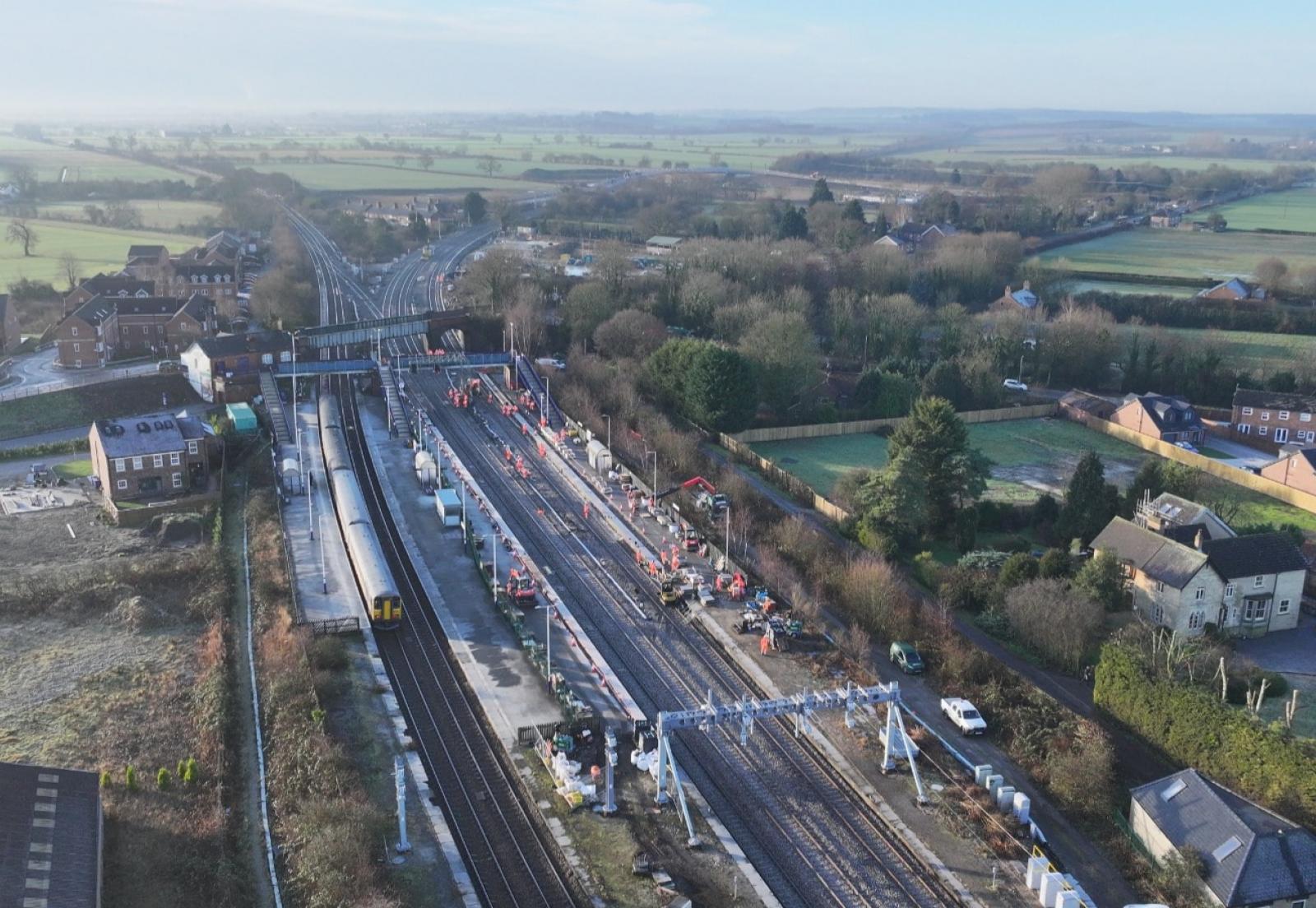
The Transpennine Route Upgrade has hit a major milestone, successfully completing 32 days of intensive engineering works designed to transform travel across the North of England.
The multi-million-pound project saw an "army" of hundreds of engineers working around the clock to install 70 new signals, renew 3km of track, and upgrade critical overhead line equipment. These improvements are the building blocks for a faster, more frequent, and fully electrified "green" railway connecting the region's major hubs.
Church Fenton served as the focal point for the month-long blockade. Significant remodelling of the tracks and the re-alignment of platforms 3 and 4 were completed, which will allow for higher line speeds and shorter journey times in the future.
Key infrastructure additions include:
- New Passing Loop: A critical addition that allows fast, direct services to overtake stopping trains, significantly boosting overall route capacity.
- Advanced Signalling: 70 operational signals now provide a more resilient and reliable network.
- Massive Logistics: The project utilised 879 rail wagons, 45 engineering trains, and three heavy-duty cranes to deliver the works.
Recognising the impact on passengers, TRU invested £100m in diversionary routes to ensure as many people as possible could stay on trains during the closure.
Throughout the 32-day period:
- Over 1,600 train journeys were successfully rerouted via Castleford.
- A fleet of 300 buses and coaches provided 1,400 rail replacement journeys to keep commuters connected.
TRU Managing Director, James Richardson, commented:
“It’s great to have completed these critical railway upgrades, between Leeds and York. Facing all weathers, our teams worked around the clock during the Christmas period and through January, delivering a host of improvements for passengers, safely and on time.
“Our work highlights the impact we are making in transforming the railway in the North of England, helping to enable economic growth, while building future capability for major projects.
“We have had a strong start to the year, and 2026 will have even more benefits being delivered for passengers. We’d like to thank customers and our local communities for their understanding, as we completed this essential work.”
The installation of overhead line equipment is a major step toward the electrification of the route. By moving away from diesel-only services, the TRU is delivering a more sustainable transport network that supports the UK’s net-zero ambitions while providing the reliable service passengers in the North deserve.
Image credit: Network Rail
Video credit: Network Rail