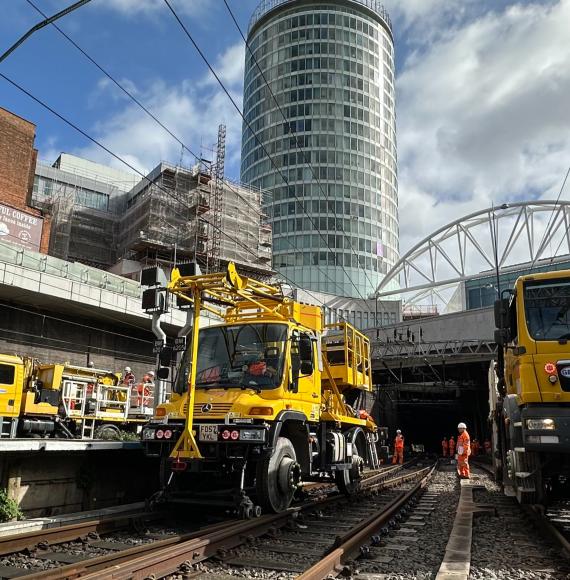
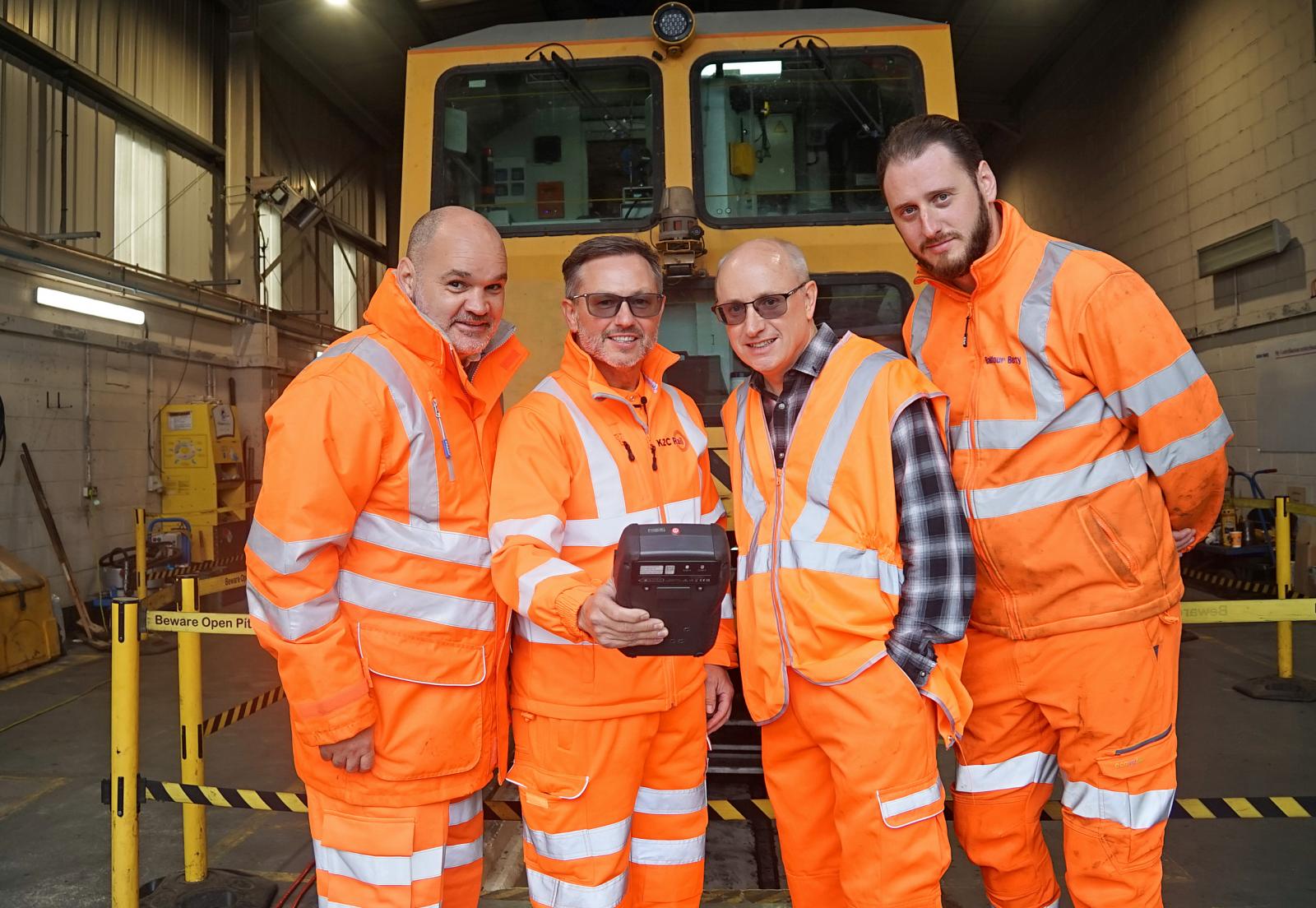

Balfour Beatty has successfully completed a pioneering trial of Engine Carbon Clean (ECC) technology on a Plasser & Theurer compact tamper, marking a significant step toward reducing carbon emissions and improving engine performance across the rail sector.
ECC uses an innovative, patented on-demand hydrogen generator to clean combustion engines internally by removing carbon build-up. The process works by piping hydrogen into the air intake, allowing the engine to draw in what it needs on demand. This simple intervention can dramatically improve fuel efficiency while reducing harmful emissions, including CO₂, CO, NOx, and N₂O.
As the first infrastructure company to apply ECC to rail-mounted plant, Balfour Beatty is tackling Scope 1 emissions head-on. The trial simulated a full year of usage aligned with standard maintenance cycles and delivered a 15.79% reduction in emissions. Following this success, the company plans to roll out ECC across its entire tamper fleet.
George Chaplin, Investment & Innovation Manager at Balfour Beatty, said:
“ECC is a simple and non-intrusive solution that fits seamlessly into our servicing schedules without disrupting workflows. By extending engine life, reducing maintenance requirements, and lowering fuel consumption, ECC delivers measurable carbon and cost savings while minimising downtime – making it a smart, sustainable investment for our fleet.”
Ben Kattenhorn, CEO of Engine Carbon Clean (by Advanced Hydrogen Technologies), added:
“The technology is already proven on road vehicles with similar engine types, achieving fuel and CO₂ savings between 8-30%, but working with rail experts K2C Rail (and their partners 1stinrail, part of the industry leading RSK Group, who also support our technology) means the ECC team are also fully aware of rail procedures, so it’s a slick and BAU service. Rail is one of the sectors most under scrutiny, but ECC offers an immediate solution – also restoring engine efficiency and power, extending the lifespan of assets and fully aligning with the new ESG compliance requirements of the International Financial Reporting Standards mandate.”
For more on ECC’s impact on Scope 1 and Scope 3 emissions, watch this video featuring Balfour Beatty Environmental Sustainability Manager Jonathan Turner and K2C Rail MD Tony Kearns:
The ECC system generates oxyhydrogen gas on demand using simple tap water electrolysers. This gas is fed into the engine during operation, cleaning components all the way to the diesel particulate filter (DPF). The reaction between hydrogen, oxygen, and heat effectively “pops” carbon deposits off internal surfaces, including pre-combustion parts.
Image and video credit: Balfour Beatty