As Rail Safety Week continues, renewed focus is being placed on the ongoing impact of trespass, vandalism and cable theft on railway performance. Across the Anglia route, these incidents remain among the most persistent causes of disruption — accounting for more than 143,000 delay minutes in 2025/26 alone.
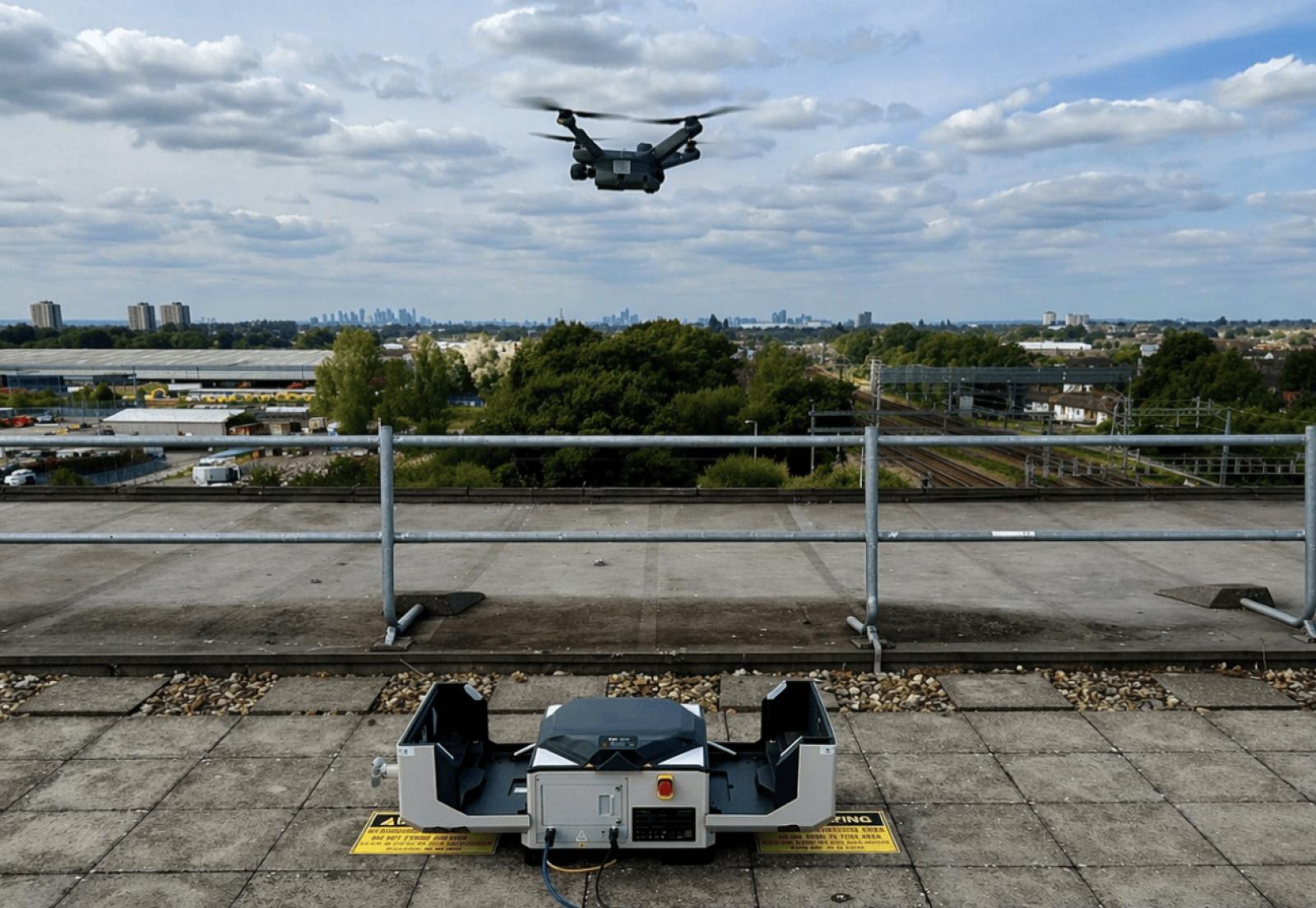
In response, GBR Anglia is set to trial beyond visual line of sight (BVLOS) drone technology from late summer 2026, beginning in Romford. The initiative is designed to strengthen incident response, improve infrastructure monitoring and ultimately enhance reliability for both passenger and freight services.
A Step-Change in Incident Response
The deployment marks a significant shift in how the industry manages operational risks linked to trespass and asset damage. Approved by the UK Civil Aviation Authority (CAA), the trial forms part of Anglia’s integrated railway approach — bringing together Network Rail, c2c and Greater Anglia to improve coordination between infrastructure and train operations.
Operated by specialist supplier heliguy™, the drones are the result of 16 months of development work. They will deliver live aerial coverage up to 400 metres from Romford Rail Operating Centre, enabling teams to assess incidents far more rapidly than with conventional drone systems. This also reduces the need for frontline staff to access high-risk trackside environments.
Advanced Monitoring and Predictive Maintenance
Beyond incident response, the BVLOS drones are equipped with high-resolution thermal imaging cameras, allowing teams to detect early signs of wear or damage across:
- Track assets
- Drainage systems
- Structures
- Lineside equipment
This capability supports a more proactive maintenance regime, identifying faults before they escalate into performance-impacting failures.
There are already ambitions to expand operations further, with potential flights of up to four kilometres across strategic locations on the Anglia route.
Wider Trials and Network-Wide Implications
A parallel BVLOS trial will also take place on Network Rail’s Western route in Gloucester. Insights from both locations will inform future rollout decisions and help determine how drone technology can underpin a more agile and efficient railway.
Ultimately, the programme aims to reduce disruption, improve response times and deliver a safer, more resilient network.
Industry Perspective
Richard Barke, route crime and security manager for Network Rail’s Anglia route, said:
“Trespass, vandalism and cable theft are some of the biggest causes of delay for passengers across the East of England."
“The learning from Romford will help us understand how this technology could support faster and more effective incident response across the Anglia route in the future.
“That means better coordination between route crime teams, operations and response teams, so we can deal with incidents more quickly and keep disruption to a minimum for passengers.”
Image credit: Network Rail