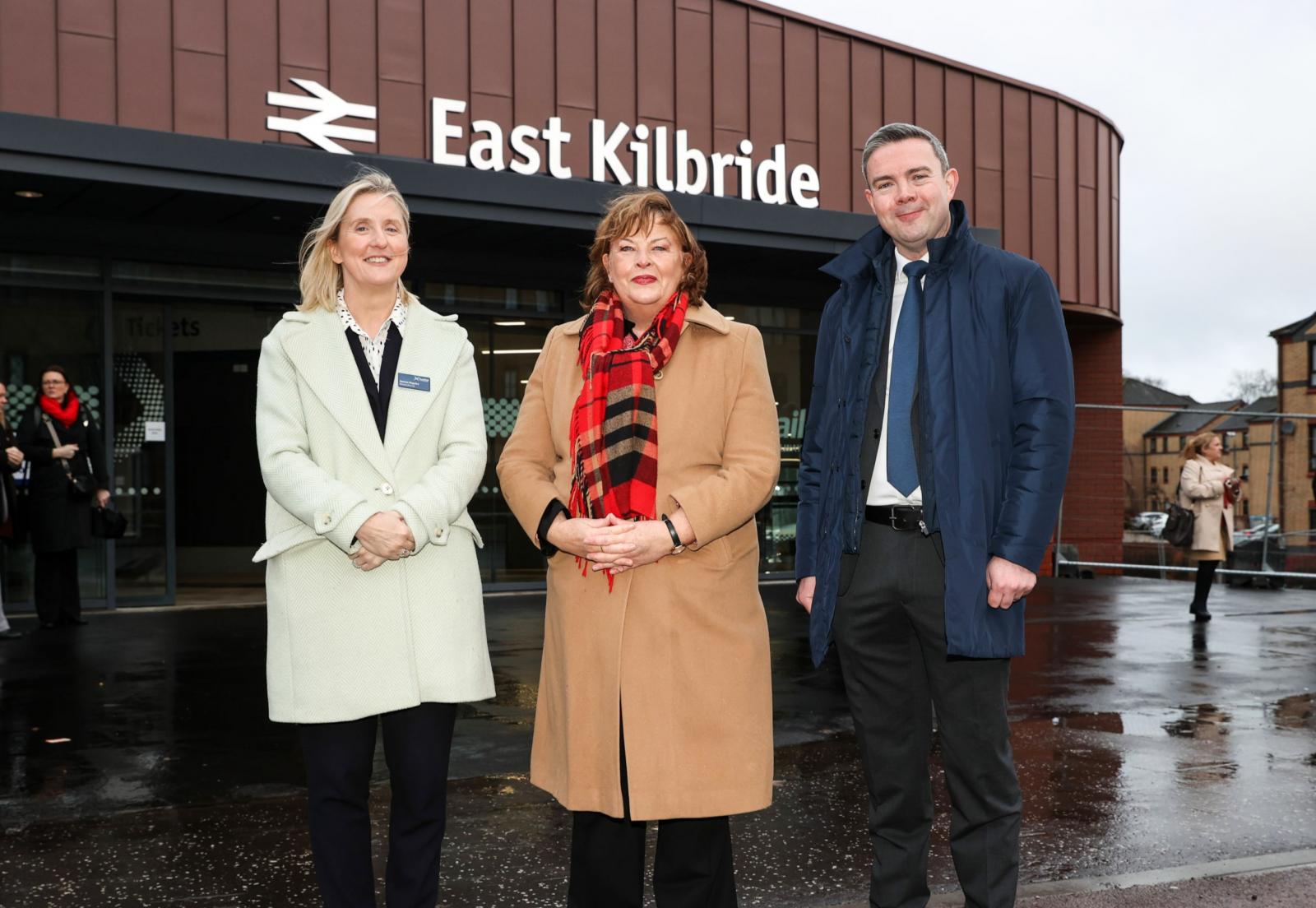

Passengers travelling between East Kilbride and Glasgow will experience a cleaner, quieter, and more reliable railway from this weekend as electric trains begin operating on the route.
The first electric services will run on Sunday 14 December, marking the completion of a £144 million Scottish Government investment to modernise the line and deliver a more sustainable transport network.
For thousands of daily commuters, students, and families, this upgrade means a more comfortable and greener way to travel—whether it’s commuting to work, heading to school or university, or enjoying leisure time in East Kilbride, Glasgow, and the communities in between.
The improvements go beyond electrification. New stations at Hairmyres and East Kilbride now offer step-free access and enhanced facilities, ensuring the line is better equipped to serve the communities that depend on it.
The project’s completion was celebrated at Glasgow Central, where project teams, stakeholders, and local representatives gathered before boarding an electric train for a commemorative journey to East Kilbride.
Cabinet Secretary for Transport, Fiona Hyslop, said:
“This £144m Scottish Government investment in this transformational project on the East Kilbride route brings significant improvements in stations, infrastructure, and services. It will attract new and existing passengers for years to come, making rail a more appealing choice for communities across this area.
I want to thank all the teams that have played a part in its delivery, as well as extending my gratitude to passengers and lineside neighbours for their patience while the work took place.”
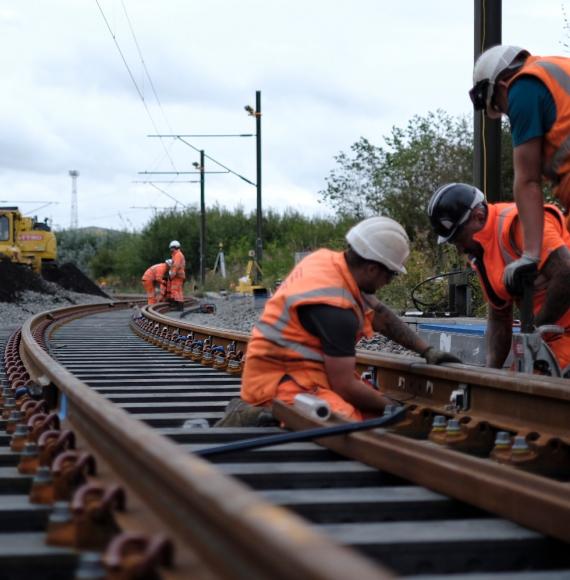
Over the past two years, Network Rail has worked with contractor partners including SPL Powerlines, AmcoGiffen, Story, QTS, Rail Systems Alliance Scotland, and Siemens to deliver the work. The project included:
- Electrification of the railway from Glasgow to East Kilbride
- A new station at East Kilbride
- A new station with two platforms and accessible footbridge at Hairmyres
- Replacement of the road bridge next to Thornliebank station
- A new footbridge at Busby station
- Improved access at Giffnock with a new accessible footbridge
- A new footbridge at Clarkston and improved access to Platform 2
Gerry McQuade, Capital Delivery Director at Network Rail Scotland, said:
“The completion of our East Kilbride to Glasgow investment programme marks the latest milestone in the story of Scotland’s Railway.
This has been a major transformation. New stations, better facilities, better accessibility, modern infrastructure and electric trains. But together, this project is about more than tracks and trains – it’s about communities. Making it easier for local people to choose rail, meaning fewer road miles and stronger connections between communities, towns and Scotland’s largest city.
I want to thank passengers and our lineside neighbours for their patience and support throughout the project. This is your railway, delivered together, and I hope everyone involved feels proud of the role they’ve played in shaping a railway fit for the future.”
Joanne Maguire, ScotRail Managing Director, added:
“Today marks another important milestone for Scotland’s Railway.
As we introduce electric trains on the East Kilbride line following the successful completion of this major electrification project, customers will start to see the benefits straight away.
The move to class 380 trains will mean smoother, quieter, and more sustainable journeys for everyone who relies on the route—whether they’re travelling to work, heading to school or university, or visiting family and friends.
With new stations at East Kilbride and Hairmyres, and improved accessibility at Busby, Giffnock, and Clarkston, the line is now better equipped to support the growing communities it serves.
We’re grateful to customers for their patience throughout the works, and we’re excited to welcome them on board this upgraded and improved railway line.”
This project demonstrates the scale and complexity of delivering electrification and station upgrades in a live operational environment. It highlights the importance of collaboration between government, Network Rail, contractors, and operators to achieve sustainability goals and improve passenger experience.
Image and video credit: Network Rail