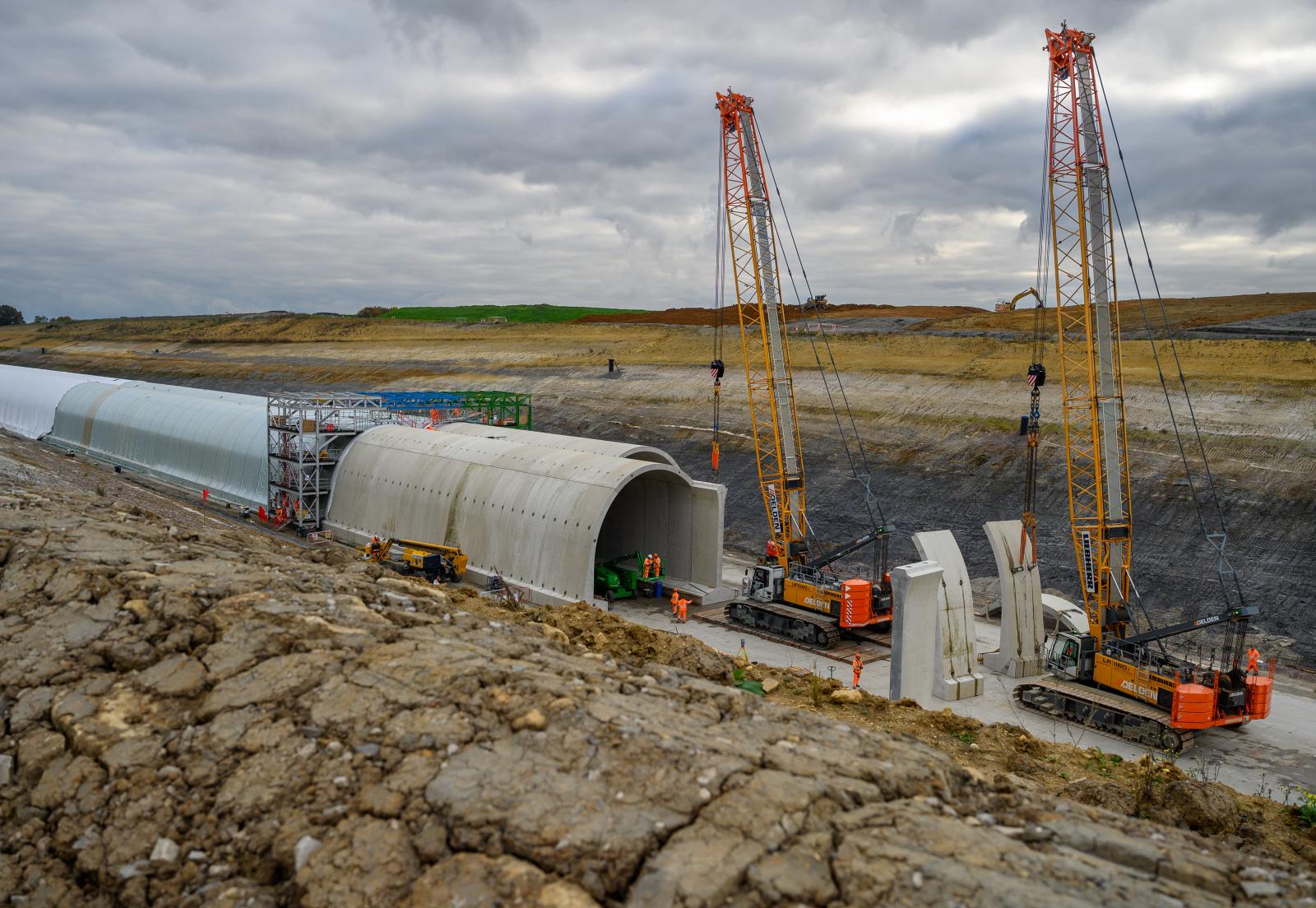

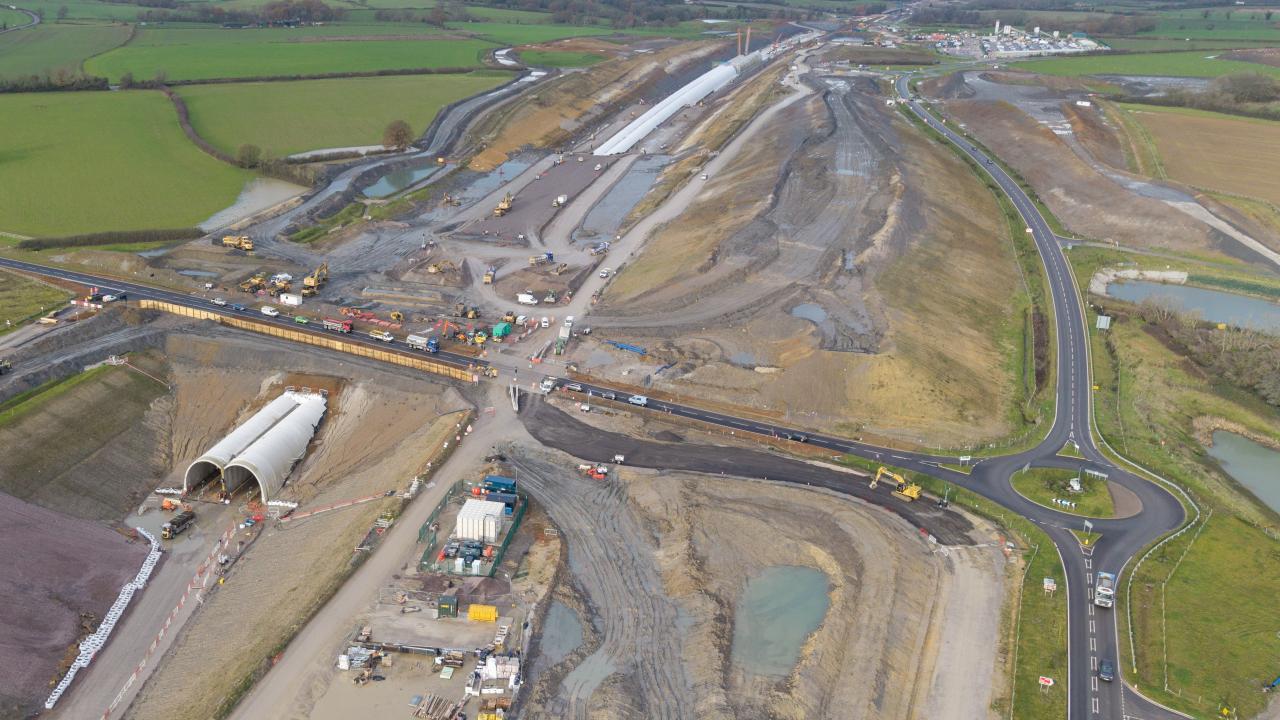
Construction of HS2’s longest green tunnel has reached a significant milestone this week, with the temporary realignment of the B4525 opening to traffic and clearing the way for the next phase of excavation.
Stretching 2.7km, the Greatworth tunnel is being delivered using a cut-and-cover method: engineers excavate a shallow cutting, assemble the tunnel structure, and then reinstate the earth above to blend the railway into the surrounding landscape.
Productivity Gains from Chipping Warden Lessons
The tunnel is being built from precast concrete segments in an ‘M’ shape, providing separate bores for northbound and southbound trains. Inspired by similar designs on the French high-speed network, the modular approach allows much of the work to be completed offsite.
Work at the nearby Chipping Warden tunnel highlighted early productivity challenges, prompting HS2 Ltd and its main works contractor EKFB – a joint venture of Eiffage, Kier, Ferrovial Construction and Bam Nuttall – to overhaul construction processes. Improvements trialled at Chipping Warden, including logistics refinements and test sections of tunnel, have since doubled installation rates. Teams at both sites are now placing five to six segments per day, compared with just two to three at the start of 2022/23.
HS2 Project Manager Sam Arrowsmith welcomed the latest progress:
“The realignment of the B4525 is a major milestone. It keeps local traffic moving while enabling the next stage of tunnel construction. The lessons from Chipping Warden have helped us significantly increase productivity, and I’d like to thank everyone who has worked so hard to get us to this point.”
Engineering Innovations
The construction sequence begins with excavation and a concrete ‘blinding’ layer. Reinforcement is now supplied in roll mats, allowing steel bars to be quickly deployed before concrete pours. Each tunnel section comprises five precast segments, assembled with improved delivery and installation methods to minimise downtime.
Further efficiencies include:
- Prefabricated reinforcing cages, doubling the speed of invert slab pours.
- Aerated concrete used to fill the valley in the tunnel’s ‘M’ profile, faster and more reliable than aggregate.
- Revised logistics, with EKFB directly managing deliveries to reduce bottlenecks at the tunnel face.
EKFB senior engineer Chris Barrett said:
“By implementing improvements and learnings from Chipping Warden, we’ve accelerated installation at Greatworth. Reopening roads unlocks the next phase of excavation, allowing us to progress through the winter months.”
Wider HS2 Context
Once complete, HS2 will connect London and Birmingham with faster journeys while freeing capacity on the West Coast Main Line for freight and regional services. In total, trains will run underground for 32 miles, including major bored tunnels under the Chilterns and five cut-and-cover green tunnels landscaped to blend into the countryside.
Alongside Greatworth and Chipping Warden, lessons are being applied at Wendover in Buckinghamshire. Two shorter green tunnels – Copthall in London and Burton Green in Warwickshire – are being delivered using a cast in-situ method.
Despite progress, HS2 Ltd Chief Executive Mark Wild has acknowledged delays in parts of the civil engineering programme and is leading a comprehensive reset to deliver the railway more efficiently and at lower cost.
Image credit: HS2