Network Rail is harnessing cutting-edge immersive simulation technology to prepare the next generation of frontline railway colleagues, with a flagship facility in Doncaster leading the way.
Based on Carolina Way, the Gresley Institute—named after legendary locomotive engineer Sir Nigel Gresley—marks both a tribute to railway heritage and a bold investment in the future of skills development. The timing is notable, as the industry reflects on what would have been Gresley’s 150th birthday on 19 June, celebrating the legacy behind iconic locomotives such as Flying Scotsman and Mallard.
Opened in 2025, the institute is designed to train up to 1,000 rail professionals annually. It boasts 21 classrooms alongside a mix of traditional and modern equipment, including both lever-pull signalling simulators and advanced digital control systems. However, it is the recent addition of a large-scale immersive simulation platform that is redefining how operational training is delivered.
A step-change for Mobile Operations Manager training
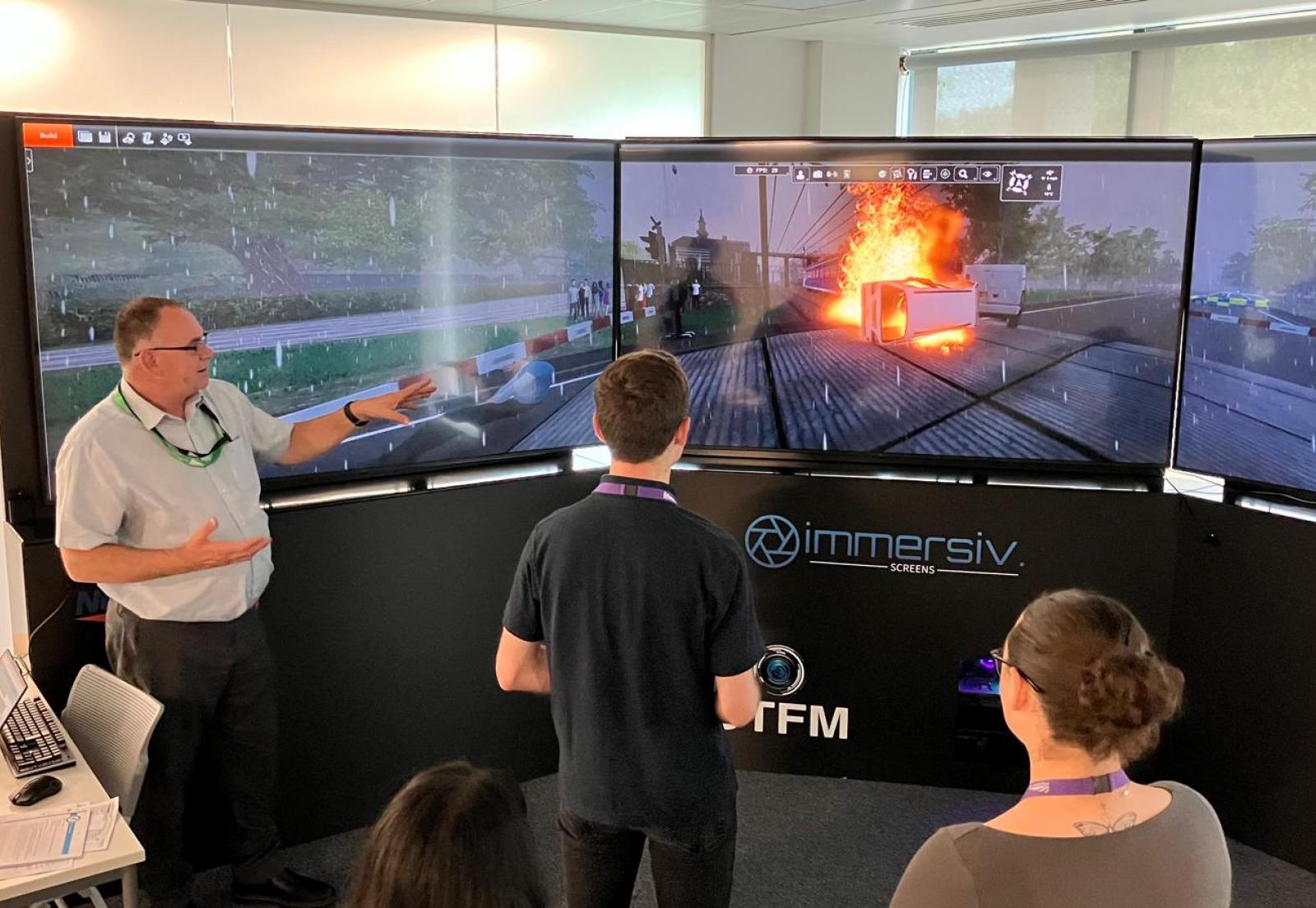
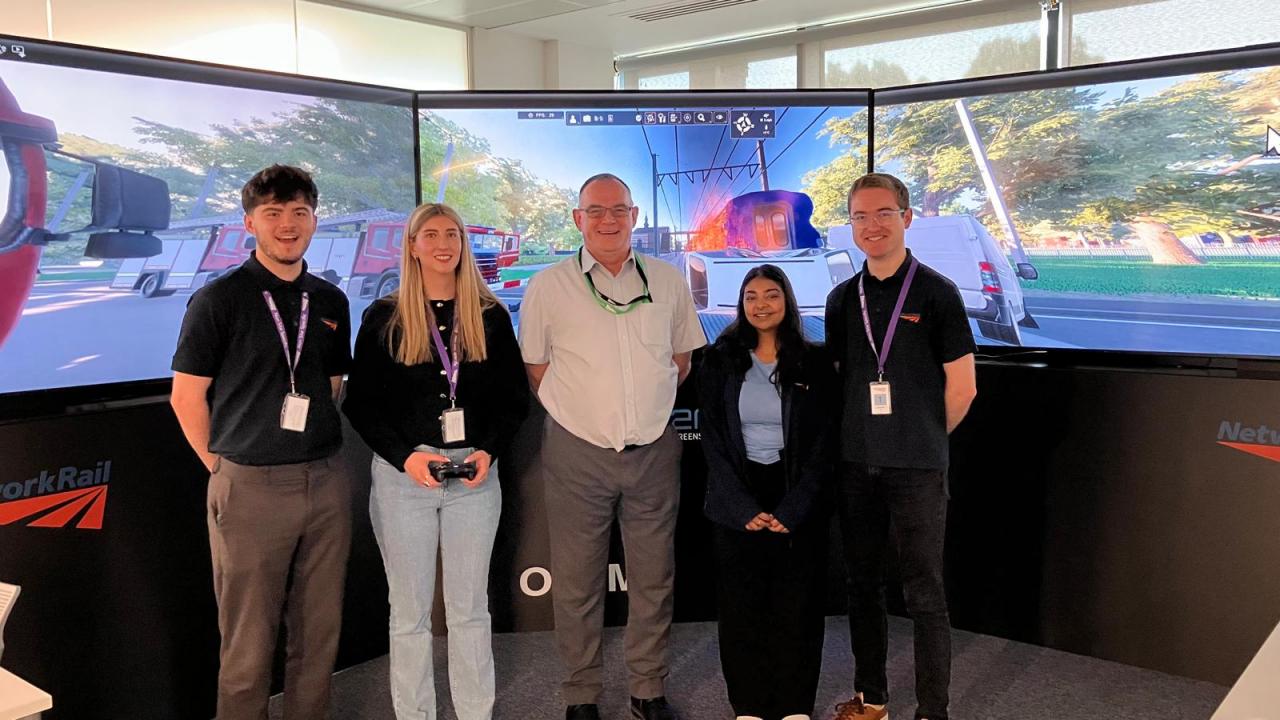
At the centre of this transformation is the Immersiv system—a custom-built simulator now deployed at the institute. The technology is currently the largest setup of its kind within Network Rail’s training estate and is focused on preparing Mobile Operations Managers (MOMs), who play a critical frontline role in responding to incidents across the network.
The setup features three 86-inch screens, each weighing 65kg, configured to create a fully navigable 3D environment. Trainees use a videogame-style controller to move through scenarios, replicating real-world railway conditions with remarkable realism.
This digital environment allows trainers to recreate a wide range of operational challenges—from infrastructure faults to emergency incidents—while dynamically adjusting variables such as weather, visibility and time of day.
Malcolm Johnson-Chappell, a lead trainer at Network Rail, highlighted how far the training approach has evolved:
“When I first started this training, it was a PowerPoint projection for three days. You sat there, did a test paper, and when you passed it was: ‘Congratulations, you can now attend major incidents.’
“But as technology has come on, so has the training. This set-up gives a much more blended approach because it’s interactive. It puts people as close to a real-life situation as you can get without being out on track. It’s an immersive, safe environment where they can make mistakes and learn from them.
“We can set up any kind of scenario as a challenge and change conditions like the time of day or weather to make dealing with incidents even more complex.
“We’ve showcased the system to many people, and everyone who sees it is impressed and can immediately see the benefits to our training. Anyone who visits the centre wants to try it out!”
Safer, smarter, more adaptive training
The shift towards immersive simulation reflects a broader industry trend prioritising safety, resilience and operational readiness. By enabling trainees to experience high-risk scenarios in a controlled setting, Network Rail is reducing the likelihood of errors in real-world situations while accelerating competence development.
Importantly, the approach also supports a more engaging learning experience compared to traditional classroom-based methods. The ability to “learn by doing” helps improve knowledge retention and builds confidence among new entrants and experienced staff alike.
Future ambition: portable immersive training
Looking ahead, Network Rail is exploring ways to scale the technology further. Plans are under consideration for portable versions of the Immersiv system, which would allow training teams to deliver realistic simulation exercises at multiple locations across the network.
Such flexibility could be particularly valuable in supporting regional teams, reducing the need for travel while maintaining consistent training standards nationwide.
Bridging heritage and innovation
The Gresley Institute stands as a powerful symbol of how the railway industry is balancing its rich engineering heritage with the demands of a rapidly evolving operational landscape. While celebrating the legacy of pioneers like Sir Nigel Gresley, Network Rail is clearly focused on equipping its workforce with the tools and skills required for a safer, more efficient and technologically advanced railway.
Image credits: Network Rail