
Passengers travelling into London Waterloo from key commuter towns including Windsor, Woking and Wimbledon are already seeing tangible benefits one year after South Western Railway (SWR) entered public ownership.
SWR became the first train operating company to transfer into public control under the Public Ownership Act in May last year, marking a decisive break with nearly three decades of fragmentation and inefficiency under rail privatisation. Twelve months on, the impact is being felt through increased capacity, more modern trains and a noticeable uplift in passenger comfort across the network.
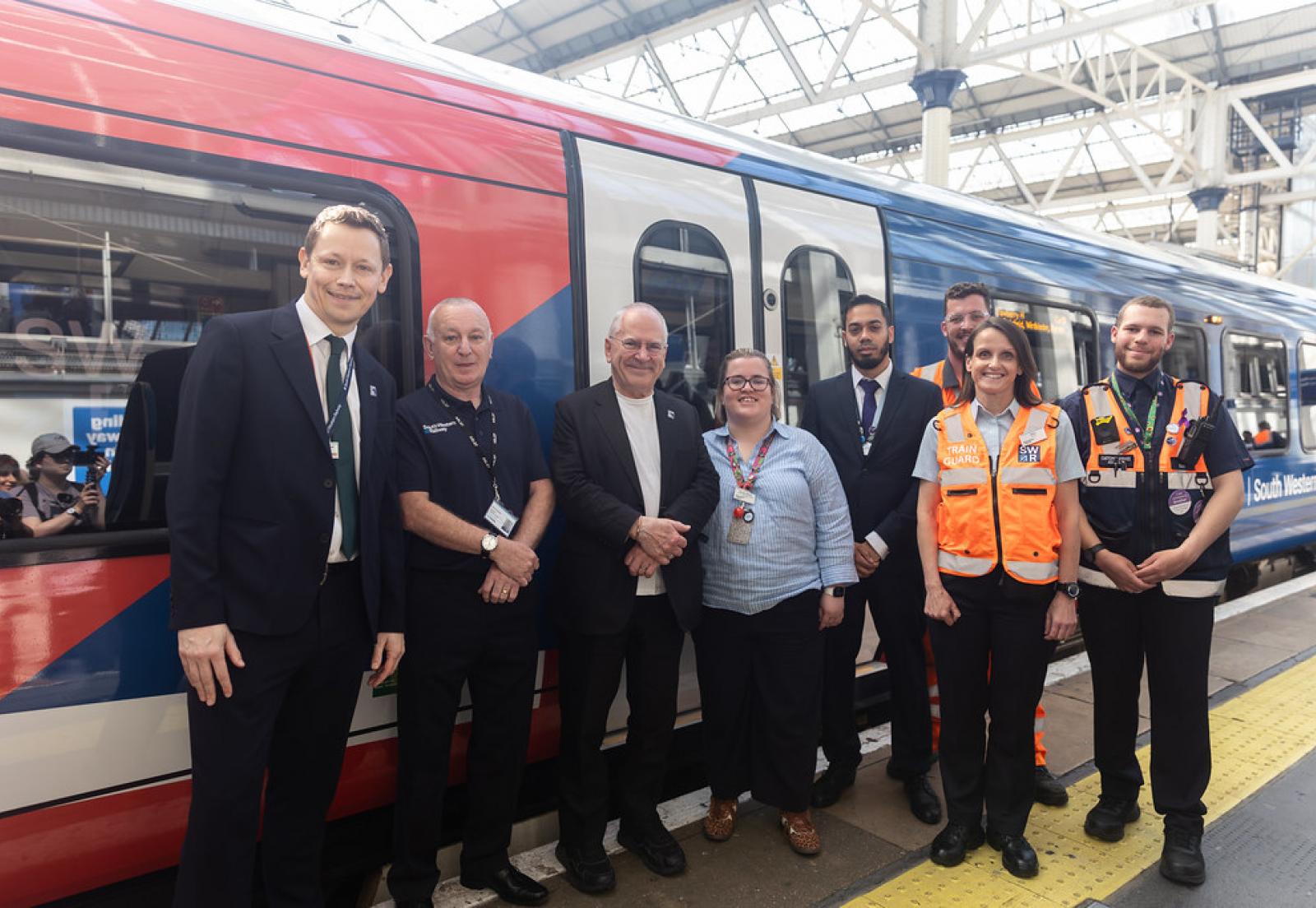
The anniversary was marked on 22 May at London Waterloo, where Rail Minister Lord Peter Hendy unveiled a newly branded Great British Railways (GBR) Arterio train operated by SWR. The event symbolised both progress on the ground and the wider direction of the Government’s rail reform programme.
Since entering public ownership, SWR and the Department for Transport have accelerated the long‑delayed introduction of the Arterio fleet, alongside faster driver training programmes. This shift in pace has delivered 39 new trains into service since May last year, significantly increasing capacity on some of the busiest commuter routes in the country.
As a result, seating and standing space on suburban services into London Waterloo has risen by 27% overall, with even greater gains on specific routes. Capacity increases include 55% on Aldershot via Ascot services, 42% to Windsor, 32% to Shepperton, 30% to Dorking and 28% on Hampton Court services.
SWR is now approaching 50 Arterio diagrams in daily service, with the full fleet of 90 trains expected to be operational by early 2027. The new trains can carry up to double the number of passengers compared with the units they replace and offer faster acceleration and braking, free Wi‑Fi, charging points, improved air conditioning, real‑time passenger information and fully accessible toilets.
Lord Peter Hendy, Rail Minister, said:
“One year on from the first train operations entering public ownership, passengers are seeing and feeling the difference. Modern trains, more seats and greater capacity are restoring confidence in the railway and showing what can be achieved when we put passengers first rather than profit.
“The rapid roll out of the South Western Railway Arterio fleet is a clear example of how nationalisation is cutting red tape that held the railway back for decades. These trains are transforming journeys for hundreds of thousands of people every day.
“This milestone marks real progress towards a genuinely integrated railway under Great British Railways – a railway that’s improving and supporting economic growth, jobs and homes.”
For SWR, the Arterio rollout is a central part of a broader recovery and improvement plan focused on reliability, resilience and customer confidence.
Lawrence Bowman, Managing Director, SWR and Network Rail Wessex, said:
“We’re fast approaching the milestone of 50 Arterio diagrams in daily service, meaning most of our suburban customers are likely to catch an Arterio for their morning commute, with some of our key routes now exclusively served by the new trains".
“Completing the rollout is a key step in our plans to improve our railway, which include a programme of major infrastructure upgrades, recruiting more traincrew, recovering quicker and keeping customers better informed during significant disruption and consulting on a full timetable refresh later this year.
“Improving our railway will take time and we have a lot more to do but we are making steady progress towards building a more reliable and resilient railway for the future.”
Closer integration between track and train has also been cited as a key benefit of public ownership.
Alex Hynes, CEO of DFTO said:
“Since entering public ownership, SWR has driven better and closer working with Network Rail.
“By bringing track and train together, an empowered and united leadership team has been able to go further, making decisions that are right for their customers and communities.”
“The new Arterio trains are delivering greater capacity and comfort for SWR’s customers and completing the roll out will unlock more vital improvements.”
Beyond the new fleet, SWR is delivering a wide‑ranging programme of passenger‑focused improvements. These include full overhauls of the Class 158 and 159 diesel fleets, expanded superfast Wi‑Fi using satellite technology, and major infrastructure schemes such as the £129m resignalling between Farncombe and Petersfield and a £120m signal replacement programme in the Havant area.
Technology is also playing a growing role, with thermal imaging cameras being introduced for early fault detection and drones deployed to provide real‑time incident updates. Accessibility remains a priority, building on more than 315,000 assisted journeys last year, alongside improvement schemes at ten stations.
Recruitment is another key focus, with 144 new drivers being trained this year to improve operational resilience, alongside consultation later in 2026 on a full timetable refresh designed to be simpler, more reliable and better aligned to the new fleet.
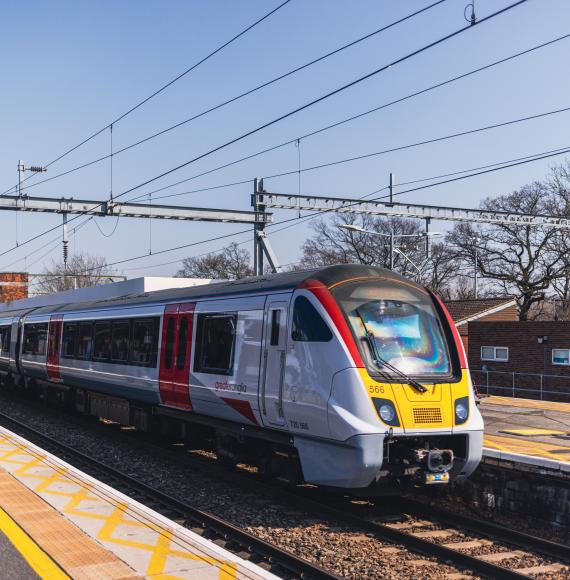
SWR’s progress forms part of a wider shift across the network. Publicly owned operators including c2c and Greater Anglia continue to lead the industry on punctuality and reliability, while frozen rail fares and greater ticketing flexibility are delivering immediate benefits for passengers.
With GTR transferring into public ownership on 31 May, and Chiltern and Great Western Railway due to follow later this year, the Government argues that passengers are already seeing the early dividends of a more integrated, publicly accountable railway.
Image credit: SWR