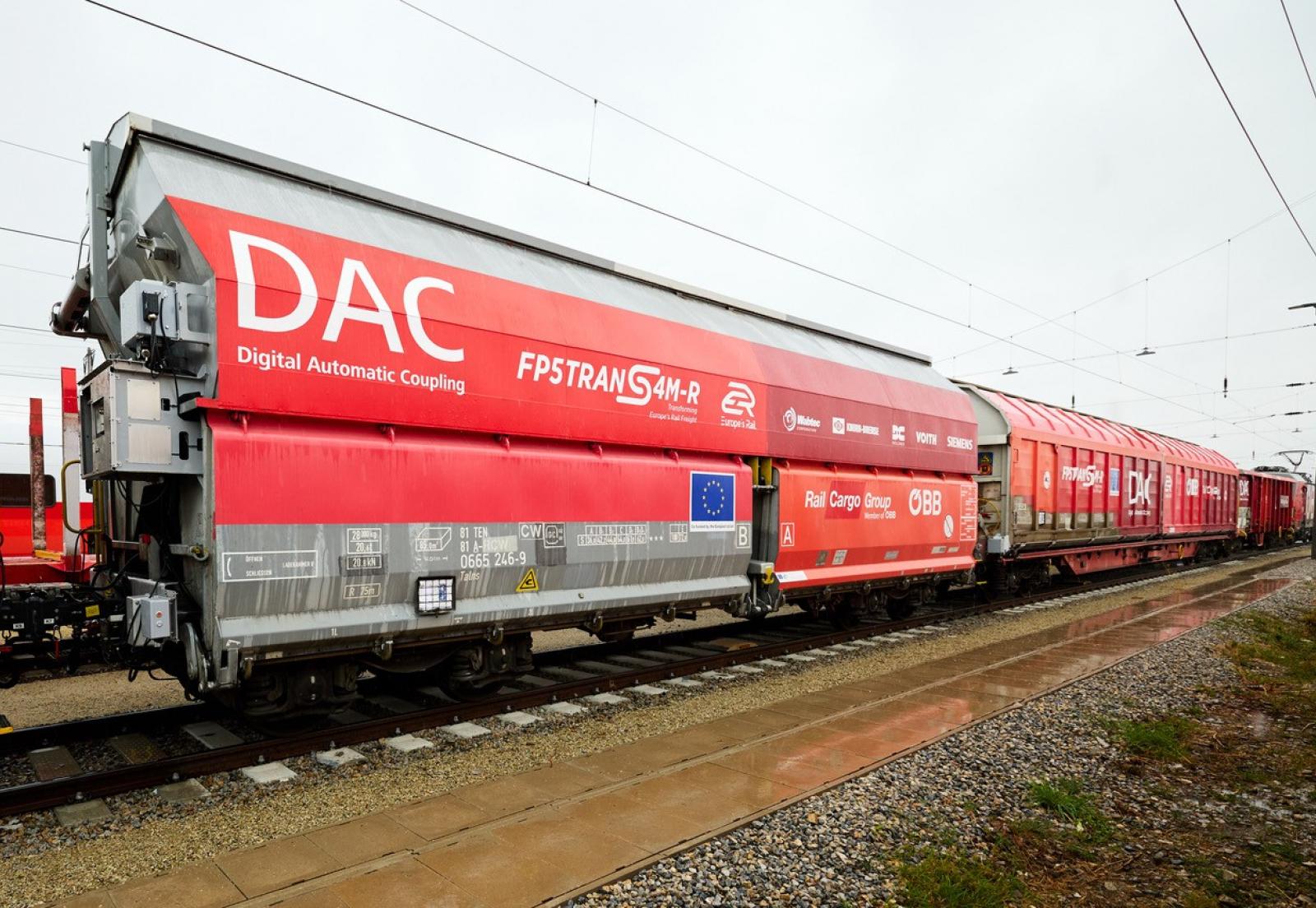
The digital transformation of European rail freight took a significant step forward this week as ÖBB demonstrated the capabilities of Digital Automatic Coupling (DAC) under real operating conditions at its Floridsdorf freight yard in Vienna.
The showcase provided a direct comparison between the traditional screw coupler, still widely used across Europe's freight network, and the next-generation DAC system that many industry leaders believe will underpin the future of rail freight operations.
DAC has emerged as one of the most important innovation projects within the European rail sector. Designed to improve efficiency, competitiveness and productivity, the technology combines automation and digitalisation to modernise freight operations while supporting the wider shift towards more sustainable transport.
Speaking at the event, Peter Hanke, Federal Minister for Innovation, Mobility and Infrastructure, highlighted the strategic importance of the technology for both Austria and the wider European rail industry.
“An efficient railway freight transport system is crucial for Austria as a business location. The Digital Automatic Coupling demonstrates how innovation can drive the rail sector forward. It improves safety and working conditions for staff, speeds up processes and lays the foundation for further digitalisation steps along the entire transport chain.”
DAC Lays the Groundwork for the Digital Freight Train
ÖBB has played an active role in the development and testing of DAC technology through a range of European research and demonstration programmes.
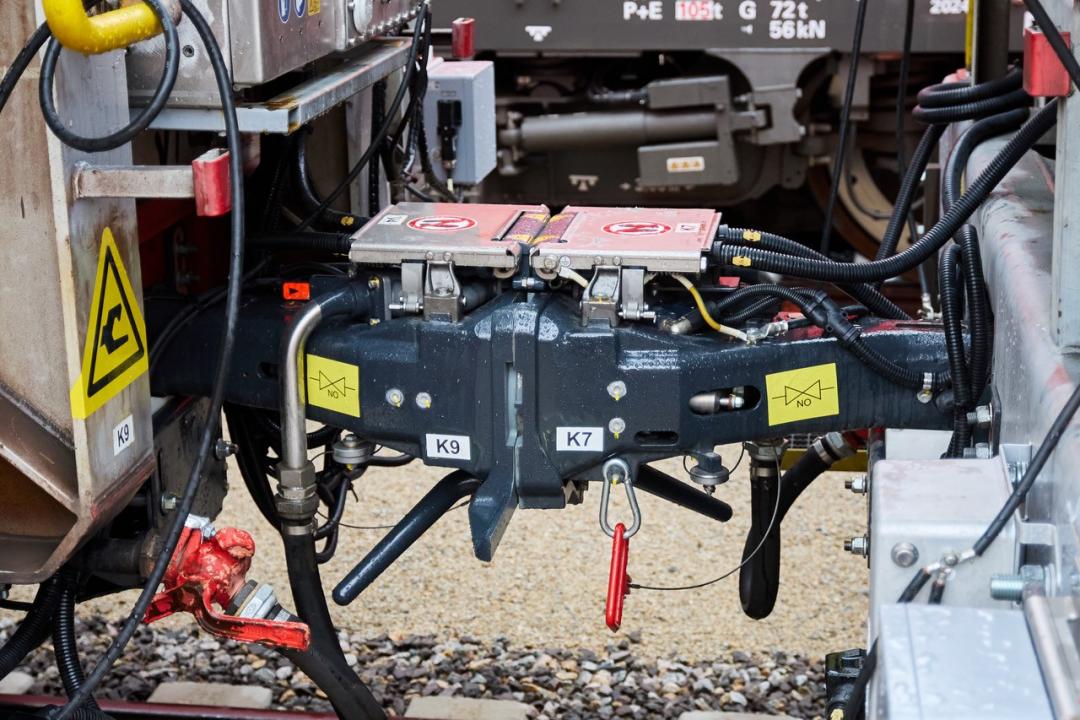
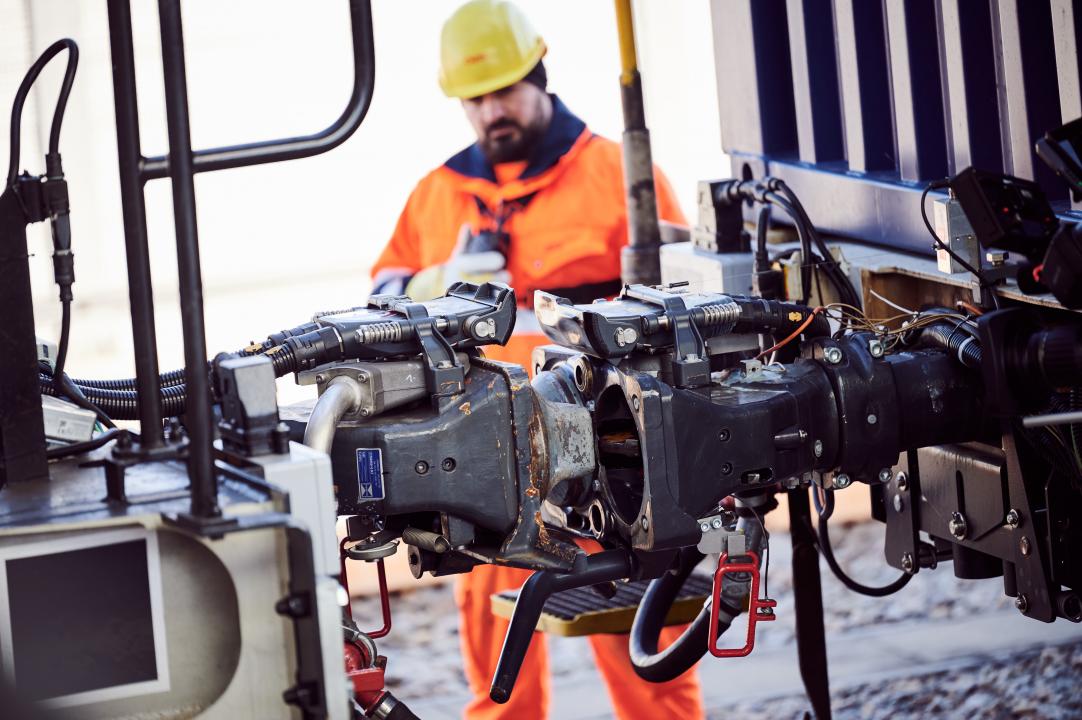
Unlike conventional couplers, DAC enables freight wagons to be coupled and uncoupled automatically while also providing continuous power and data transmission throughout the train consist. This creates opportunities for a range of digital applications, including automated brake testing, digital wagon sequencing and future train integrity monitoring systems.
The technology is expected to significantly reduce manual interventions, enhance workforce safety and improve operational efficiency. It could also enable longer and heavier freight trains, allowing rail operators to make better use of existing network capacity.
ÖBB CEO Andreas Matthä underlined the wider significance of the innovation.
“The DAC is far more than just a new coupling. It is the foundation for the digital freight train of the future and thus for safer and more competitive railway freight transport in Europe. With our demonstrator train, we are demonstrating today that the technology works under real-world conditions.”
Austrian Demonstrator Train Delivering Valuable Operational Data
As part of the Europe's Rail FP5 TRANS4M-R project, ÖBB is currently operating a specially equipped demonstrator train to assess DAC technology in day-to-day railway environments.
The programme is designed to evaluate technical reliability, maintenance requirements, operational safety and system integration. Crucially, the project includes both DAC-equipped freight wagons and locomotives, enabling a comprehensive assessment of the technology across the train formation.
Winter testing conducted in Austria has already delivered valuable insights that will support ongoing technical refinement and help prepare the technology for wider deployment across Europe's freight rail network.
Commercial Operations Represent the Next Milestone
The next phase of DAC development will see the technology move beyond demonstrations and into commercial freight operations through the Pioneer DAC Trains (PioDAC) programme.
Supported by funding from the Connecting Europe Facility (CEF) and delivered in partnership with European stakeholders, the initiative will allow ÖBB to deploy DAC technology in live commercial services for the first time.
The objective is to demonstrate certification readiness while proving the business case for implementation under real market conditions.
The findings from both the ongoing demonstration programme and the Pioneer DAC Trains project are expected to play a key role in future decisions on Europe-wide deployment. However, several key requirements remain, including achieving full technical maturity, demonstrating operational benefits, establishing harmonised European standards, creating suitable approval processes, securing viable funding models and developing a coordinated migration strategy for the continent's freight networks.
For the European rail freight sector, DAC is increasingly seen not simply as a new coupling mechanism, but as the digital backbone that could transform freight train operations for decades to come.
Image credits: OBB