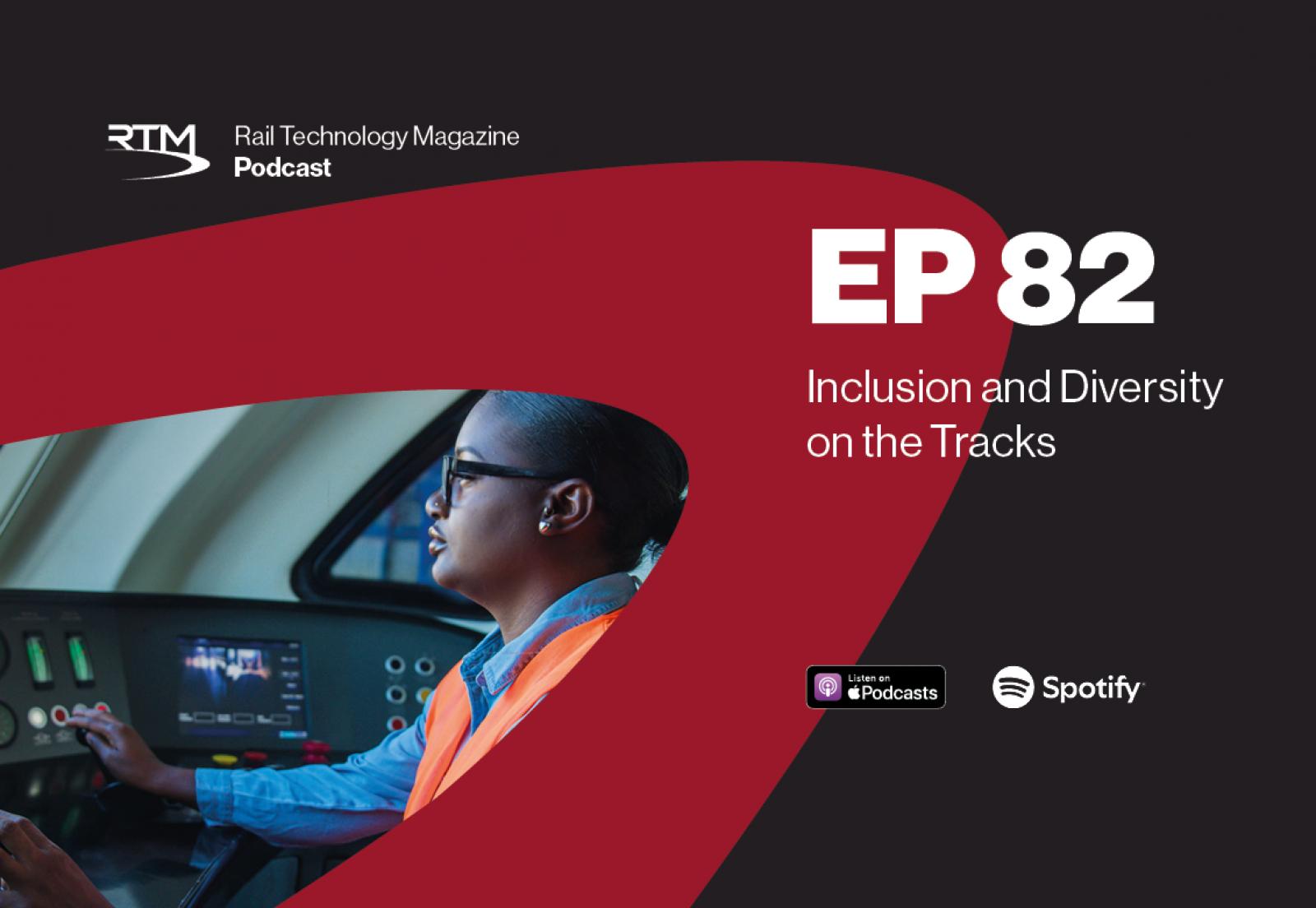

A railway is more than its stations, services and destinations. It is also the people who plan, build and run it — and the culture they experience at work. In this episode, Raye Fullard, Diversity and Inclusion Manager at the Rail Delivery Group, and Dr Holly Foss, Equality, Diversity and Inclusion Chair at the Birmingham Centre for Railway Research and Education, discuss how the rail industry can make inclusion a meaningful part of its everyday practice in Episode 82 of our podcast.
Their starting point is simple: EDI cannot belong to HR alone. A strategy is more likely to make a difference when people across an organisation help shape it, leaders visibly support it, and colleagues are encouraged to take responsibility for the culture around them. A policy or charter can signal what matters, but it needs to be backed by ongoing conversations, clear objectives and practical action.
That action does not always need to be a major programme. Raye describes inclusion as something people can notice in daily working life: a colleague stepping in when someone is being talked over, or an employee feeling able to speak up and ask for help. Holly connects these behaviours to psychological safety — the confidence to contribute, share ideas and try something new without fear of being dismissed.
The discussion also explores how the rail sector can attract a wider range of people. Engineering is still perceived as male-dominated, and many people may not realise how many different roles exist across rail. The industry needs engineers, of course, but also lawyers, planners, designers, human resources specialists and many others. As Raye points out, rail offers more than one route into a career, and people can move between roles as their interests develop.
Holly highlights the importance of making those routes visible. University is one option, but apprenticeships, learning on the job and other forms of training can offer valuable alternatives. Inclusive recruitment means looking carefully at where jobs are advertised and how roles are described, while considering competencies and potential rather than relying too heavily on conventional qualifications or a single expected career path. Flexible contracts and job-sharing can also help make opportunities work for a broader range of applicants.
Attracting people is only part of the picture: organisations need to help them feel they belong. Raye discusses the value of staff networks, which can offer a supportive space to share experiences and connect with colleagues. For smaller organisations without the resources to run multiple internal networks, external communities across rail and engineering can provide connection, encouragement and career support.
The panellists are clear that inclusion is not a limited resource. Making a workplace more accessible or welcoming does not take something away from others; it can improve how teams work and help them draw on a broader range of experiences. The benefits can be seen in stronger collaboration, new ideas and better outcomes for the people who use the railway.
So what does progress look like? It means leaders modelling the behaviours they expect, organisations listening to staff, and the sector making its many career opportunities visible. Most of all, it means moving from statements of intent to consistent action.
Watch or Listen to the full conversation for practical perspectives on how the rail industry can build a more inclusive workforce — and why that work matters to everyone.