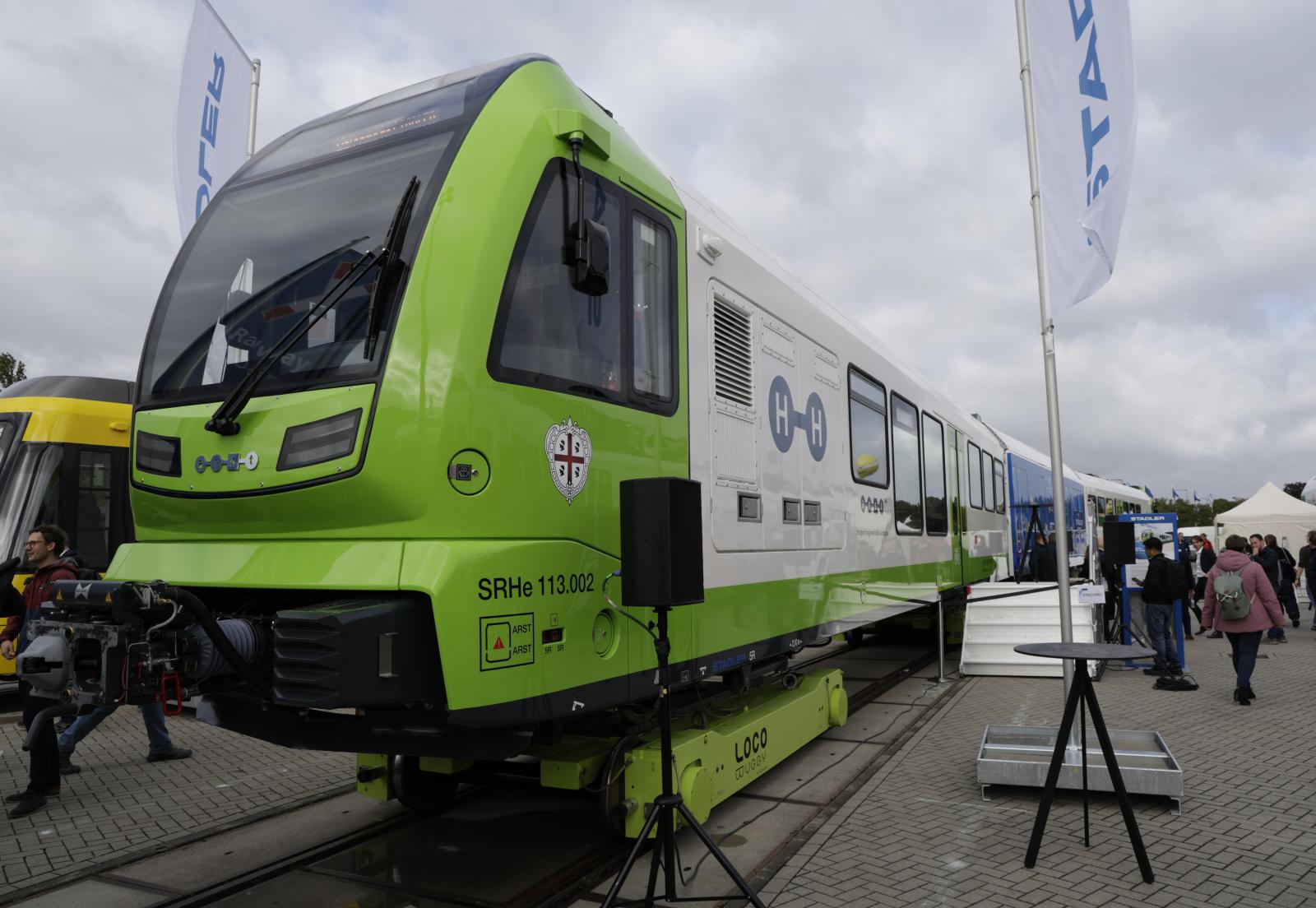

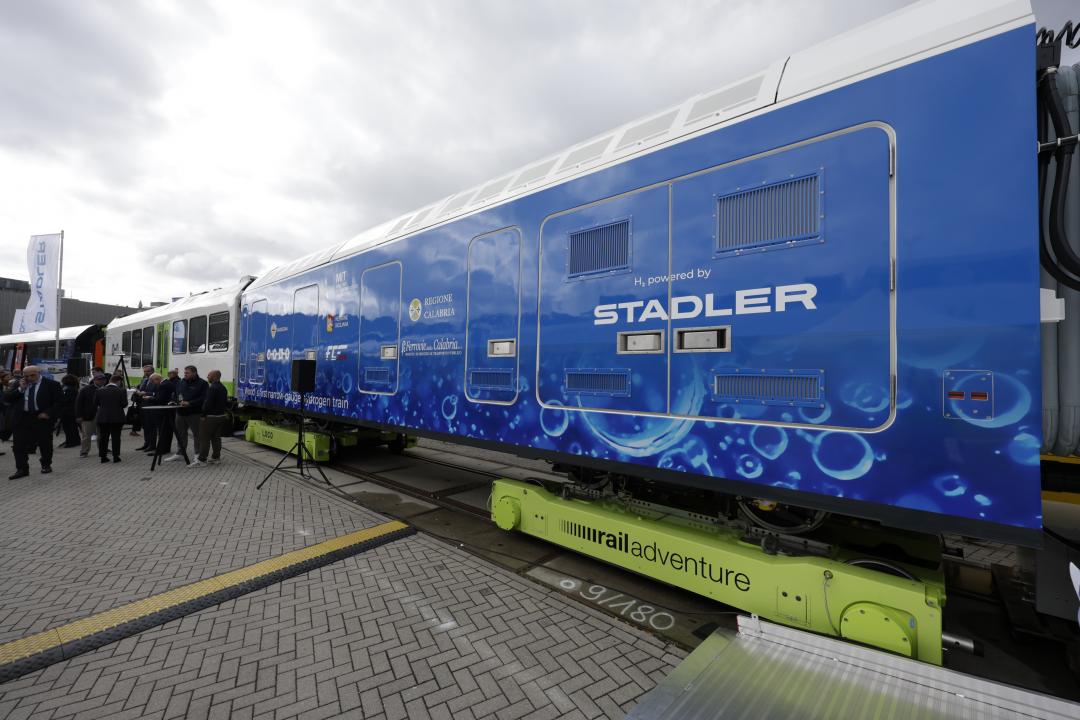
Stadler has revealed the world’s first hydrogen-powered train specifically designed for narrow-gauge railways, marking a major milestone in the decarbonisation of regional rail transport.
Developed in partnership with Italian operators Azienda Regionale Sarda Trasporti (ARST), Ferrovie della Calabria (FdC) and Ferrovia Circumetnea (FCE), the pioneering fleet has been tailored for operation across the unique landscapes of Sardinia, Calabria and Sicily.
Manufactured at Stadler’s headquarters in Bussnang, Switzerland, the new trains will enter service on a range of regional and local routes, bringing zero-emission operation to some of Italy’s most challenging and picturesque rail corridors.
The project forms part of a wider order for 21 trains, including ten hydrogen-powered vehicles. The first unit has been completed for ARST, while nine trains for FdC and two for FCE are currently under construction.
Purpose-Built for Italy’s Diverse Narrow-Gauge Networks
Unlike conventional rolling stock, each train has been engineered to meet the specific operational demands of the regions it will serve. From coastal routes in Sardinia and mountain tunnels in Calabria to the steep gradients surrounding Mount Etna in Sicily, the fleet has been designed with flexibility and performance in mind.
“Thanks to close collaboration with the Ministry of Transport and the railway operators ARST, FdC, and FCE, Stadler has developed a modular solution capable of adapting to the diverse requirements of Italy’s narrow-gauge railway networks. All the trains are based on the same technological platform and combine a compact profile, lightweight mechanical structures, and an innovative hydrogen propulsion system. This integration ensures high standards of performance, innovation, reliability, and sustainability,” says Maurizio Oberti, Stadler’s Sales & Marketing Director for the Italian market.
The project also represents the latest chapter in a two-decade partnership between Stadler and Ferrovie della Calabria.
Aristide Vercillo Martino, Sole Director of FdC, emphasises:
“The collaboration between Stadler and Ferrovie della Calabria has continued successfully for around twenty years. This journey began with the first vehicle developed specifically for Italy’s narrow-gauge railways and designed for FdC. It has been strengthened over time through the experience gained with several generations of railcars now successfully in service. This long-standing partnership has laid the foundations for the development of a new generation of trains, designed to meet the company’s operational needs while offering passengers ever-higher standards of comfort, accessibility, and travel quality. This achievement forms part of the wider investment programme promoted in collaboration with the Calabria Region to upgrade railway infrastructure and accelerate the digital transformation of the regional transport system.”
Hydrogen Technology Delivers Significant Carbon Savings
At the heart of the trains is an innovative propulsion system combining hydrogen fuel cells, onboard hydrogen storage tanks and advanced traction batteries housed within a dedicated central Power Pack vehicle.
The batteries are continually recharged using energy generated from hydrogen, enabling the trains to operate efficiently on non-electrified routes without relying on fossil fuels.
According to Stadler, a fleet of ten hydrogen trains will reduce annual carbon emissions by more than 2,100 tonnes of CO₂ when compared with equivalent diesel operations.
Green Hydrogen Produced Using Solar Energy
The environmental credentials of the project extend beyond the trains themselves.
The fleet will operate using green hydrogen produced entirely from solar energy, with dedicated production and refuelling facilities currently being developed by ARST, FdC and FCE.
Carlo Poledrini, General Director of ARST, said:
“These vehicles, developed in collaboration with Stadler, are a central element of the decarbonisation strategy for the narrow-gauge network. We are immensely proud to bring the world’s first narrow-gauge hydrogen train onto our lines. For ARST, this project represents the first step in the company’s evolution from a transport operator into an energy company.”
Improved Passenger Comfort and Accessibility
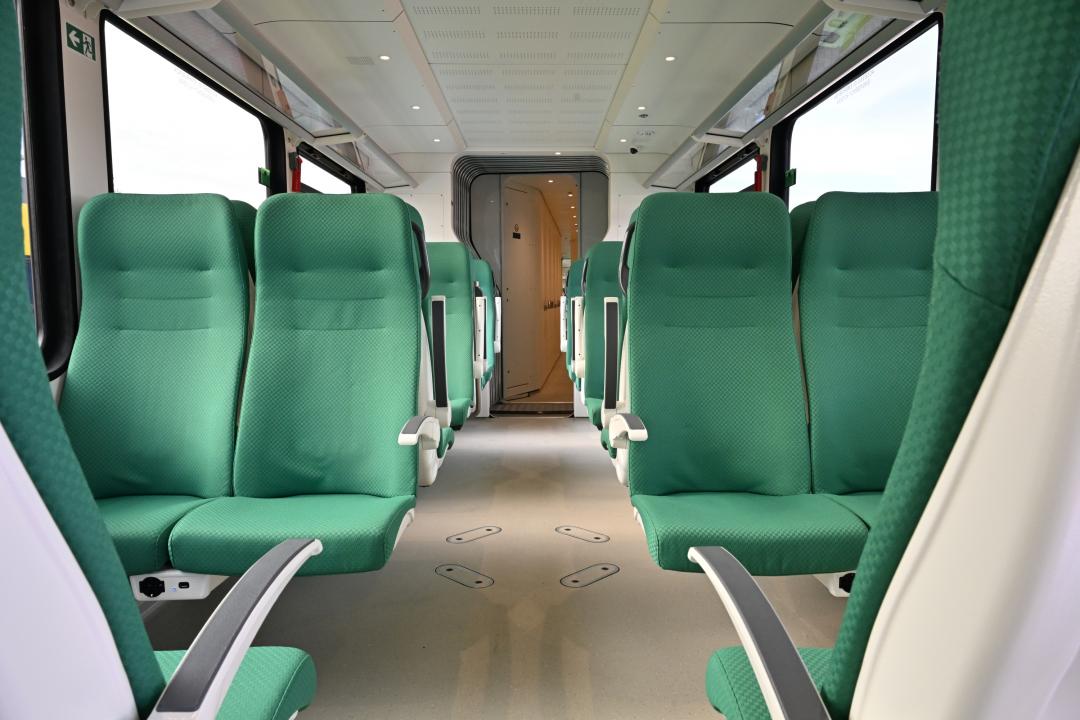
Alongside sustainability benefits, the trains are expected to provide a significantly enhanced customer experience.
Hydrogen-powered operation is substantially quieter than diesel traction, reducing noise pollution for communities and passengers alike. Bright interiors, large panoramic windows and low-floor boarding will further improve accessibility and comfort.
For Ferrovia Circumetnea, the trains will offer visitors an even better way to experience one of Sicily’s most scenic railway journeys.
Salvatore Fiore, Managing Director of FCE, said:
“The landscapes surrounding Mount Etna are among the most picturesque in Sicily. Our aim is to offer passengers the most pleasant travel experience possible. Thanks to the introduction of the new hydrogen-powered trains, we can enhance comfort while making a tangible contribution to more sustainable transport. We are delighted to have Stadler by our side as a reliable partner and to make this extraordinary route even more attractive to our passengers.”
A New Benchmark for Sustainable Regional Rail
The introduction of Stadler’s narrow-gauge hydrogen train demonstrates how alternative traction technology can be successfully adapted for specialist railway applications. Combining zero-emission operation, renewable energy, passenger comfort and bespoke engineering, the project could provide a blueprint for other regional and heritage-style railways seeking to reduce their environmental impact without the need for costly electrification.
Image credits: Stadler