Alstom and SNCF Voyageurs have reached a significant milestone in the decarbonisation of regional rail operations, with the first two battery-powered TER trains now carrying passengers in France.
The introduction of the trains marks the latest phase of a €41 million national programme led by five French regions, SNCF Voyageurs and Alstom. The initiative aims to demonstrate how battery technology can reduce diesel dependency on non-electrified routes while supporting more sustainable rail mobility.
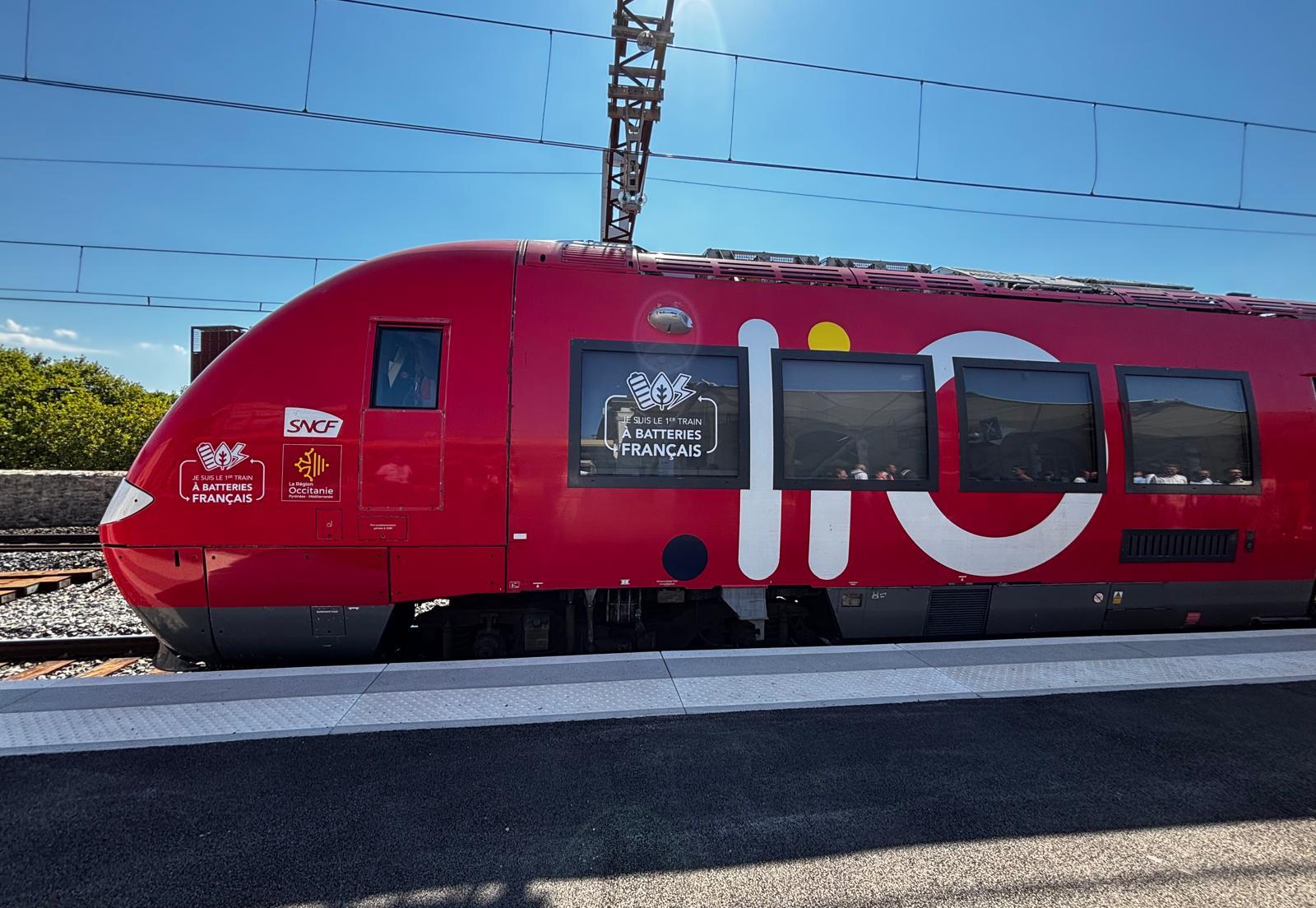
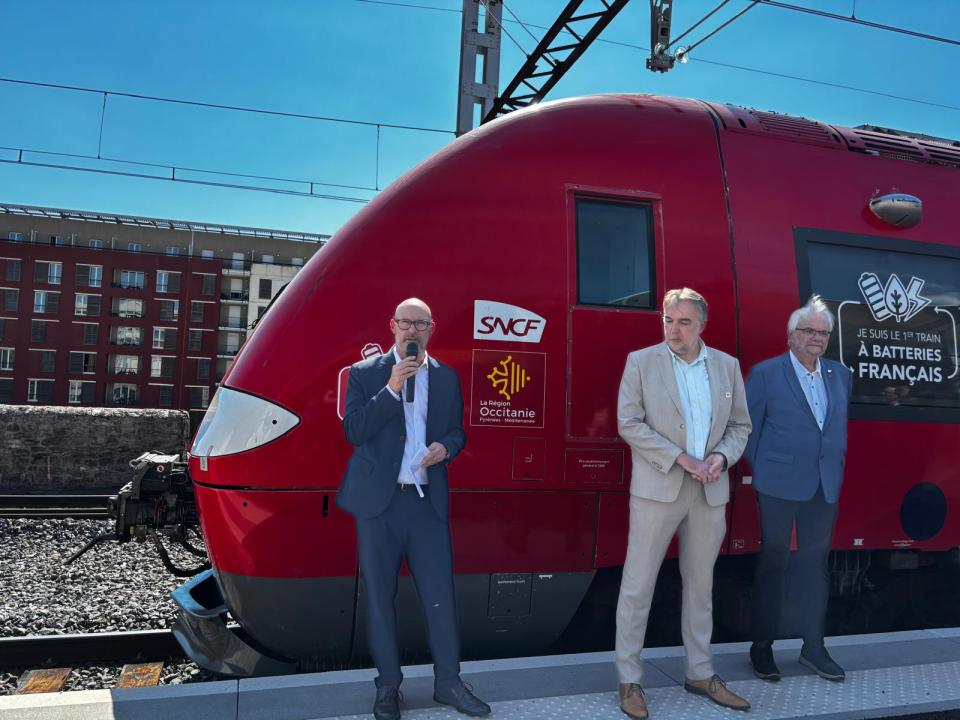
The first battery-powered train in the Occitanie region was officially launched on the Nîmes to Vauvert line, attended by Jean-Luc Gibelin, Vice-President of the Occitanie Region responsible for Mobility and Transport Infrastructure, representing Carole Delga, President of the Occitanie Region, Gaël Barbier, Regional Director of SNCF Voyageurs Occitanie, and Olivier Delecroix, Vice-President for Marketing and Sales at Alstom France.
The new liO train prototype is designed to support the region’s wider strategy to decarbonise transport, improve connectivity on non-electrified routes and strengthen regional rail services.
Occitanie has become the first French region to test three separate alternatives to diesel traction. Alongside the new battery-powered train, the region has already trialled a hybrid Régiolis train capable of operating in electric, diesel and battery modes, while hydrogen-powered Régiolis trains are expected to operate on the Montréjeau to Luchon line.
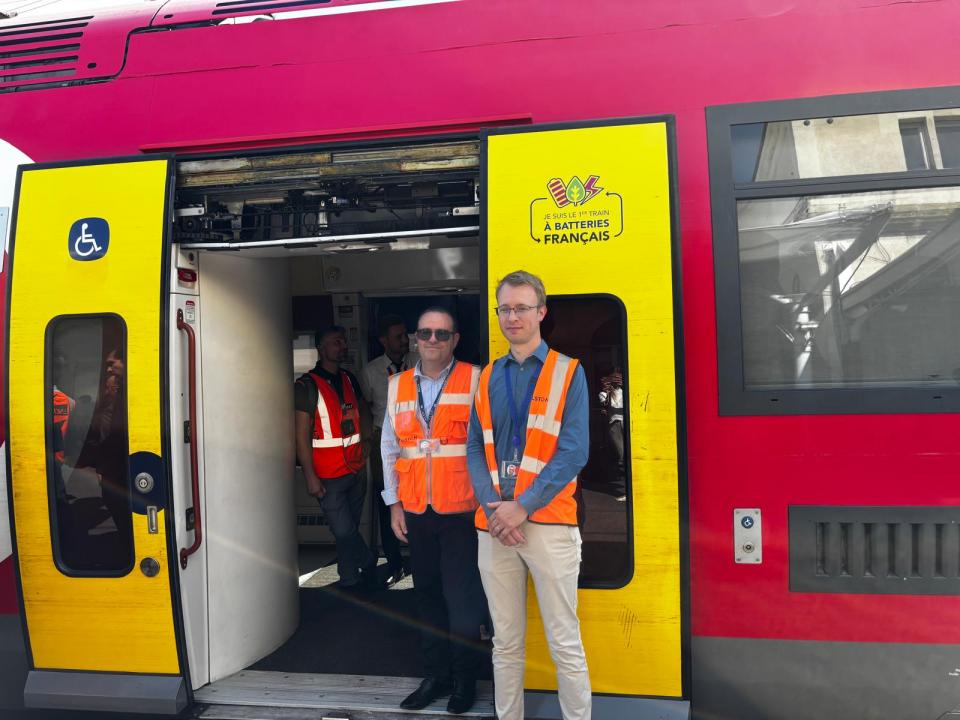
Sud Region Train Already Carrying Passengers
Meanwhile, the Sud Region’s first battery-powered regional train entered commercial service on 28 July 2026, operating on the Avignon to Carpentras route.
Operated by SNCF Voyageurs TER Sud, the train uses overhead electric power where electrification is available before switching to battery mode at Sorgues for the remainder of its journey to Carpentras. This allows the train to operate on non-electrified sections without diesel traction.
Regional leaders say the project forms part of a broader commitment to delivering lower-carbon public transport while maintaining operational performance and passenger comfort.
Testing the Future of Regional Rail
The national programme brings together the regions of Occitanie, Sud Region, Auvergne-Rhône-Alpes, Hauts-de-France and Nouvelle-Aquitaine, alongside SNCF Voyageurs and Alstom.
The two trains now in service will provide valuable operational data under real-world conditions, helping to establish how battery technology could be deployed more widely across France’s regional rail network.
The trains have been created by converting existing high-capacity AGC multiple units. Diesel engines have been replaced with lithium-ion battery systems capable of providing a range of more than 80 kilometres.
The technology also captures and stores energy generated during braking, reducing overall energy consumption by up to 20%. In addition to environmental benefits, passengers are expected to benefit from quieter journeys and lower levels of vibration.
€41 Million Investment Programme
The battery train programme represents an investment of more than €41 million, comprising:
- €30 million from the five participating regions
- €6 million from SNCF Voyageurs
- €5.5 million from Alstom
Industry Leaders Welcome the Milestone
“Together with Occitanie, the Sud Region and SNCF Voyageurs, we are taking a significant step forward in the development of more sustainable rail solutions. These two battery-powered regional trains demonstrate that it is possible to transform and modernise existing rolling stock to reduce its environmental footprint, whilst meeting passengers’ mobility needs. This innovation provides a concrete example of how the rail sector can continue its transition towards ever more efficient and energy-efficient transport,” said Frédéric Wiscart, President of the France BeLux region at Alstom.
“In the Occitanie Region, we have chosen rail and we are committed to innovation. This battery-powered liO train is further proof of this: alongside our partners, we are experimenting, investing and preparing today for the railway of tomorrow. With hybrid, battery-powered and soon, hydrogen-powered trains, Occitanie is the only French region to be testing three technologies to reduce the use of diesel in our regional trains. And this innovation goes hand in hand with a very concrete ambition: to develop the public rail service. On the Nîmes–Vauvert line, this new train will therefore increase the service with two additional return journeys on weekdays. Cleaner, more comfortable and more frequent transport for everyday life: that is the train of tomorrow!” said Carole Delga, President of the Occitanie Region.
“SNCF Voyageurs is proud to support the Occitanie Region in realising its ambitions for more frequent and sustainable regional transport. Together with the Region and Alstom, we are today putting France’s first battery-powered train into service in Occitanie. On the non-electrified section of the Nîmes–Vauvert line, this innovation will enable trains to run without using diesel and therefore without emitting CO2. The introduction of two additional return journeys by the Occitanie Region as part of this trial supports the tremendous growth in liO train traffic resulting from our partnership, which benefits both passengers and the different regions of Occitanie,” said Gaël Barbier, Regional Director of SNCF Voyageurs TER Occitanie.
“With this first battery-powered train, the Sud Region is turning innovation into a reality for the benefit of passengers and our regions. We are tangibly reducing CO2 emissions whilst maintaining the same quality of service. It is a practical, more efficient and quieter solution for building the regional train of the future,” said Renaud Muselier, President of the Provence-Alpes-Côte d’Azur (Sud) Region and Deputy President of Régions de France.
“With this first battery-powered train now in service in the Sud Region, we are demonstrating that innovation is a practical means of accelerating the rail sector’s green transition. This project, carried out in partnership with the Sud Region and Alstom, illustrates the SNCF Group’s ability to advance technologies in the service of more sustainable mobility, without compromising on the quality of service offered to passengers. By putting this train into commercial service today, we are paving the way for the railways of tomorrow: a public transport system that is ever more efficient, lower in carbon emissions and better tailored to the needs of local communities,” said Delphine Couzi, Regional Director of SNCF Voyageurs Sud and Regional Coordinator of the SNCF Group.
Image credit: Alstom