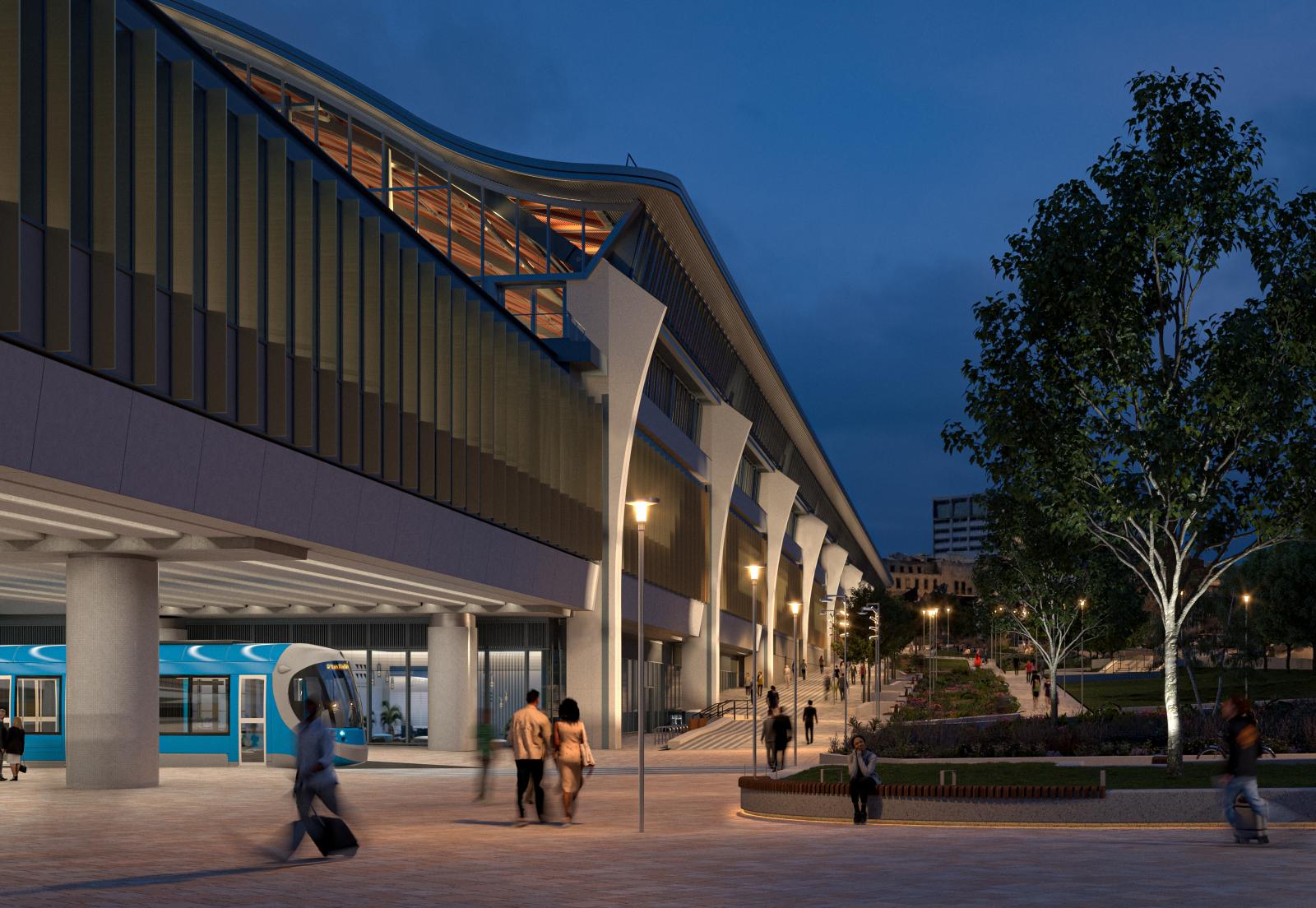

Engineers on the HS2 project have completed a major construction milestone this week, finishing the last of more than 2,000 concrete piles that will support the foundations of Birmingham’s Curzon Street Station. The achievement comes as new images were released showcasing how the station’s public spaces and landscaped surroundings will look once complete.
Stretching more than 400 metres between Moor Street Station and Millennium Point, Curzon Street will feature seven platforms beneath a vast arched roof inspired by iconic Victorian railway architecture. With the piling phase now finalised, construction of the station is progressing at pace.
Major Milestone for Birmingham’s Flagship HS2 Station
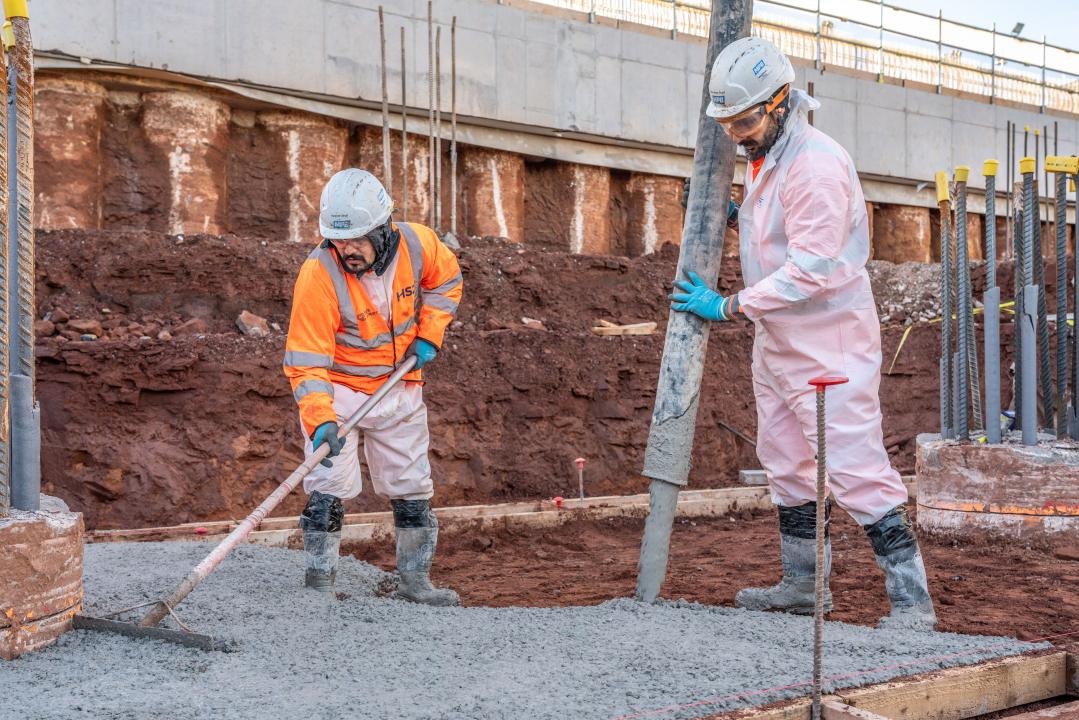
Engineers have now installed all 2,011 reinforced concrete piles, each ranging from 6 to 24 metres deep, marking the completion of one of the station’s most complex sub‑surface engineering phases.
HS2 Ltd’s Senior Project Manager, Alistair Morgan, said:
“Once complete, Curzon Street will be a new landmark for Birmingham - and provide a fitting city centre terminus for a railway that will improve journeys and free up space on the existing West Coast Main Line. These new images also show how it will be integrated into the rest of the city – with new green spaces, better accessibility and onward public transport links.
“It’s great to see how much progress has been made on the foundation works and I’d like to thank everyone who’s been working so hard to get the job done. But we’ve still got a lot of work to do before the first passengers arrive, and I look forward to seeing more significant progress in the year ahead.”
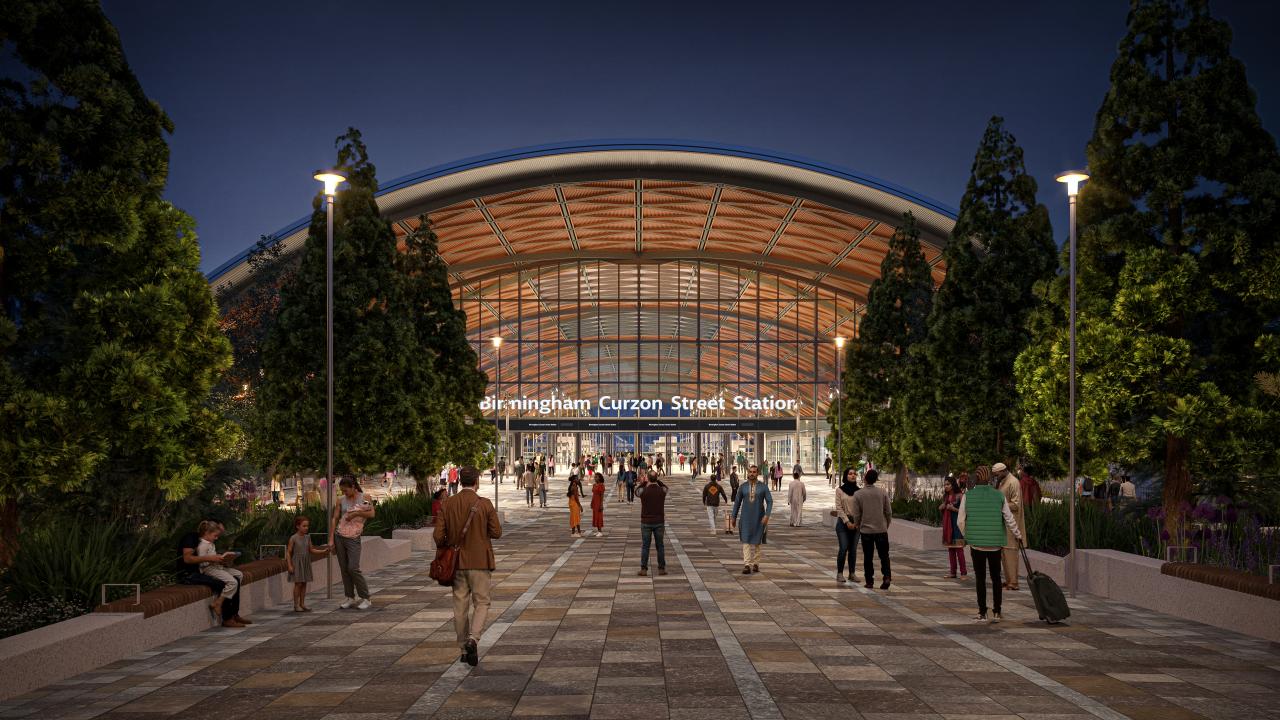
At the front of the station, passengers will enter via a paved station square bordered by landscaped gardens alongside Moor Street Queensway. The newly released visuals reveal updated landscape designs, submitted to Birmingham City Council for approval, including improved pedestrian and cycle integration and better rainwater drainage solutions.
Enhanced Public Realm and Improved Connectivity
Plans highlight a tree‑lined promenade running the length of the station, connecting major city destinations.
A second entrance to the east will link directly to Digbeth, offering tram connectivity, taxi drop‑off points and upgraded cycle access.
Adjacent to this entrance will be a new public square facing the historic Old Curzon Street Station, built in 1838. Fresh terraces and gardens will enhance the setting of this landmark heritage building.
Construction Progress Delivered by Major Industry Partners
Piling work, which began in September 2024, was delivered by Mace Dragados Joint Venture (MDJV) with Keltbray. This phase included excavation of 47,000 cubic metres of material and construction of an 8‑metre‑high retaining wall at the western end of the site.
MDJV’s Senior Project Manager, Rodger Storey, said:
“Completing the foundation works for Curzon Street station marks a major milestone in the delivery of the project. The team is proud of the major achievement represented the extensive piling operation that forms the station’s foundations.
“With this crucial phase now finished, we look forward to progressing the construction of the station building itself, which will create further jobs, apprenticeships, and supply chain opportunities as activity on site continues to ramp up.”
The final piles were installed in late February and early March 2026, following a brief pause to allow Network Rail to carry out essential maintenance on a neighbouring viaduct.
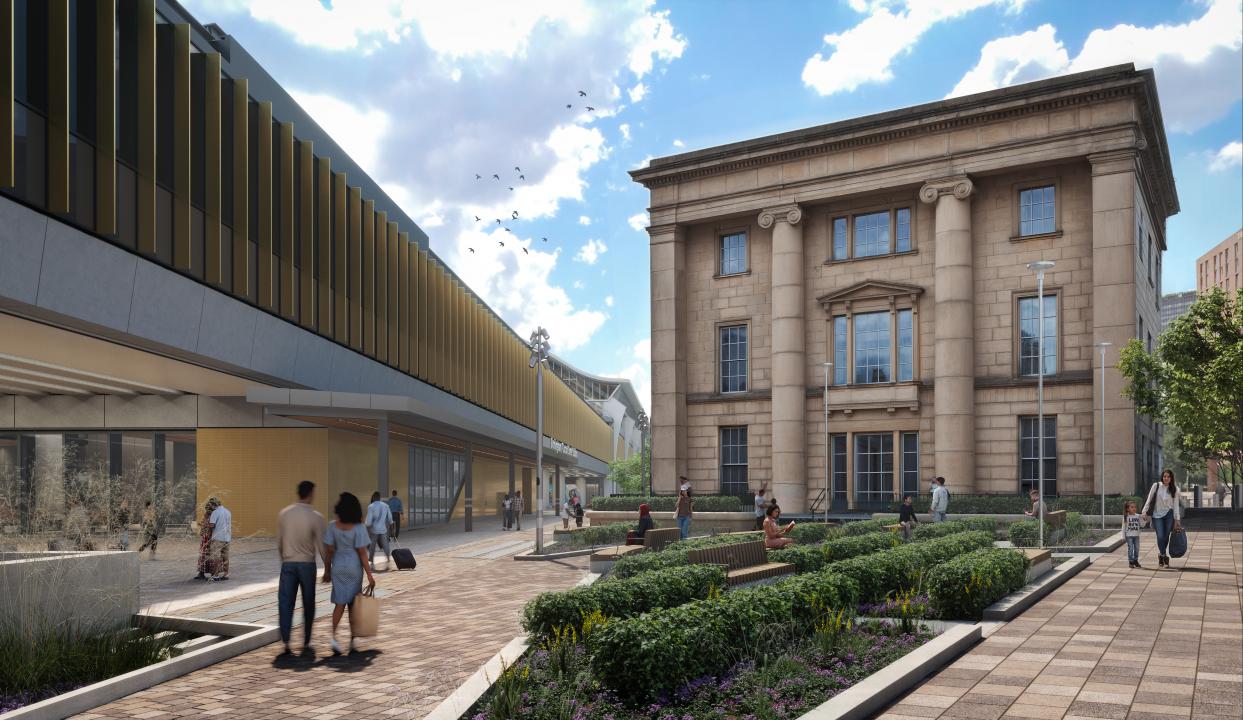
Next Steps: Metro Extension and Further Structural Work
With piling complete, teams are now preparing for construction of the Digbeth extension to the West Midlands Metro, which will run underneath the station via New Canal Street.
Sub‑surface works require more than 19,000 tonnes of reinforced steel and 69,000 cubic metres of concrete. To date, 7,000 tonnes of reinforcement and 29,000 cubic metres of concrete have already been installed.
Elsewhere on site, work continues on a large temporary office complex that will serve as the project’s operational hub. At peak activity, more than 1,000 workers will be employed on site.
Progress is also advancing on the viaducts that will bring HS2 trains into central Birmingham. The Curzon 2 Viaduct—the tallest on the project at 40 metres—is nearing completion and will be slid into its final position this summer.
Across the HS2 programme, more than 33,000 jobs are currently supported, including the project’s 2,000th apprentice, a 19‑year‑old from Bordesley Green. HS2 CEO Mark Wild continues to lead a full project reset to ensure efficient delivery across the entire 140‑mile stretch from London to Birmingham.
Image and video credits: HS2