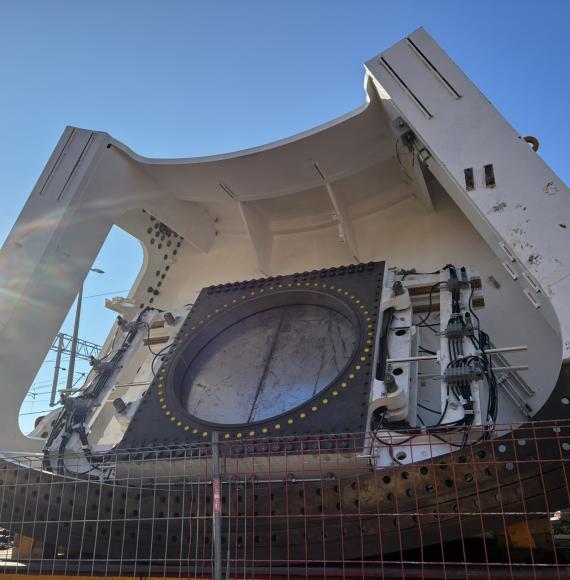

High Speed Two’s route into central London has taken a major step forward as a colossal tunnel boring machine began its journey from Old Oak Common towards Euston. The launch marks a pivotal milestone in the government’s commitment to deliver the high‑speed rail line directly into the capital’s city centre.
The 1,624‑tonne TBM – named Madeleine after Women’s Engineering Society former president Madeleine Nobbs – will carve out a 4.5‑mile tunnel beneath London, simultaneously excavating and installing pre‑cast concrete segments to form the permanent tunnel structure. It is the first of two machines that will build the twin tunnels connecting Old Oak Common to the future HS2 terminus at Euston.
The ceremonial “switch‑on” was attended by the Chief Secretary to the Prime Minister, Darren Jones; Rail Minister, Lord Hendy; HS2 Ltd Chief Executive Officer, Mark Wild; and Transport for London Commissioner, Andy Lord. Their visit underscores the strategic importance of completing HS2’s central London connection, which the government describes as essential to unlocking the project's full economic benefits.
Extending HS2 to Euston is projected to deliver substantial long‑term economic growth. Estimates from Camden Council suggest that a combination of new homes and commercial development centred around the Euston site could generate £41 billion for the UK economy by 2053 and support 34,000 new jobs.
The government has confirmed that a new Euston Delivery Company will lead the development of the HS2 station, the redevelopment of the existing mainline station, upgrades to London Underground facilities, and wider commercial regeneration across the Euston campus. The aim is to create an “affordable and integrated” transport hub at the heart of the capital.
This tunnelling milestone follows extensive construction achievements across the HS2 line, including:
- 23 miles of completed tunnels
- 19 bridges
- 2 major viaducts
along the route between London and Birmingham.
With over 33,000 workers currently contributing to HS2’s delivery, the project is also expected to add £10 billion to the west London economy over the next decade, including the development of 22,000 new homes and almost 19,000 additional jobs.
Rail Minister Lord Hendy said:
“It was brilliant to switch on the tunnel boring machine at Old Oak Common today – not just because it’s an engineering marvel – but because it brings HS2’s journey to Euston another step closer to reality.
“We’re putting HS2 back on track, and taking the railway into central London is crucial to unlocking its full potential to deliver more jobs, more homes and a long-term boost to the whole British economy.”
Once complete, HS2 promises faster and more reliable journeys between London, Birmingham, and major cities beyond, helping to relieve congestion on existing lines and expand national rail capacity.
HS2 Ltd CEO Mark Wild is currently overseeing a comprehensive “reset” of the project to ensure the new railway is delivered safely and at the lowest reasonable cost. Officials note that despite challenges, HS2 remains central to the government’s mission to drive economic growth, create jobs, and increase housing supply.
Commenting the milestone, Wild said:
“On my first day at HS2, I unveiled the Euston TBMs as they were being prepared to build the Euston Tunnel. Just over a year on, we’re beginning to excavate the tunnel – a show of confidence that HS2 will be built into central London and kickstart economic growth.
“Over the past 12 months, I have been leading a comprehensive reset across HS2 to get it back on track and I am confident that we’re on the right path to delivering HS2 safely and efficiently. The start of tunnelling here today is a part of the strong foundations we can build upon to completing HS2 and deliver better journeys for rail passengers.”
This milestone also comes as the government advances legislation to establish Great British Railways, a new publicly owned body intended to bring greater coherence and accountability to the national rail network. Meanwhile, passengers across the UK are benefiting from the first rail fare freeze in 30 years, designed to ease cost‑of‑living pressures and make train travel more affordable.
Image credit: iStock