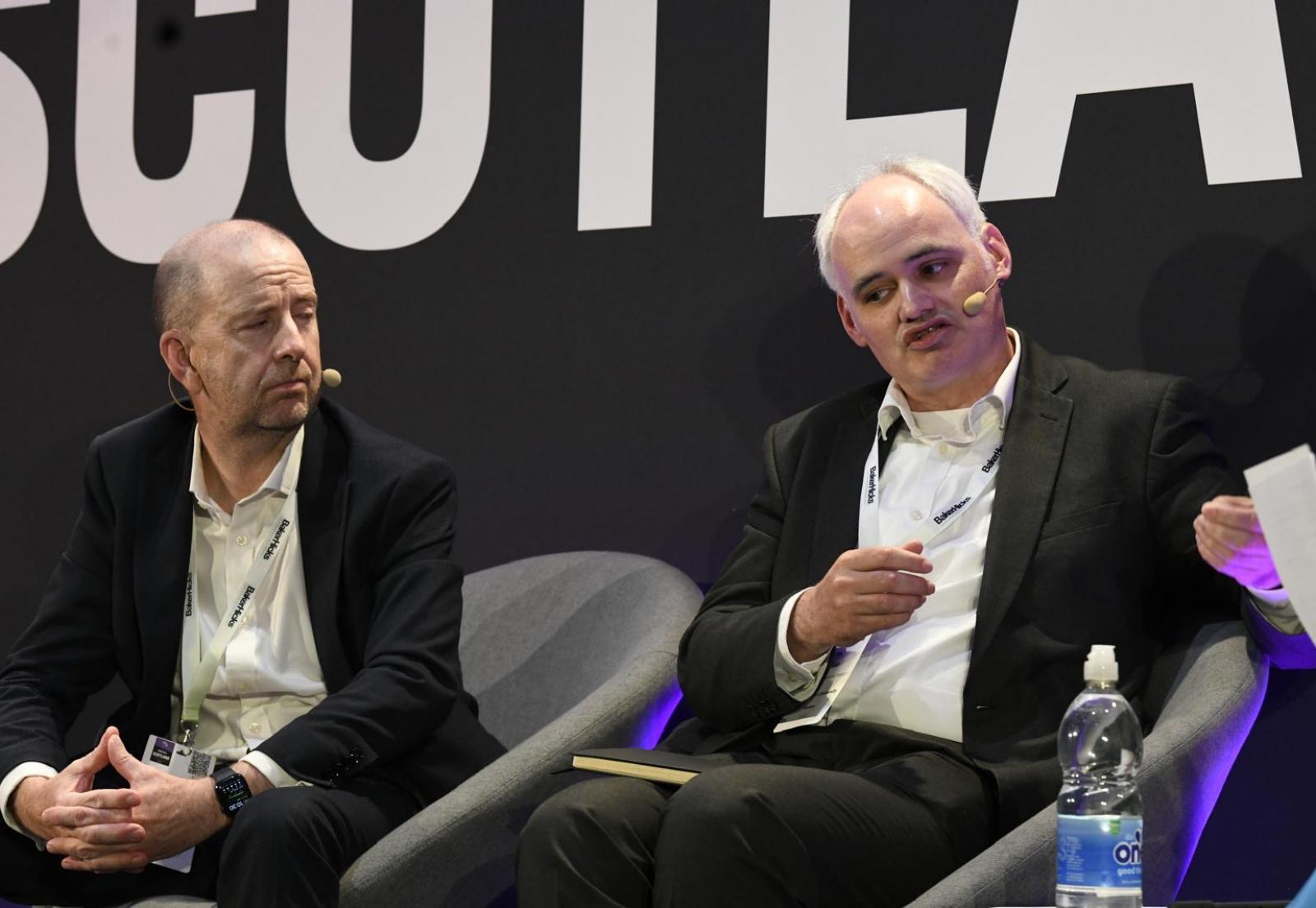
At TransCityRail Scotland 2026, industry leaders gathered to examine the future of Scotland’s railway – a sector on the brink of transformative technological change. Speaking on a high-profile panel, John Easton of Heriot-Watt University and David Taylor of Hitachi Rail shared candid insights into how the industry can successfully innovate while maintaining its uncompromising safety standards.
Their discussion offered a grounded yet forward-looking perspective on the realities of delivering innovation in one of the UK’s most safety-critical sectors.
A central message from the panel was clear: innovation cannot exist in isolation.
John and David stressed the importance of creating an “industry pull” for new technologies. Without a strong demand rooted in operational challenges, even the most advanced solutions risk failing to gain traction.
Rather than pushing technology for its own sake, rail organisations must first define the problems they are trying to solve. Only then can innovation deliver meaningful improvements across infrastructure, operations and passenger experience.
Beyond technology, the panel highlighted a crucial – and often underestimated – factor: people.
David emphasised that successful innovation hinges on how it is introduced and adopted across the ecosystem. From asset managers and operators to suppliers and frontline staff, buy-in is essential.
He noted that stronger collaboration between organisations can:
- Create more supportive conditions for innovation
- Enable SMEs to bring agile, scalable solutions into the market
- Bridge the gap between research and real-world implementation
This collaborative approach is increasingly vital as the rail sector looks to accelerate digital transformation.
Unsurprisingly, safety remained at the heart of the discussion.
The UK rail network operates within a highly regulated environment, where standards are designed to protect passengers, workers and infrastructure. John and David acknowledged that while these frameworks are essential, there must also be room for evolution.
John pointed to the value of understanding the historical context behind safety standards. By doing so, the industry can identify where flexibility is possible – enabling new technologies to be introduced without compromising safety. This balanced approach could unlock faster adoption of innovation while maintaining the sector’s strong safety record.
Artificial intelligence emerged as a key theme, reflecting its growing role across transport sectors.
While some in the industry remain cautious, John argued that AI presents a significant opportunity to:
- Enhance customer engagement
- Improve operational efficiency
- Support predictive maintenance and decision-making
However, he stressed that deploying AI responsibly will require robust safeguards.
According to John, establishing clear “guardrails” around AI systems is essential to ensure reliability, transparency and safety – particularly in a complex rail environment.
The session painted a clear picture of a sector ready to evolve – but only through coordinated effort.
By focusing on:
- Stronger stakeholder engagement
- Problem-led innovation
- Flexible application of safety standards
- Responsible adoption of technologies such as AI
the rail industry can unlock new opportunities while maintaining the trust and safety passengers expect.
As Scotland’s railway continues its journey towards modernisation, the insights from John and David provide a practical roadmap for sustainable innovation.