Stadler is strengthening its foothold in North America with a landmark contract to supply vehicles for Austin’s first light rail system, signalling a major step forward for urban transit innovation in the United States.
The new network will feature 15 stations along a nearly 10-mile corridor, with fully electric trains operating at intervals of every five to ten minutes for most of the day. Designed with future expansion in mind, the system reflects a long-term vision for growth in one of America’s fastest-developing cities.
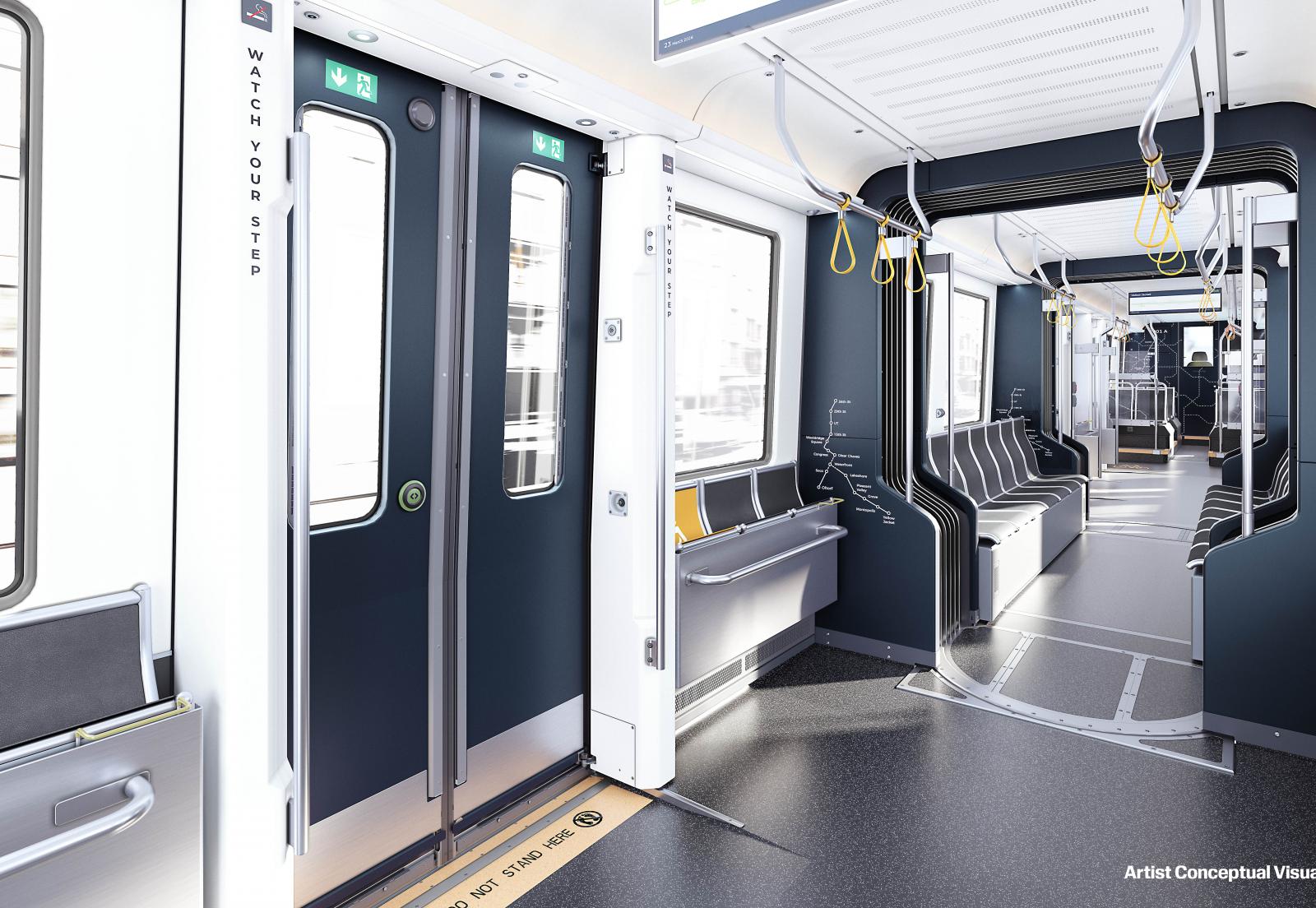
At the core of the project is a step-change in vehicle design. Stadler’s trains, based on its widely deployed CITYLINK platform, will introduce a fully low-floor configuration throughout the entire interior — eliminating the step-over sections typically required above powered wheelsets. This is a first for the U.S. light rail market and is expected to transform accessibility standards.
The vehicles will be assembled at Stadler’s Salt Lake City facility, marking the company’s fifth project in Texas and further cementing its regional presence.
“ATP is excited to have Stadler join the Austin Light Rail team to design a vehicle with features never before delivered in the United States,” says Greg Canally, ATP’s CEO.
“The action today demonstrates our commitment to build a light rail system that is right for Austin as ATP keeps advancing the project.”
Redefining Accessibility and Performance
The new CITYLINK vehicles are engineered to bridge the gap between traditional streetcars and higher-speed rail systems. They are designed to navigate dense city streets while also delivering performance capabilities typically associated with regional rail.
Key performance highlights include:
- Top speeds of up to 65 mph beyond the city centre
- Capacity for approximately 240 passengers per five-car train
- Fully ADA-compliant accessibility zones
- Flexible spaces for bicycles, luggage and pushchairs
The elimination of internal steps within the aisles enhances passenger flow and ensures a smoother, more inclusive travel experience — a major leap forward for accessibility in urban rail design.
Importantly, the design phase will actively involve community input. Residents of Austin will be able to influence elements such as interior layouts, colour schemes, wayfinding systems and accessibility features, ensuring the network reflects local needs.
A System Built for Long-Term Growth
Stadler will play a central role not only in vehicle delivery but also in shaping the system’s overall integration. Construction of the new light rail infrastructure is expected to begin in 2027.
The initial line will connect key destinations across Austin, forming the foundation of a broader network that is planned to expand in future phases. This includes a proposed link to Austin-Bergstrom International Airport, enhancing connectivity and supporting economic growth.
The agreement also includes an option for a Technical Support and Spare Supply Agreement (TSSSA), which would represent Stadler’s fifth long-term service contract in the U.S. and its third in Texas. This underlines a broader commitment to lifecycle support and local partnerships — an increasingly important factor in modern rail procurement.
Supporting a U.S. Light Rail Resurgence
This award builds on Stadler’s expanding North American portfolio, including its 2024 contract to deliver vehicles for the UTA TRAX system. It also highlights a growing wave of investment in light rail across the United States, as cities seek to modernise fleets and develop new networks.
Demand is increasingly focused on vehicles that combine:
- Higher operational performance
- Greater accessibility
- Flexible, multi-purpose interiors
- Efficient integration with evolving urban infrastructure
Martin Ritter, CEO Stadler Division North America says “Stadler’s CITYLINK platform is setting a new benchmark – defining what the next generation of light rail vehicles can be in the United States. Together with Austin Transit Partnership, we are helping shape a new era of transit in one of the fastest-growing cities in the United States.”
Why This Matters for the UK Rail Sector
For UK rail professionals, this project highlights several key trends gaining traction globally:
- The move towards fully accessible, low-floor train designs
- Integration of tram-train and hybrid vehicle concepts
- Greater emphasis on community-led design
- Long-term service agreements tied to rolling stock delivery
As UK cities continue to explore light rail and tram expansion, particularly in regeneration zones, Stadler’s approach in Austin provides a compelling benchmark for what future systems could achieve.
Image credit: Stadler