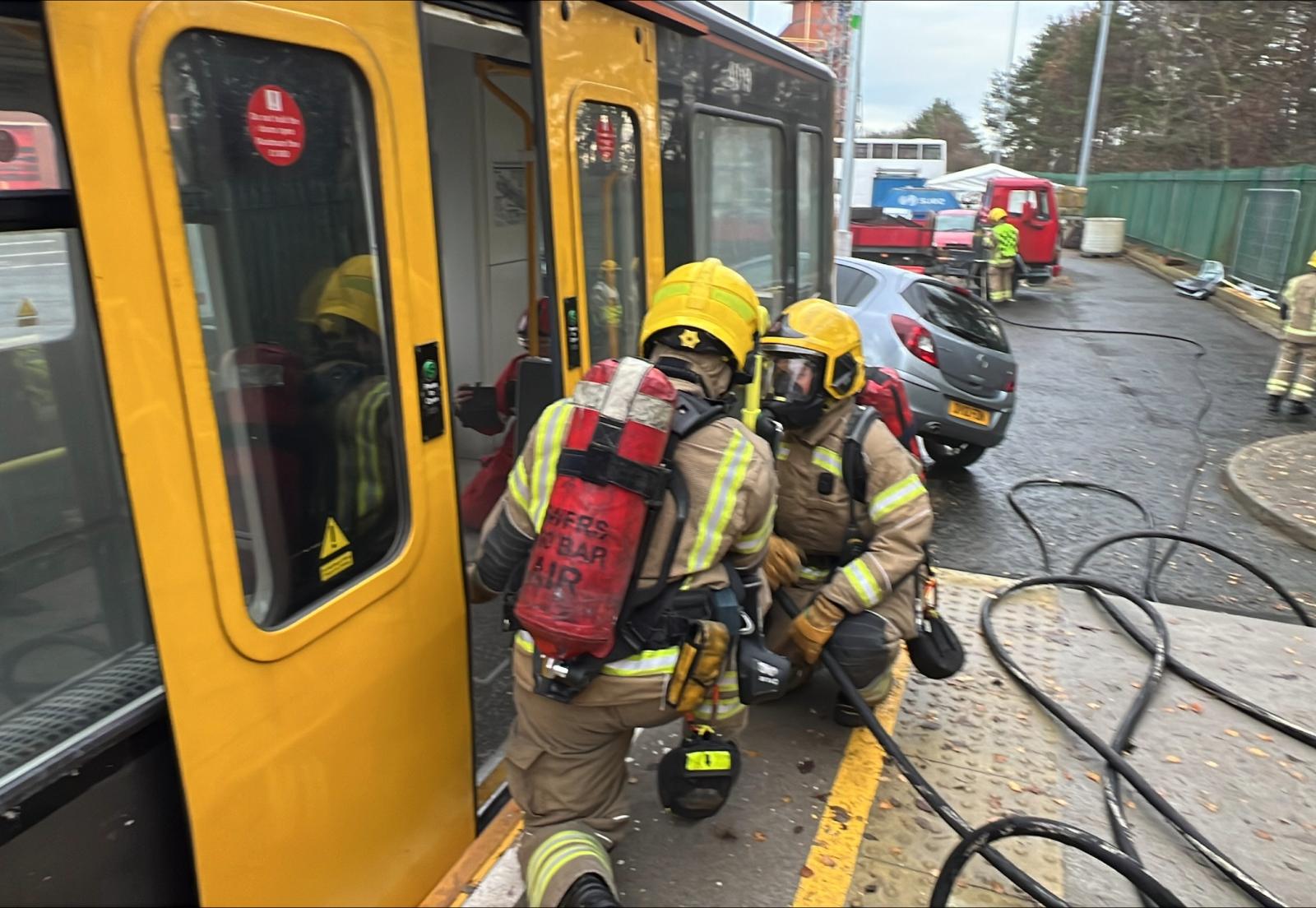
Firefighters in Tyne and Wear are taking their training to the next level thanks to an unusual addition to their facilities—a retired Metro carriage.
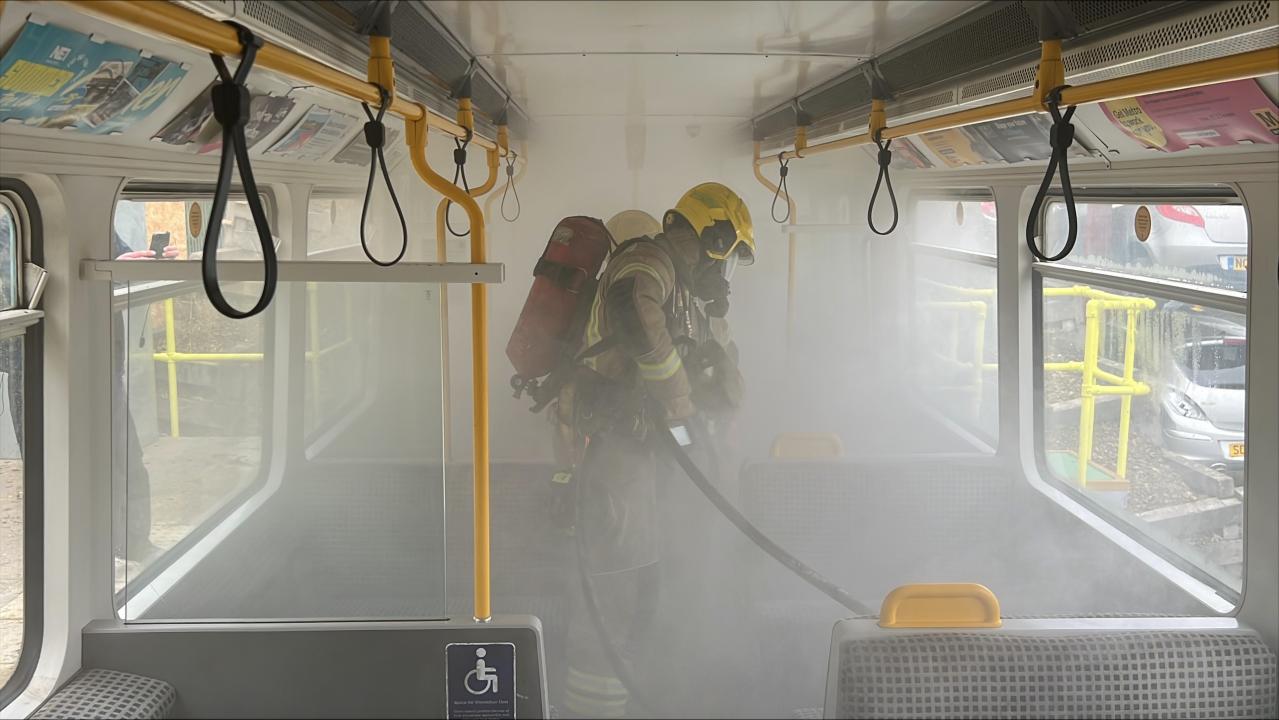
The Tyne and Wear Fire and Rescue Service (TWFRS) has incorporated the decommissioned train into its operational training centre in Washington, creating realistic, immersive scenarios that crews could face in real emergencies. These include road traffic collisions and breathing apparatus drills, vital for preparing firefighters for complex incidents.
Carriage number 4019, which served Metro passengers for 45 years, now plays a crucial role in honing lifesaving skills. It replaces a former London Underground train previously used for similar exercises.
Michael Richardson, Head of Fleet and Depot Replacement at Nexus, said:
“It’s fantastic to see a decommissioned Metro train being put to such important use by the Tyne and Wear and Rescue Service at their revamped training facility in Washington.
“The old carriage, which has served our customers for 45 years, is now playing a vital role supporting firefighter training across a range of different scenarios that they must prepare for.
“I’ve no doubt it’ll prove useful, allowing their fire crews to hone essential lifesaving skills which are required of them in the event of a real-life emergency.”

For TWFRS, the Metro carriage is more than just a prop—it’s a critical tool for replicating high-risk situations. Dale Howey, Head of Service Delivery Operational Training, explained:
“It’s essential for the development of our firefighters that they are given the opportunity to experience and train in real life scenarios, where they can practice and enhance their specialist skills.
“The Metro is a huge infrastructure in our region and it is vital that we train to meet the risks within our Service area. The Metro carriage is a vital part of our training centre that provides a location where serious incidents such as rail or road traffic collisions can be set up for exercise purposes. We can also introduce many other elements into the carriage because most incidents are never the same.
“The Service appreciates the Metro carriage that was gifted from our partners at Nexus, as this will ultimately ensuring our crews are able to train for the risks within our region and potentially save people’s lives for years to come.”
The first exercise using the Metro carriage saw crews from South Shields and Washington Community Fire Stations tackle a simulated collision involving the train and two vehicles on a purpose-built 38-metre stretch of track. Cosmetic smoke added to the realism as firefighters rescued a Metro driver and a casualty from one of the vehicles.
The carriage will also support TWFRS’s Urban Search and Rescue (USAR) team and enable multi-agency drills with other emergency services. To enhance authenticity, the training site includes a concrete platform, a mock tunnel, and even an imitation ticket machine—allowing crews to rehearse rescues both on and off the train.
This innovative partnership between Nexus and TWFRS demonstrates how retired rail assets can continue serving the community long after their passenger service ends—by helping save lives.
Image credits: Nexus
Video credit: Nexus