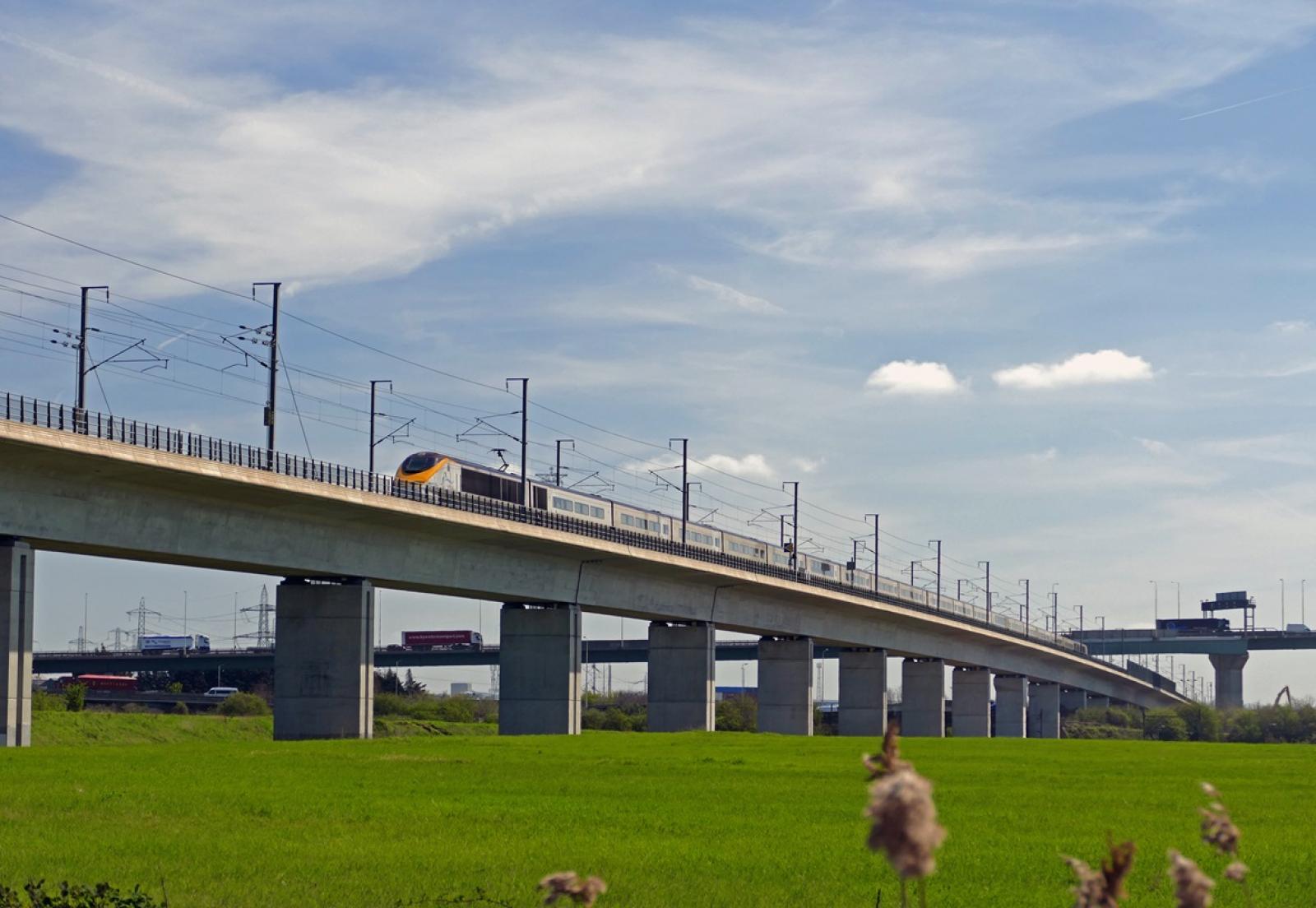

The Office of Rail and Road (ORR) has taken a major step towards opening up international rail competition, approving a new framework track access agreement that could see Virgin Trains operating services between London and mainland Europe from 2030.
The rail regulator announced that on 13 August it decided to pre-approve a framework track access agreement between HS1 Limited, trading as London St. Pancras Highspeed, and VTE OPCO Limited (Virgin Trains). The agreement would allow Virgin Trains to run up to 20 daily return services between London and destinations including Paris, Brussels and Amsterdam from 1 October 2030 until 31 December 2040.
The decision marks a significant milestone in efforts to bring greater competition to the international rail market, which has traditionally been dominated by a single operator. Increased competition is expected to stimulate economic growth, improve passenger choice and help drive demand for sustainable cross-border travel.
Under the ORR's approval process, Virgin Trains and London St. Pancras Highspeed can now formally enter into the agreement, provided it is completed by 4 September 2026.
However, several key hurdles remain before services can begin operating. Virgin Trains will need to procure a fleet of suitable rolling stock, secure access rights on rail networks beyond HS1 and obtain the necessary safety approvals from both the ORR and relevant European authorities.
The operator currently plans to launch its international services in 2030, creating a new competitive option for passengers travelling between the UK and major European cities.
Commenting on the announcement, Martin Jones, Deputy Director, Access & International at the ORR, said:
“This is an important next step in bringing competition and growth to the market for international rail services, and we welcome the progress Virgin Trains and London St Pancras High Speed have made.”
“While there is still more work to do, we are supporting Virgin and the wider industry to grow international services.”
The move comes amid growing industry ambition to expand international rail capacity and encourage modal shift from aviation to rail on short-haul European routes. If successful, Virgin Trains would become the first major competitor to challenge the existing international rail market through the Channel Tunnel, potentially ushering in a new era for cross-border passenger rail services.
Image credit: ORR