
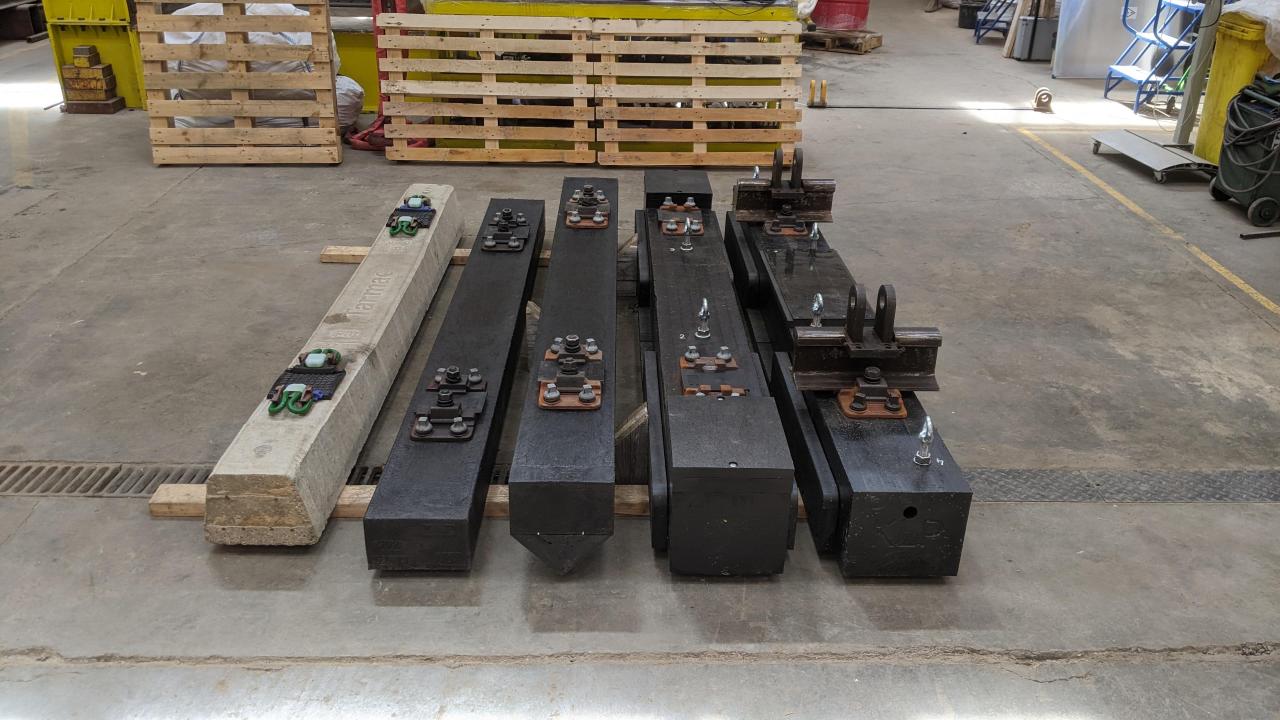
Engineers from Heriot-Watt University, working alongside colleagues at the University of Leeds and partners across Europe, have unveiled a new self-levelling railway sleeper designed to tackle one of the rail sector’s most persistent infrastructure challenges: transition zones.
The innovation has the potential to significantly reduce maintenance requirements, cut operational costs, improve passenger comfort and deliver a more sustainable approach to track construction, thanks in part to its use of recycled plastic materials.
Tackling a long-standing infrastructure issue
Transition zones—where track stiffness changes abruptly, such as at the interface between embankments and bridges or tunnels—have long been problematic for rail operators. These areas are prone to higher degradation rates and increased maintenance costs.
Dr Ahmet Furkan Esen, from Heriot-Watt University’s School of Energy, Geoscience, Infrastructure and Society, explained the underlying issue:
“Over time, the softer ground settles more than the structure, creating small gaps under the sleepers, the rectangular supports that hold rails in place.
“Hanging sleepers then no longer sit firmly on the ballast, which is the crushed stone layer beneath the track.
“As trains pass over them, loads are unevenly distributed, increasing wear on rails, sleepers and ballast.
“The result is more frequent maintenance, speed restrictions and passenger discomfort.
“Millions are spent each year across Europe’s rail network to maintain transition zones, and it’s been a persistent engineering challenge.”
A self-adjusting solution
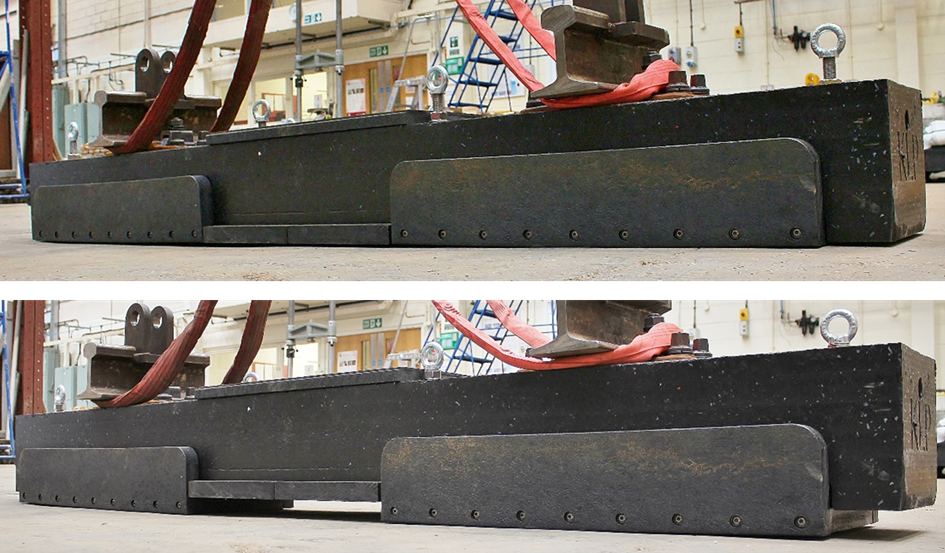
The newly developed sleeper is designed to counteract these issues automatically. Built with an internal mechanism that adjusts to ground settlement, it works in a similar way to a self-adjusting jack.
Dr Esen said:
“It works a bit like a self-adjusting jack.
“If the ground underneath settles and a gap opens up beneath the sleeper, a mechanism inside it lowers the sleeper base down to close the gap automatically, without anyone needing to come out and fix it.
"This could be a real step-change in how we look after transition zones.
“It’s not just another small fix: it’s a sleeper that can correct minor faults on its own, so it needs less manual maintenance."
In addition to reducing intervention requirements, the sleeper has been manufactured using recycled plastic, supporting the rail industry’s shift toward circular economy principles.
Dr Esen added:
"As well as reducing maintenance, the sleeper is manufactured from recycled plastic, giving waste material a long-term, high-value use in railway infrastructure.
"That helps support a more circular economy for the rail industry while reducing reliance on virgin raw materials."
Full-scale testing delivers promising results
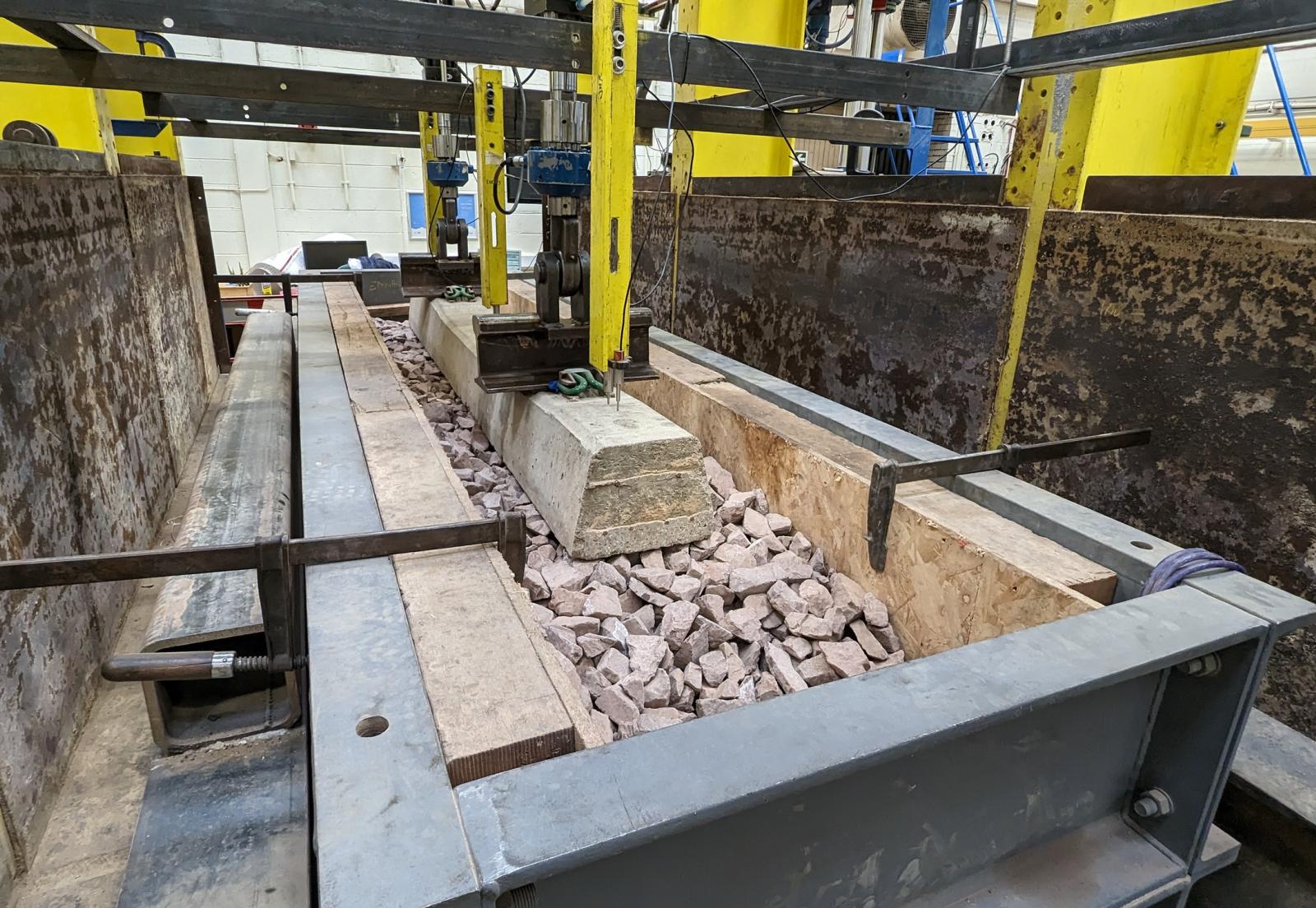
The system has undergone rigorous testing at Heriot-Watt’s purpose-built track bed facility in Edinburgh—one of the UK’s most advanced rail research environments.
Dr Esen explained:
“Our test track bed allows us to simulate the long-term effects of high-speed traffic and decades of operation on major lines.
“Over three days, we ran 600,000 loading cycles, applying forces of up to kilonewtons per rail seat, equivalent to a 17-tonne axle load, to mimic the forces generated by operational and high-speed rail traffic.
“We also introduced carefully controlled gaps beneath the sleepers to simulate progressive ground settlement, just as would happen in a real-life railway track.”
Sensors embedded within the ballast monitored load transfer and pressure distribution throughout the testing programme.
The findings suggest the technology could offer a robust and practical solution for real-world deployment.
“We demonstrated that the self-levelling mechanisms activated once small voids began to form, and restored contact between the sleeper and ballast.
“Over the course of the test, it compensated for gaps of up to 40mm while maintaining stable load paths beneath the rails, preventing the damaging impact forces typically associated with hanging sleepers.
“We’ve proved this is a realistic infrastructure solution for railways. It has been designed to fit standard railway tracks and to be compatible with widely used fastening systems and maintenance practices.”
A pathway to lower-cost, resilient rail infrastructure
While further refinement and testing are required, the early results are encouraging for UK and European rail operators seeking cost-effective ways to improve asset resilience.
Dr Esen concluded:
“We need to further refine and test the sleepers, but the results are extremely promising and demonstrate our technology’s practical potential.
“Our self-levelling sleepers could help rail operators maintain smoother tracks, reduce disruption and lower whole life maintenance costs, particularly in troublesome transition zones.”
The research forms part of the IN2ZONE project, funded through the European Union’s Horizon 2020 programme under the Shift2Rail Joint Undertaking.
Image credits: Heriot-Watt