
The UK rail regulator has recognised improving performance across Britain’s railway, with fewer cancellations and strong efficiency gains, but has warned that reduced infrastructure renewals could pose longer-term risks to safety and reliability.
In its latest annual assessment of Network Rail, the Office of Rail and Road (ORR) highlighted clear progress in operational performance during the year to March 2026. However, the regulator also stressed that financial pressures—particularly inflation—are forcing difficult decisions that could impact the condition of the network in years ahead.
Performance improves as cancellations fall
Passenger train cancellations dropped to 3.5% over the reporting period, down from 4.1% the previous year, while freight cancellations also improved, beating annual targets. Reliability gains have largely been attributed to fewer traincrew-related cancellations, although ORR emphasised that infrastructure performance remains a crucial factor in sustaining long-term improvements.
Punctuality has remained broadly stable, with 84.1% of services arriving within three minutes of schedule between April 2025 and March 2026.
Regulatory intervention has played a role in these gains. ORR closed its enhanced monitoring regime in Wales & Western following earlier concerns, while targeted scrutiny of Network Rail’s Eastern region has driven an improvement plan that is beginning to deliver results.
Efficiency target exceeded for second year
Network Rail has outperformed its efficiency targets for the second consecutive year, delivering £614 million in savings over the latest financial year. The organisation is now forecasting total efficiencies of £4.1 billion across Control Period 7 (April 2024 to March 2029), exceeding its £3.9 billion target.
While this represents positive value for taxpayers, the achievement has come against a backdrop of rising costs, leading to difficult trade-offs elsewhere.
Renewals cut raises long-term concerns
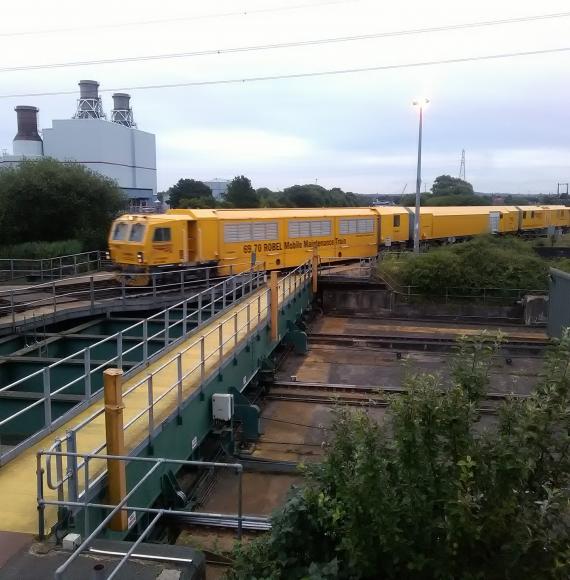
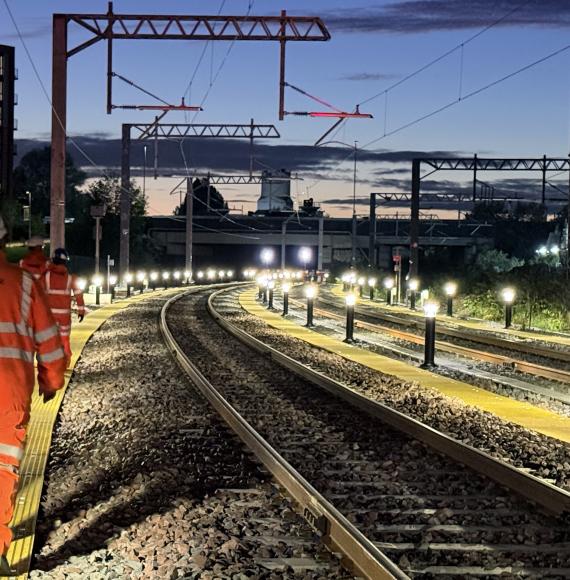
Inflationary pressures have forced Network Rail to scale back planned renewals across England and Wales to 83% of the original plan. This reduction affects critical assets including track, tunnels and bridges—prompting concern from the regulator about how the railway will maintain safety and performance standards.
ORR has made clear that while Britain’s railway remains among the safest in Europe, more detailed planning is required to demonstrate how reduced renewals will not lead to deterioration in asset condition.
Scotland sees steadier progress
In contrast, Scotland has so far maintained its planned level of renewals under Control Period 7. Network Rail Scotland reported improved cancellation figures at 2.1%, beating its 2.3% target.
However, challenges remain. The Scotland Train Performance Measure stood at 89.8% at the end of year two, with ambitions to reach 92.5% by year four. ORR has flagged this trajectory as being at risk, requiring continued focus from both Network Rail and ScotRail.
Regulator calls for stronger evidence and collaboration
Graham Richards, Director of Planning and Performance at ORR, said:
“Fewer cancellations is good news for passengers and freight customers. And £614m of efficiencies this year is good news for taxpayers. But we know there is still much more to be done through Network Rail working ever more closely with train operators to deliver better whole-industry outcomes."
“If we’re to continue to protect and improve future train performance, we must carefully manage our ageing railway infrastructure. We recognise that in a constrained funding environment there are no easy answers, which is why we have challenged Network Rail to provide better evidence of how it will mitigate the effects of declining asset condition on train safety and performance outcomes.”
A pivotal moment for the rail network
The findings come at a critical time for the railway, as the sector prepares for the most significant structural changes in a generation. While recent performance improvements will be welcomed by passengers and freight operators alike, ORR’s message is clear: sustaining these gains will depend on how effectively Network Rail balances short-term efficiencies with long-term asset management.
Image credit: ORR