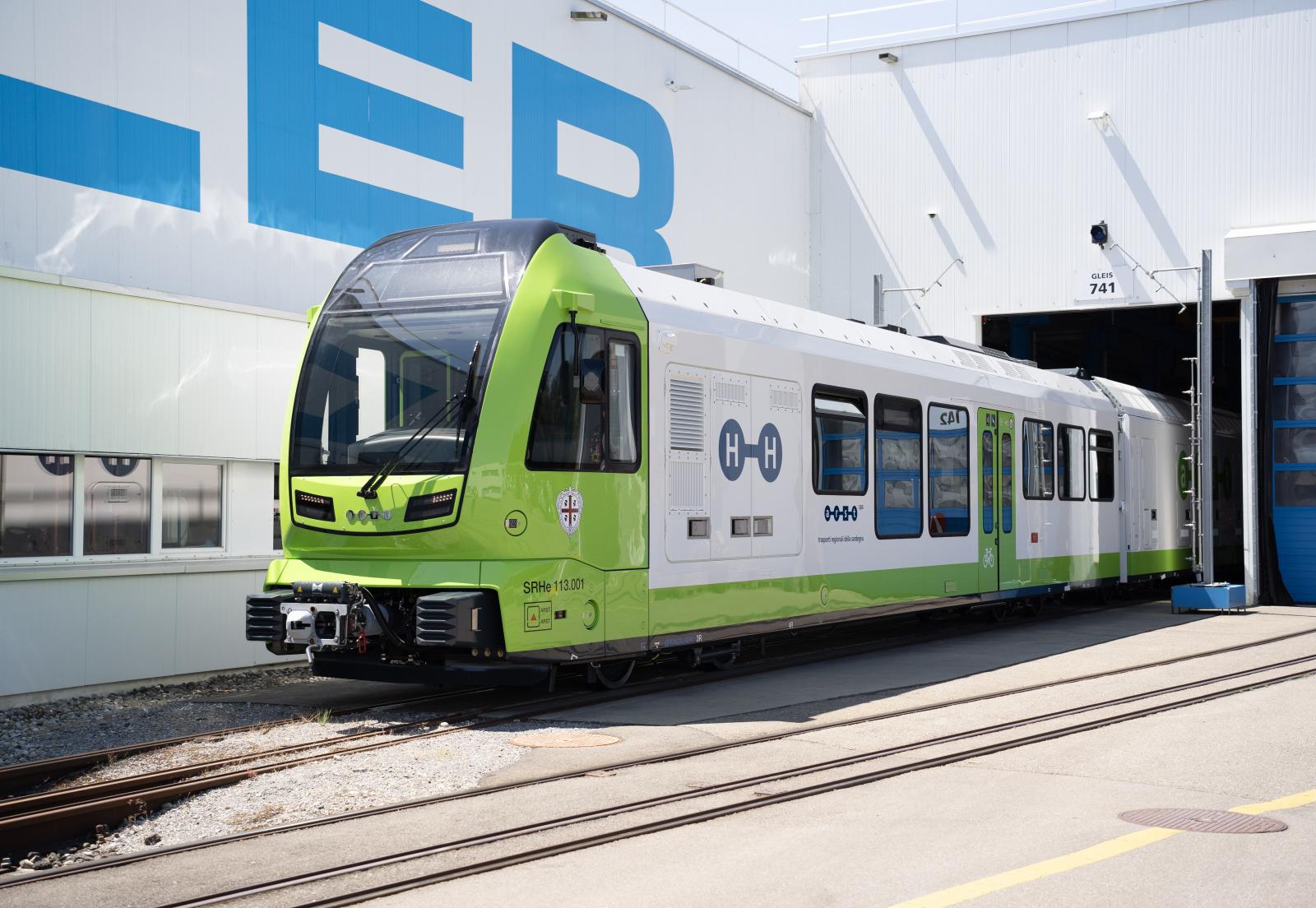

Stadler and Sardinian operator ARST have marked a significant milestone in rail innovation, unveiling what is being described as the world’s first hydrogen-powered train designed specifically for narrow-gauge networks. The launch took place at Stadler’s commissioning centre in Erlen, Switzerland, with the fleet set to enter passenger service from 2028.
The trains will operate on key regional routes across Sardinia, including Alghero Airport–Mamuntanas, Sassari–Alghero and Sassari–Sorso, forming a cornerstone of the island’s push towards sustainable transport.
Barbara Manca, Regional Minister for Transport of the Autonomous Region of Sardinia, emphasised the strategic importance of the project:
“With the commissioning of the first hydrogen-powered train designed for narrow-gauge railways, Sardinia is proving itself a pioneer of technological innovation in the transport sector. This is the first train of its kind, specifically designed for contexts similar to ours with the aim of turning a limitation into a great opportunity. The hydrogen trains, which will be deployed on ARST lines, are a shining example for the environment, the local economy and the development of key skills in our region.”
ARST’s Sole Director Giovanni Mocci highlighted the operator’s ambition to position itself at the forefront of global rail innovation:
“The unveiling of this train demonstrates ARST’s ability to position itself as a cutting-edge company on the international stage. We are deeply proud to bring the world’s first narrow-gauge hydrogen train to our lines. It is a historic technological leap forward for our fleet, a milestone made possible by the full alignment of objectives and the crucial support of the Region of Sardinia. We are radically transforming the way we provide public transport, making ARST a model of innovation and reliability.”
From a manufacturing perspective, Stadler sees the project as a benchmark for sustainable rail development. Maurizio Oberti, Stadler’s Sales & Marketing Director for Italy, said:
“This is a world first in the global rail sector, combining innovative technological development with sustainability. The train we are presenting today sets new standards in Italian regional rail transport and demonstrates the commitment of Stadler and the Autonomous Region of Sardinia to more environmentally responsible rail transport.”
“We would like to thank ARST for the trust they have placed in us and for the excellent collaboration established during the project.”
Driving decarbonisation in regional rail
A total of ten hydrogen trains have been ordered under a 2023 framework agreement between Stadler and ARST. Once deployed, the fleet is expected to cut more than 2,100 tonnes of CO₂ emissions annually compared with diesel traction—equivalent to roughly 450 car trips around the globe.
Dr Ansgar Brockmeyer, Deputy CEO of Stadler Group, underscored the company’s leadership in this niche:
“Stadler is the only train manufacturer in the world that designs and builds hydrogen trains for narrow-gauge lines. Together with ARST, we have developed a solution that makes a tangible contribution to the decarbonisation of rail transport.”
Renewable hydrogen at the heart of operations
A key innovation is the train’s integrated hydrogen propulsion system. Fuel cells and hydrogen tanks are housed within a central “Power Pack” carriage, which converts hydrogen into electrical energy to both power the train and recharge onboard batteries.
Crucially, the hydrogen itself will be produced using 100% renewable solar energy, establishing a fully green, end-to-end system—from energy generation to rail operation. This enables reliable operations on non-electrified routes while supporting wider decarbonisation goals.
Carlo Poledrini, Central Director of ARST, explained how the initiative fits into a broader transformation strategy:
“These vehicles, developed in collaboration with Stadler, are a central element of the decarbonisation strategy for the narrow-gauge network. It is the first step in ARST’s evolution from a transport operator to an energy company capable of powering its own network of services. As already demonstrated by the active construction sites in Mandas, Alghero and Macomer, we are integrating technological innovation in vehicles with the autonomous production of clean energy. Working in full synergy with regional institutions, ARST is bringing to fruition a model of sustainable and fully self-sufficient public transport.”
Engineered for narrow-gauge performance
Designing hydrogen trains for narrow-gauge lines presents unique challenges, particularly around axle load and infrastructure constraints. Stadler has addressed this by creating lightweight vehicles with a bespoke profile tailored to Italy’s narrow-gauge networks.
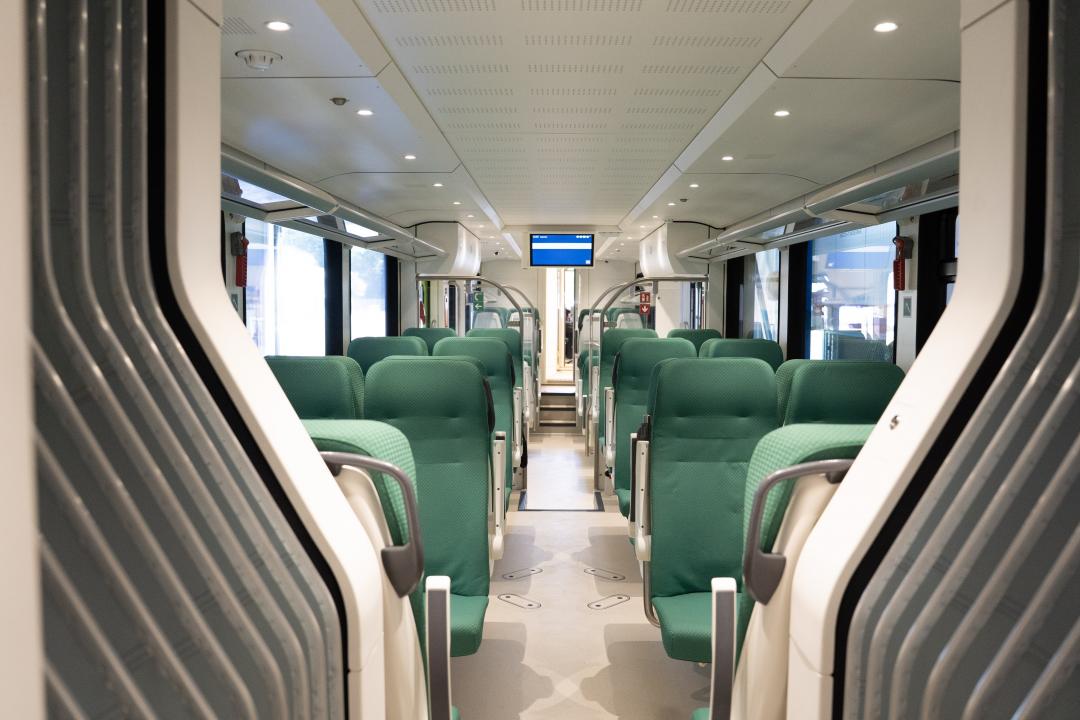
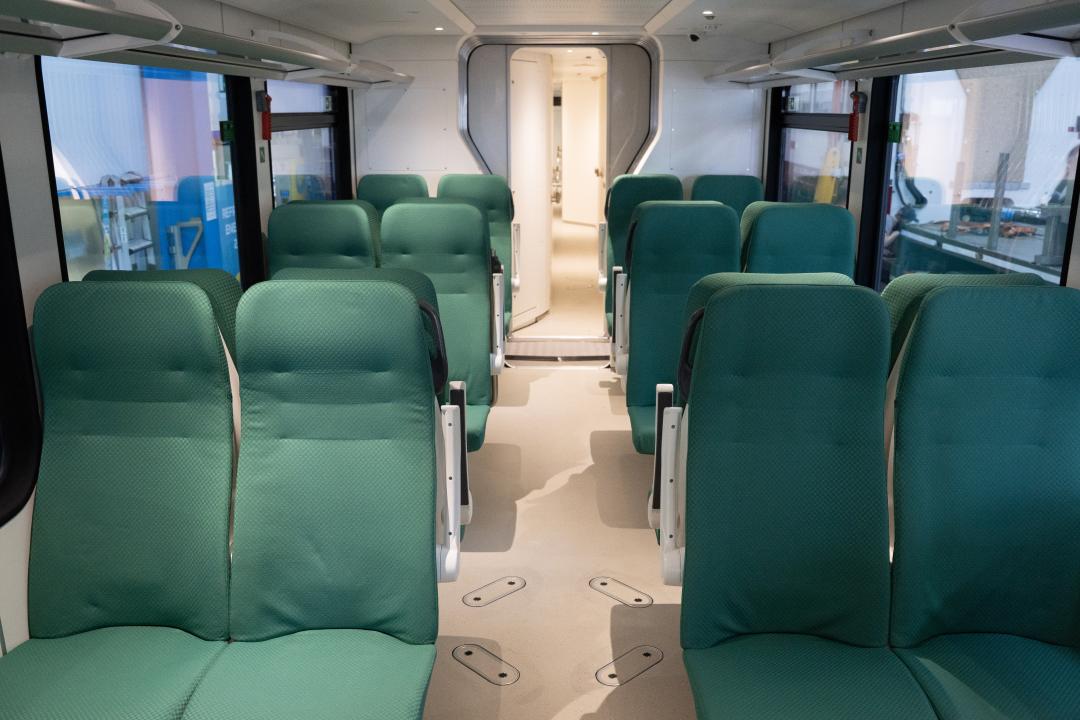
Passenger experience has also been prioritised, with features including:
- Low-floor access for improved accessibility
- Air-conditioned interiors
- Large panoramic windows
- Reduced noise and vibration compared to diesel units
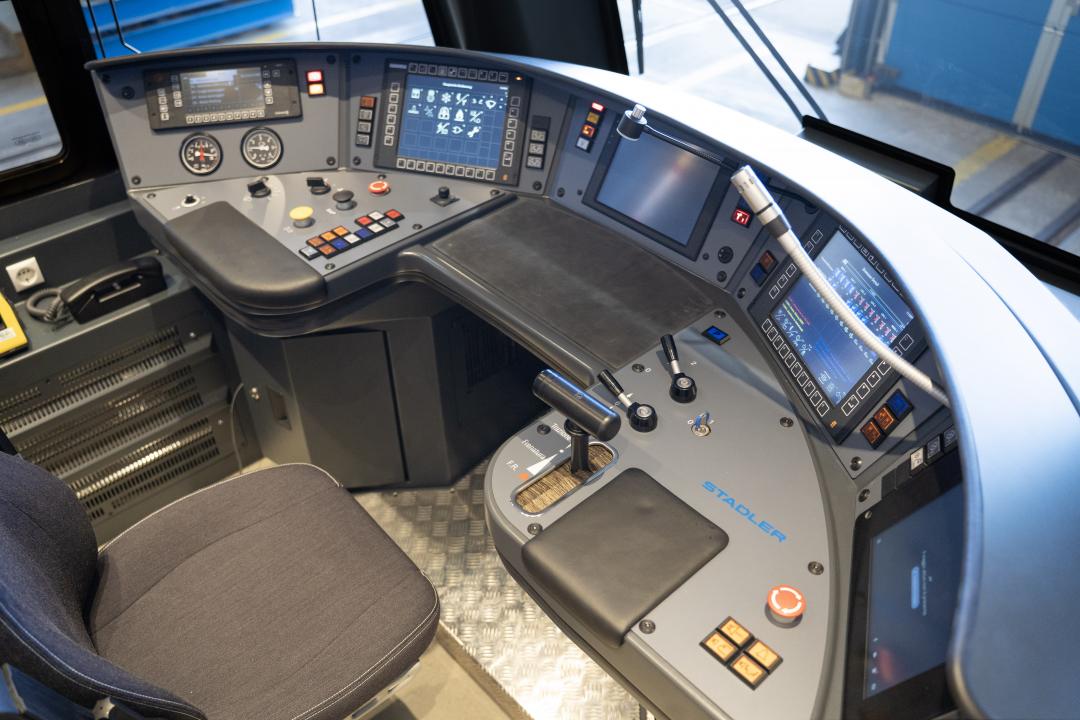
Dedicated crew facilities, including a private access door and independent air-conditioning, have also been incorporated.
Before entering service, the trains will undergo comprehensive testing in line with requirements set by Italy’s National Agency for the Safety of Railways and Road and Motorway Infrastructure (ANSFISA).
A wider shift across Italy
The Sardinian programme is part of a broader national push led by the Italian government and Ministry of Infrastructure and Transport to decarbonise rail operations. Hydrogen technology is being rolled out across multiple regions, with nine trains currently under construction for Ferrovie della Calabria and two for Ferrovia Circumetnea in Sicily.
All vehicles will be manufactured at Stadler’s Bussnang headquarters in Switzerland, reinforcing the company’s central role in advancing hydrogen rail technology across Europe.
Image credits: Stadler